AI Lead Generation: 7 Tools and Strategies to Maximize Leads
Hannah Abouchar

AI lead generation uses artificial intelligence to identify, prioritize, engage, and qualify potential buyers faster and more accurately than manual prospecting workflows allow.
The seven most impactful AI lead generation approaches combine signal intelligence (identifying which accounts are in a buying window), personalized outreach generation (creating relevant first contact at scale), and qualification automation (routing the highest-intent leads to the sales team immediately).
Organizations that have deployed AI lead generation consistently report 2 to 3 times higher reply rates on outbound outreach, 30 to 50% larger account coverage per SDR, and 20 to 40% more qualified pipeline per quarter compared to teams running manual prospecting.
This guide covers the seven tools and strategies that produce the most measurable lead generation impact.
What AI lead generation is and how it differs from traditional lead generation?
Traditional lead generation involves building static contact lists from databases, running batch outreach campaigns to those lists, and waiting for inbound interest to emerge from the volume.
The conversion rates from traditional lead generation are a direct function of list quality and outreach volume: more contacts sequenced at higher frequency produces more responses, regardless of timing or relevance.
AI lead generation replaces volume with intelligence. Rather than sequencing every ICP-qualified contact on the available list, AI identifies which accounts in the ICP universe are showing behavioral signals that indicate they are currently in an active evaluation, generates outreach that references those specific signals, and initiates contact at the moment of maximum buyer receptivity rather than at the moment most convenient for the SDR’s sequencing schedule.
The conversion rate difference between traditional and AI lead generation is not incremental: it is categorical.
A contact who receives an outreach message referencing a funding announcement that happened yesterday, a VP of Sales who joined last week, and an intent signal in the product category from the prior 10 days is in a fundamentally different context from a contact who receives the same message six weeks later after the buying window has shifted.
The MIT Lead Response Management Study finding that leads contacted within 5 minutes of expressing interest convert at 21 times the rate of leads contacted after 30 minutes applies equally to outbound timing: outreach that arrives within 24 to 48 hours of a triggering signal produces dramatically higher conversion than outreach from a weekly list review.
Strategy 1: Intent signal monitoring for account prioritization
What it is:
AI systems continuously monitor the external account universe for behavioral signals indicating active buying intent: Bombora topic surges, G2 Buyer Intent category page visits, funding announcements, leadership hires, and relevant job postings.
Accounts whose signal profiles cross a configured threshold are elevated to Tier A status for immediate outreach.
Why it maximizes leads:
Traditional lead generation prospecting distributes outreach uniformly across the ICP-qualified universe, reaching most accounts when they are not in a buying window.
Intent signal monitoring concentrates outreach on the 3 to 5% of ICP accounts that are in an active window in any given week.
This concentration produces reply rates and meeting booking rates 3 to 5 times higher than uniform list outreach on the same account universe.
How to implement it:
Configure an intent data provider (Bombora for broad category intent, G2 Buyer Intent for software evaluation signals) with the product category topics relevant to the ICP.
Set a threshold above which accounts route to the SDR outreach queue. For funding events and leadership hires, configure automated alerts through a pipeline intelligence platform like Rox that monitors these events continuously and surfaces the account within hours of the trigger.
Tools for this strategy: Bombora, G2 Buyer Intent, Rox, 6sense.
The intent data for outbound prospecting guide covers the full intent signal framework, including how to weight different signal types and how to configure the tier thresholds that govern routing.
Strategy 2: AI-powered outreach personalization at scale
What it is:
AI generates personalized outreach messages for each account that reference the specific signal combination that elevated the account, the contact’s role and professional context, and the confirmed prior engagement history from the CRM.
Rather than selecting from template variants, the AI generates account-specific content for each outreach touch.
Why it maximizes leads:
Generic outreach from a static template produces low reply rates because the message is not specific to the buyer’s current situation.
AI-generated outreach that references the buyer’s recent Series B close, the VP of Sales hired three weeks ago, and the Bombora intent surge in the revenue intelligence category demonstrates genuine account intelligence and arrives with immediate contextual relevance.
The specificity of AI-generated outreach is the primary driver of the 2 to 3 times reply rate improvement that AI-assisted outbound programs consistently report.
How to implement it:
Connect the AI outreach generation tool to the intent monitoring system and to the CRM so that the AI generates drafts from the full account context: the signal that triggered the outreach, the contact’s confirmed professional history, and the CRM engagement record from any prior interactions.
The rep reviews the draft, edits if needed, and approves. The review time per account should be 3 to 5 minutes rather than the 10 to 15 minutes required for outreach written from scratch.
Tools for this strategy: Rox, Clay (with Claygent), Apollo AI, Lavender.
The email personalization tools guide covers the technical approaches to AI-personalized outreach, including how to evaluate the personalization quality of different AI email tools.
Strategy 3: AI lead scoring for inbound qualification
What it is:
AI scoring models evaluate each inbound lead against a combination of firmographic fit (ICP match on company size, industry, geography, and growth stage), behavioral engagement (what actions the lead has taken with owned assets), and timing (recency and momentum of the engagement) to produce a composite score that governs routing priority.
Why it maximizes leads:
Traditional inbound lead qualification uses manually defined rules: “if a lead downloads an ebook and is at a company with 100 or more employees, add them to the SDR queue.”
AI scoring identifies the non-linear signal combinations that actually predict conversion which are rarely captured by simple rule-based criteria and produces a more accurate ranking of which leads deserve immediate SDR attention versus which should enter nurture sequences.
How to implement it:
Build the lead scoring model from the company’s own closed-won contact data: which firmographic and behavioral signal combinations appear most frequently in the engagement history of contacts who eventually closed.
Configure the model in the marketing automation platform and set routing thresholds that govern which score range triggers SDR outreach, which enters targeted nurture, and which enters general awareness nurture.
Tools for this strategy: HubSpot AI scoring, Marketo Engage predictive scoring, Madkudu, Rox.
The leads scoring guide covers the three-dimension scoring model (fit, engagement, and timing) with worked examples and the threshold calibration process.
Strategy 4: AI chatbot qualification for website visitors
What it is:
AI-powered chatbots deployed on high-intent pages (pricing page, demo request page, comparison guides) engage visitors with qualifying questions, determine whether they meet ICP criteria, and either route them directly to an SDR for a live conversation or book a meeting with the available rep.
Why it maximizes leads:
The average response time to an inbound demo request without chatbot qualification is 42 hours. A qualified buyer who visits the pricing page at 9pm on a Tuesday and encounters a chatbot that qualifies them, books a meeting, and provides immediate value (a relevant case study, an answer to their specific question) has a fundamentally different experience from a buyer who submits a form and receives a follow-up email the next morning.
The AI response speed data shows leads contacted within 5 minutes converting at 21 times the rate of leads contacted after 30 minutes.
How to implement it:
Deploy the chatbot on the pages most visited by high-intent buyers (pricing, demo, competitive comparison pages). Configure qualification questions that assess ICP fit (company size, role, use case).
Set routing rules that determine when the chatbot books a meeting directly (high ICP fit, high intent) versus when it delivers a resource and schedules a follow-up (moderate ICP fit, research intent).
Tools for this strategy: Qualified, Drift (Salesloft), Intercom, HubSpot Chatflows.
Strategy 5: AI-powered account-based lead generation
What it is:
Account-based lead generation identifies a defined set of target accounts (typically the ICP’s highest-fit accounts) and coordinates marketing and sales activities to generate first contact from multiple buying committee members within those accounts simultaneously, rather than pursuing a single contact at each account.
Why it maximizes leads:
In B2B enterprise sales, the average buying committee involves 6.8 stakeholders. Single-thread outreach to one contact per account misses the 5 to 7 other committee members who influence the purchase decision.
AI-powered account-based lead generation identifies the full buying committee at each target account, maps the relevant outreach angle for each role, and coordinates multi-thread engagement that increases the probability of finding a responsive champion among the full committee.
How to implement it:
Configure the target account list from the highest-ICP-fit accounts in the addressable universe. Use an AI tool to map the buying committee from integrated contact databases, inferring the likely decision-makers, technical evaluators, and end users based on role and seniority.
Generate role-specific outreach for each buying committee member that addresses their specific perspective on the purchase decision.
Tools for this strategy:
Rox (buying committee mapping), 6sense, Demandbase, ZoomInfo Copilot.
The account-based selling guide covers the full account-based lead generation methodology, including how to structure buying committee outreach for different stakeholder roles.
Strategy 6: AI-powered content and SEO lead generation
What it is:
AI content tools generate blog posts, landing pages, comparison guides, and resource content optimized for the search queries that ICP-fit buyers use when researching solutions in the product category.
AI-generated content at scale expands the surface area for inbound lead capture without proportional increases in content team headcount.
Why it maximizes leads:
Inbound leads who find a company through organic search have already self-qualified their interest in the product category.
They are in research mode, not awareness mode, which means they are further along the buyer journey when they first engage and closer to a qualified conversation.
AI content generation allows smaller content teams to produce the volume of category-relevant content required to rank for the long-tail keywords that ICP buyers use.
How to implement it:
Identify the search queries that ICP buyers use when researching the product category and adjacent problems.
Generate AI content targeting those queries, with human editorial review to ensure accuracy, brand voice consistency, and genuine depth on topics that require domain expertise.
Capture leads from the content through gated resources, newsletter subscriptions, and contextual demo CTAs.
Tools for this strategy:
Surfer SEO (AI content optimization), Clearscope, Jasper (AI content generation), HubSpot Content Hub.
The what is prospecting in sales guide covers how inbound content-sourced leads complement outbound prospecting in the full lead generation system.
Strategy 7: AI-powered warm outbound from PLG signals
What it is:
For companies with a product-led growth motion (free trial, freemium tier, or self-serve starter), AI monitors product usage signals and initiates warm outbound to trial users whose usage pattern indicates purchase readiness: hitting team seat limits, activating core features, returning after inactivity with renewed engagement, or connecting product integrations that indicate broader organizational deployment.
Why it maximizes leads:
Trial users who are actively using the product are the highest-intent leads available. They have self-qualified by investing time in evaluating the product.
AI monitoring of usage signals surfaces the specific moment when a trial user’s behavior indicates they are ready for a conversion conversation which is a fundamentally different context from a cold outreach to an ICP-qualified company that has never encountered the product.
How to implement it:
Connect the product analytics platform (Mixpanel, Amplitude, or similar) to the AI outreach system.
Configure the usage signals that indicate conversion readiness: seat utilization above a threshold, feature activation completion, integration setup, or team member invitations.
Generate outreach calibrated to the specific usage signal: “I noticed your team has been using [core feature] daily for the last three weeks and is approaching the team seat limit.
I wanted to make sure you have the context to evaluate the next tier before you hit the ceiling.”
Tools for this strategy: Unify, Customer.io, Rox (with product signal integration).
The 7 tools for AI lead generation
1. Rox

Primary AI lead generation capability:
Account signal monitoring, ICP scoring, buying committee mapping, and AI outreach generation.
Rox combines continuous external account monitoring (firmographic, technographic, and behavioral signals) with autonomous outreach generation that references the specific signal combination that elevated the account.
The coverage extends to the full ICP-qualified external universe, not only accounts in the CRM.
Best for: Teams where pipeline generation is the primary constraint and where the SDR motion needs to cover a larger ICP account universe than current headcount can manually research and sequence.
2. ZoomInfo
Primary AI lead generation capability:
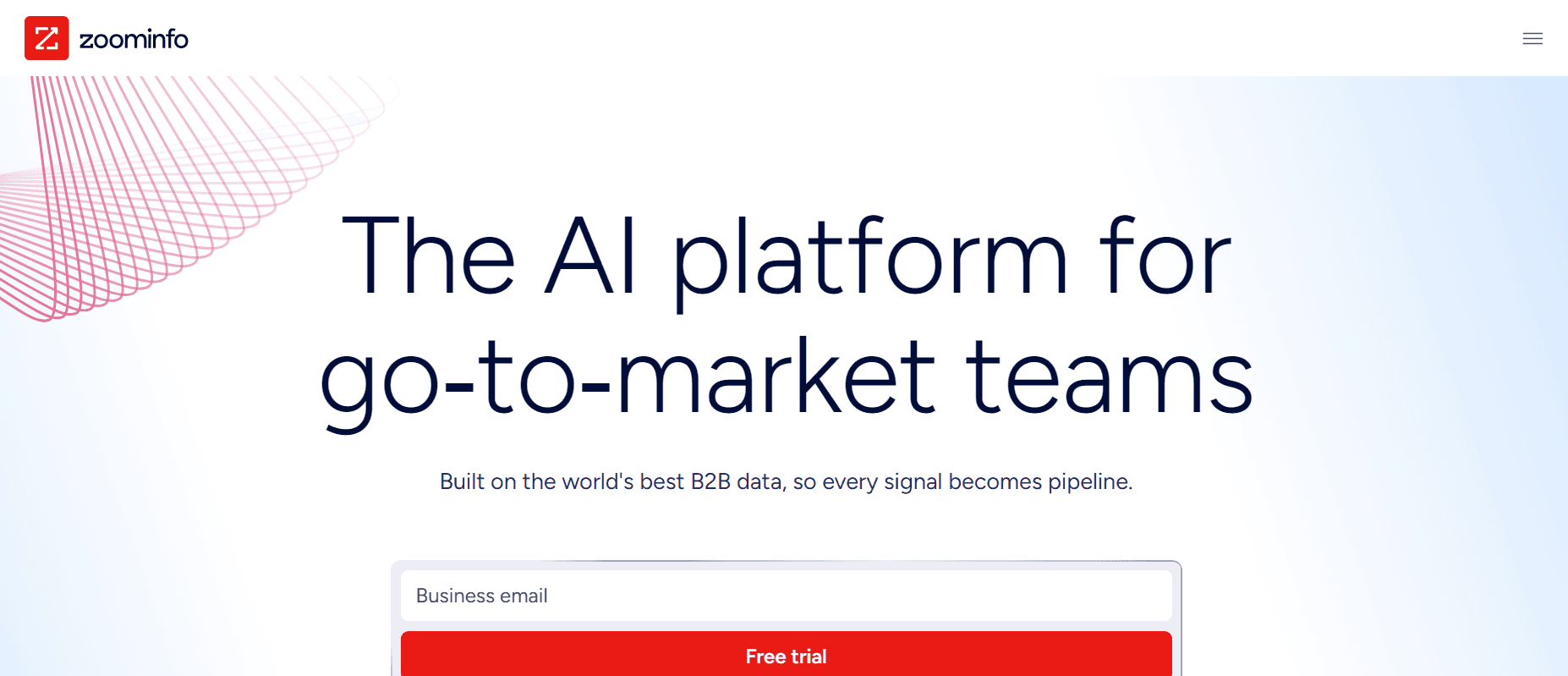
Contact database with 300M+ contacts and ZoomInfo Intent for basic intent signal prioritization. AI-powered contact search and firmographic filtering for list building.
Best for: Teams that need contact data volume and basic intent signals in a single platform with wide integration availability.
3. Apollo
Primary AI lead generation capability:
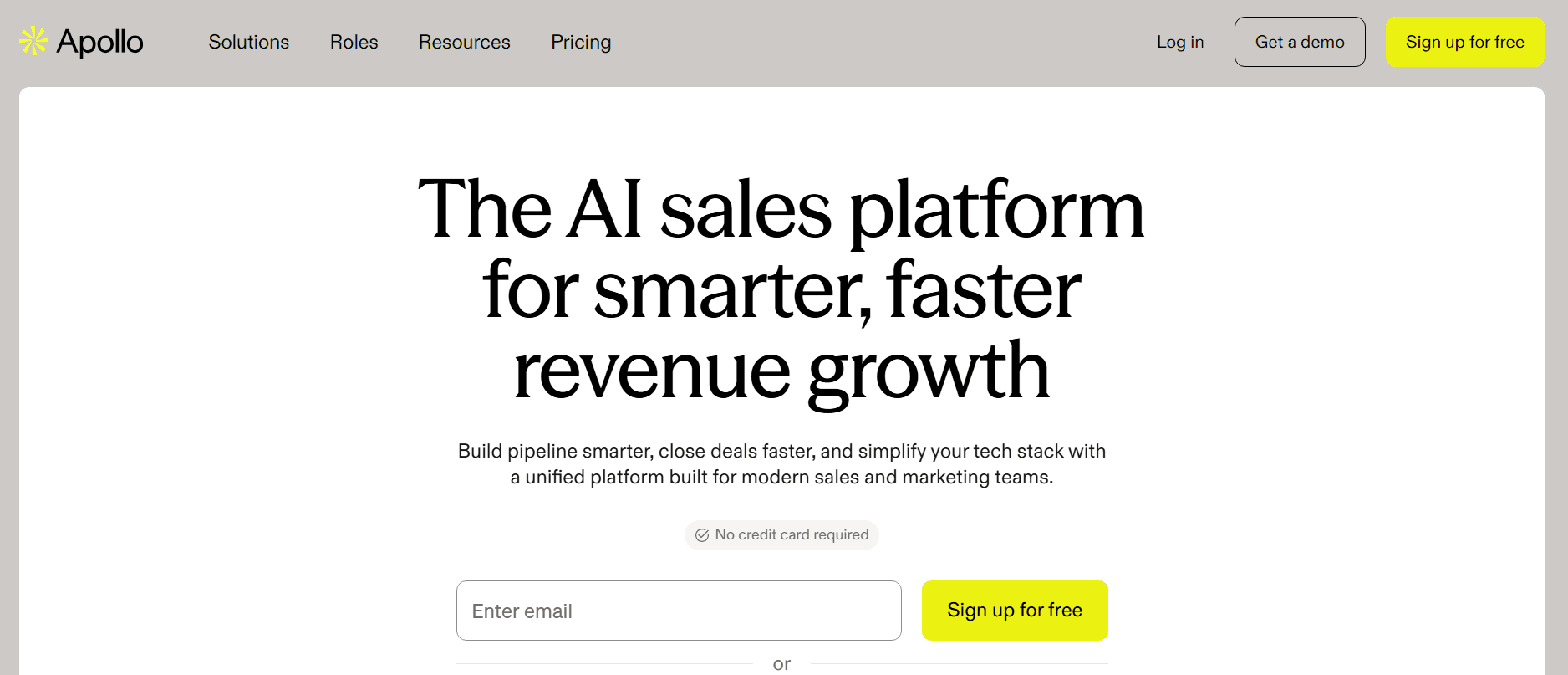
Apollo Combined contact database (275M+ contacts), AI email personalization, AI SDR for autonomous sequence execution, and Apollo Intent for in-platform intent scoring.
Best for: Growth-stage teams that want combined contact data and sequencing with AI personalization at accessible pricing.
4. 6sense

Primary AI lead generation capability:
6Sense Predictive account scoring using AI models that assess buying stage (Unaware, Considering, Deciding) based on multi-source intent aggregation. Account-targeted advertising and coordination with SDR outreach.
Best for: Enterprise teams running coordinated ABM programs where account-targeted advertising and SDR outreach are coordinated against the same target account list.
5. Clay

Primary AI lead generation capability:
Clay, Waterfall enrichment from 100+ data providers with Claygent web research agent for unstructured account intelligence. AI outreach personalization from enriched account and contact data.
Best for: Revenue operations teams that want maximum flexibility in the enrichment workflow and have the technical capacity to build and maintain custom prospecting pipelines.
6. Qualified
Primary AI lead generation capability:
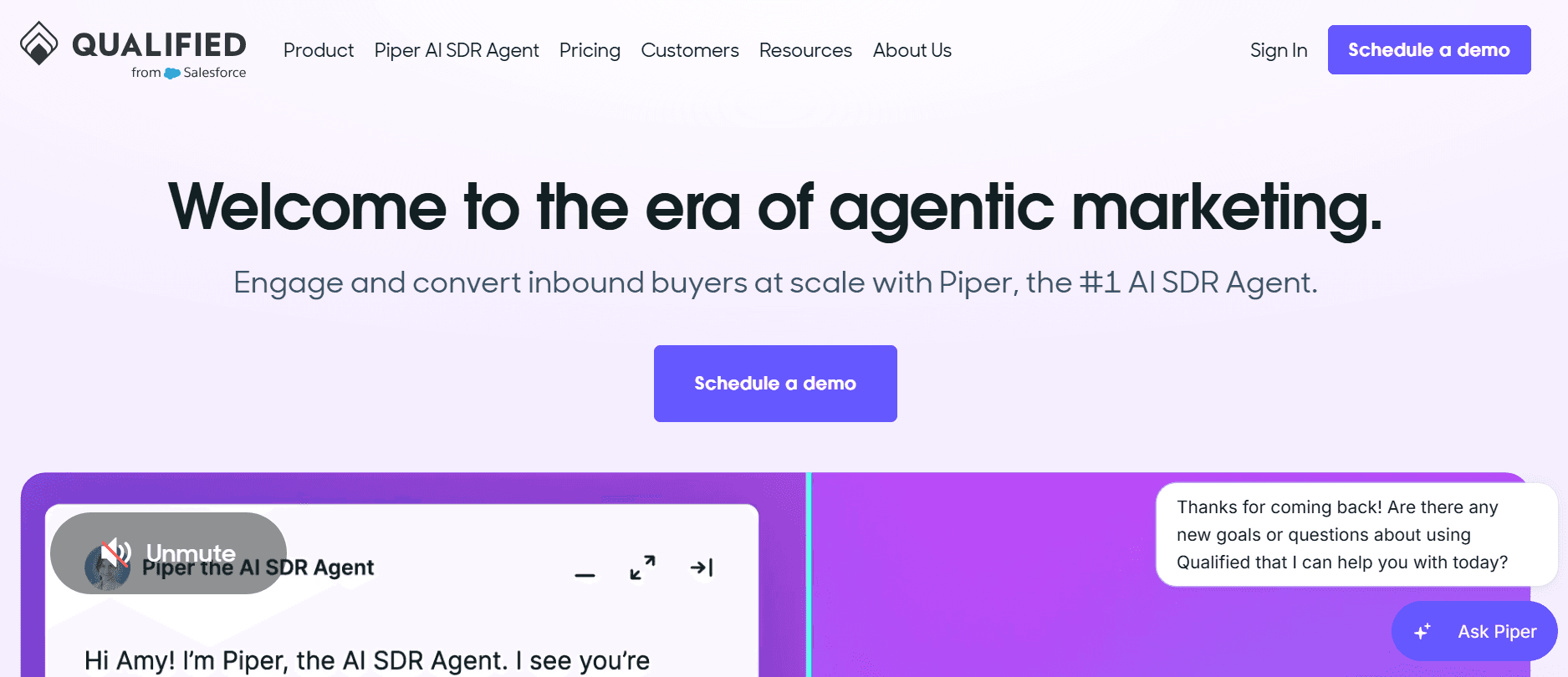
Qualified AI pipeline agent for website visitors. Identifies visitors from target accounts through IP resolution, initiates personalized qualification conversations, routes high-intent visitors to live reps or meeting booking.
Best for: Companies with meaningful website traffic from ICP-fit accounts who want to convert anonymous visits into qualified pipeline through real-time conversational qualification.
7. HubSpot AI
Primary AI lead generation capability:
Native AI lead scoring within HubSpot CRM, AI content generation for inbound lead capture, and AI-powered email personalization for outbound sequences.
Best for: Growth-stage companies already running HubSpot who want AI-enhanced lead generation without adding a separate vendor.
How to build an AI lead generation system that compounds
Layer 1: Contact data foundation
Establish a reliable source of ICP-qualified contact data. ZoomInfo, Apollo, or Cognism for North American enterprise coverage. Cognism for EMEA.
Apollo for growth-stage and mid-market at accessible pricing. This layer answers: who exists in the addressable market and how do I reach them?
Layer 2: Intent signal prioritization
Layer intent data above the contact universe to identify which accounts in the addressable universe are currently in an active buying window.
Bombora for broad category intent. G2 Buyer Intent for software evaluation signals. Rox for continuous multi-source signal monitoring. This layer answers: which accounts should I be working this week?
Layer 3: AI outreach generation
Generate personalized outreach calibrated to the specific intent signals and account context for each prioritized account. Rox for signal-calibrated autonomous outreach generation.
Clay for enrichment-enhanced outreach personalization. This layer answers: what should I say to this account, right now?
Layer 4: Inbound qualification and routing
Ensure that inbound leads generated by content and brand awareness are qualified and routed immediately to the appropriate sales resource. AI lead scoring for prioritization.
Chatbots for real-time website qualification. This layer answers: which inbound leads deserve immediate SDR attention?
Layer 5: Signal feedback loop
Connect the outcomes from each layer (which accounts replied, which meetings booked, which deals closed) back to the prioritization and outreach generation layers to improve the signal quality and the outreach relevance over time.
This layer is what makes the AI lead generation system improve rather than plateau.
Conclusion
Rox’s approach to AI lead generation is signal-first rather than volume-first. The goal is not to sequence the maximum number of ICP contacts: it is to sequence the right contacts at the moment when their buying context makes the outreach most likely to produce a qualified conversation.
The Rox AI lead generation motion covers four of the seven strategies above in a single connected system: intent signal monitoring for account prioritization (Strategy 1), AI-powered outreach personalization calibrated to the specific signal combination (Strategy 2), buying committee mapping for account-based lead generation (Strategy 5), and continuous pipeline monitoring that ensures generated leads advance through the sales process rather than stalling after the first meeting.
For revenue teams building an AI lead generation system that produces compounding improvements over time, Rox’s B2B pipeline generation strategy and account selection for outbound prospecting resources cover the full system design for a connected signal intelligence, outreach generation, and pipeline management motion.
To see how Rox generates leads for enterprise revenue teams, explore the platform’s account intelligence and revenue agent capabilities.
FAQ
What is AI lead generation?
AI lead generation uses artificial intelligence to identify, prioritize, engage, and qualify potential buyers more efficiently than manual prospecting workflows.
The primary AI applications in lead generation are: intent signal monitoring that identifies which ICP-qualified accounts are in an active buying window, AI-powered outreach generation that creates personalized first contact calibrated to the specific buying signals detected.
What are the best AI tools for lead generation?
The best AI lead generation tools depend on the primary bottleneck. For identifying accounts in active buying windows: Rox and 6sense provide the most comprehensive intent-driven account prioritization. For contact data and basic prospecting: ZoomInfo and Apollo provide the broadest database coverage.
How does AI improve outbound lead generation?
AI improves outbound lead generation in three specific ways: signal detection identifies which accounts in the ICP universe are currently in an active buying window, which allows outreach to be concentrated on the 3 to 5% of accounts most likely to respond rather than distributed uniformly across the full list.
What is the difference between AI lead generation and traditional lead generation?
Traditional lead generation builds static contact lists and sequences them at uniform frequency, converting volume into replies through sheer outreach quantity. AI lead generation identifies which specific accounts in the ICP universe are showing active buying signals, generates contextually relevant outreach for those accounts at the signal moment.
How do you measure the ROI of AI lead generation?
Measure AI lead generation ROI against three primary metrics: pipeline generated per SDR per quarter (AI-assisted reps should generate 30 to 50% more qualified pipeline than unassisted reps on the same account universe), outreach reply rate (AI signal-calibrated outreach should produce 2 to 3 times higher reply rates than static template outreach to the same account profiles).
Similar Articles
We build with the best to make sure we exceed the highest standards and deliver real value.