AI Sales Coaching: How Artificial Intelligence Is Making Every Rep Better
Callia Peterson

AI sales coaching uses artificial intelligence to analyze sales conversations, identify the behavioral patterns that predict deal outcomes, and deliver targeted coaching feedback to reps and managers without requiring the manager to listen to every call.
The core problem AI sales coaching solves is scale: a manager with 8 to 12 reps who each make 10 to 20 calls per week cannot review every call, which means most coaching is based on anecdote and impression rather than evidence.
AI changes that by processing every call, extracting the relevant signals, and surfacing the specific moments worth coaching before the manager and rep ever sit down together.
According to Gartner, organizations with structured AI-assisted coaching programs achieve 28% higher quota attainment than those relying on manual coaching alone.
What AI sales coaching is and how it differs from traditional coaching?
Traditional sales coaching is limited by the manager's time and attention. A manager who reviews 3 calls per rep per week is seeing 15 to 25% of each rep's actual call activity.
The calls they do review are often selected based on which calls the rep volunteers for review (typically the better ones), not which calls contain the most coaching-relevant moments.
The coaching feedback that results reflects a biased sample and often misses the specific behavioral patterns that are most predictive of deal outcomes.
AI sales coaching changes the input to coaching. Rather than coaching from a sample of calls selected by the rep or the manager, AI coaching platforms analyze every call, extract structured signals (talk-to-listen ratio, question frequency, competitor mentions, objection handling patterns, next step clarity).
Surface the specific moments that most need coaching attention based on their correlation with deal outcomes in the company's own historical data.
The result is coaching that is: evidence-based (grounded in what actually happened across all calls), specific (referencing exact moments and timestamps rather than general impressions), and consistently applied (every rep receives coaching attention proportional to their actual gaps rather than to their relationship with the manager).
The 4 core capabilities of AI sales coaching platforms
Capability 1: Call recording, transcription, and topic detection
The foundation of AI sales coaching is a complete, accurate record of every sales conversation. AI coaching platforms capture call audio, produce word-accurate transcriptions, and tag the transcript by topic: when the rep was discovering the pain point, when the prospect mentioned a competitor, when pricing was discussed, when the next step was agreed.
Topic detection converts the raw transcript into a structured, searchable record. A manager who wants to review how their reps handle the "we already have a solution" objection can pull every call where that objection appeared across the full team rather than hoping to encounter it in a manual review sample.
The conversational intelligence for revenue guide covers the conversation intelligence platforms (Gong, Chorus, Salesloft Conversations) that provide this foundational recording and transcription layer.
Capability 2: Behavioral metric extraction
Above the transcript layer, AI extracts quantitative behavioral metrics that can be compared across reps, against team benchmarks, and against historical performance:
Talk-to-listen ratio.
The percentage of call time the rep is speaking versus listening. Research consistently shows that calls where the rep talks more than 60% of the time produce lower conversion rates than calls with a 40/60 or 50/50 ratio.
AI extracts this metric from every call automatically, surfacing reps who are consistently above the threshold.
Question rate.
The number of questions asked per minute of call time. Reps who ask fewer than 2 questions per minute in discovery calls are not drilling deeply enough into the buyer's situation.
AI identifies this pattern across a rep's full call history rather than from a single reviewed call.
Filler word frequency.
Filler words (um, uh, like, you know) at high frequency signal lack of confidence or preparation. AI identifies the specific topics where a rep's filler word rate is highest, which reveals the areas where coaching on content knowledge or delivery will have the most impact.
Next step commitment rate.
The percentage of calls that end with a specific, confirmed next step. Calls that end without a confirmed next step produce the stalled deals that inflate pipeline without converting.
AI tracks this metric across every rep's calls and surfaces the pattern to the manager.
Competitor mention handling.
How the rep responds when the buyer mentions a competitor. AI tags every competitor mention and the rep's response, allowing the manager to review competitive handling patterns without listening to every full call.
Capability 3: Deal outcome correlation and coaching priority scoring
The most differentiated AI coaching capability is the correlation between specific call behaviors and deal outcomes.
AI coaching platforms trained on the company's historical deal data learn which behavioral patterns (specific question types, talk ratio ranges, objection handling approaches, next step commitment language) are most strongly correlated with deals that close versus deals that stall or lose.
This correlation produces a coaching priority scoring: the behavioral gaps that are most strongly associated with lost deals get the highest coaching priority, and the coaching agenda for each rep is ranked by expected revenue impact rather than by what the manager happened to notice.
A rep who scores below team average on next step commitment rate (which the AI has correlated with a 23% lower close rate in the company's historical data) gets a coaching intervention on next step commitment before a rep who is below average on filler word frequency (which the AI has correlated with a 3% lower close rate).
Evidence-based priority is what separates AI coaching from impression-based coaching.
Capability 4: Automated coaching scorecards and agendas
AI coaching platforms generate coaching scorecards automatically from each rep's call activity: the competencies evaluated (discovery depth, competitive positioning, next step commitment, talk ratio), the specific evidence from recent calls, and the trend over the prior 30 days.
The manager arrives at the 1:1 with a pre-built coaching agenda rather than having to assemble one from memory or from a spot review of recent calls.
The coaching scorecard serves two functions: it gives the manager the specific evidence base for the coaching conversation (the exact call moment at 12:47 where the rep failed to probe after the buyer mentioned a specific pain).
It gives the rep concrete evidence of what needs to change rather than a general impression of their performance.
AI sales coaching platforms: what they do and how to evaluate them
Rox
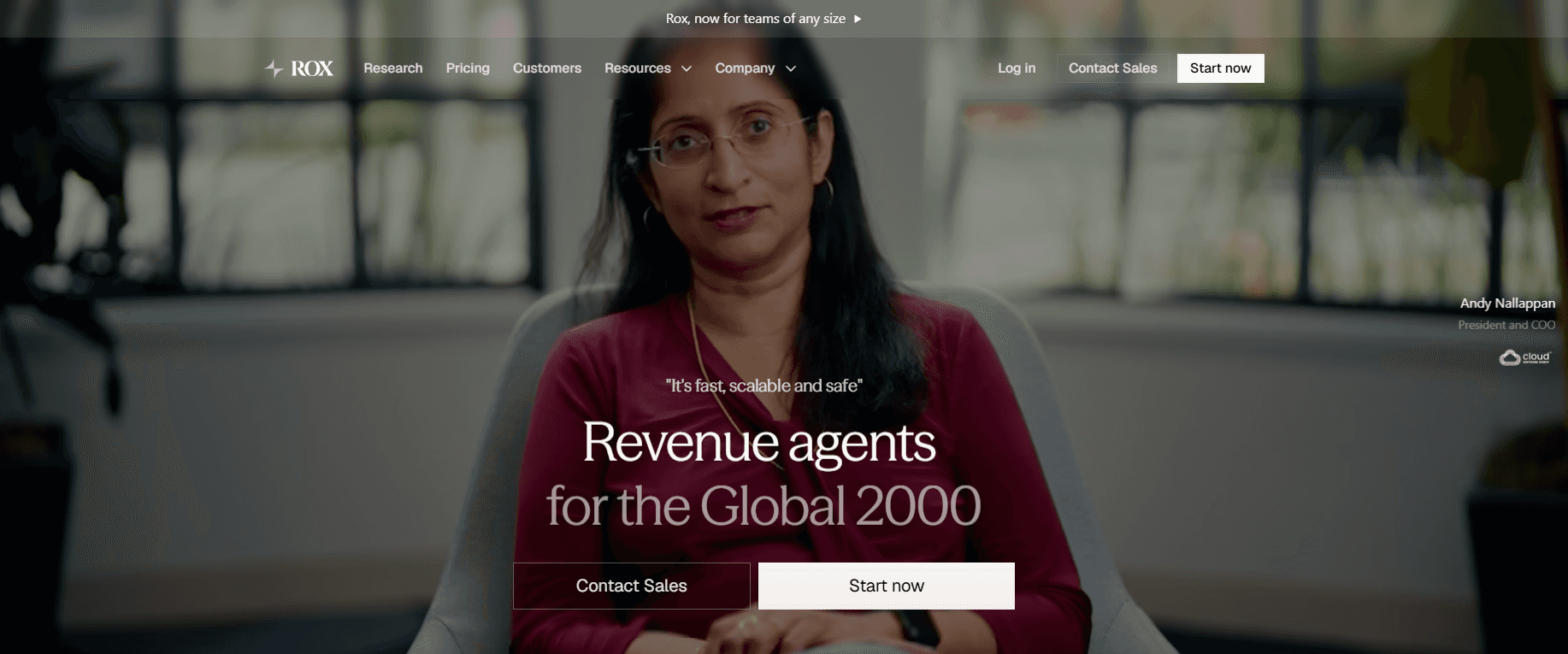
Rox's contribution to AI sales coaching is at the pipeline intelligence layer: surfacing the deal-level behavioral signals that indicate which active deals have coaching-relevant patterns and connecting those signals to the specific coaching dimensions that are driving them.
When a rep's deals consistently show low scores on "next step agreed" and "economic buyer not confirmed" across multiple active opportunities, Rox surfaces this pattern to the manager as a coaching signal alongside the deal risk flag.
The manager doesn't need to run a separate analysis to identify the coaching need: it surfaces automatically as part of the pipeline monitoring that is already running continuously.
This is not a replacement for call recording and transcript coaching: it is an additional signal layer that connects pipeline outcomes to coaching priorities in a way that pure conversation intelligence cannot, because it sees the deal outcomes that the calls are producing, not just the calls themselves.
Gong
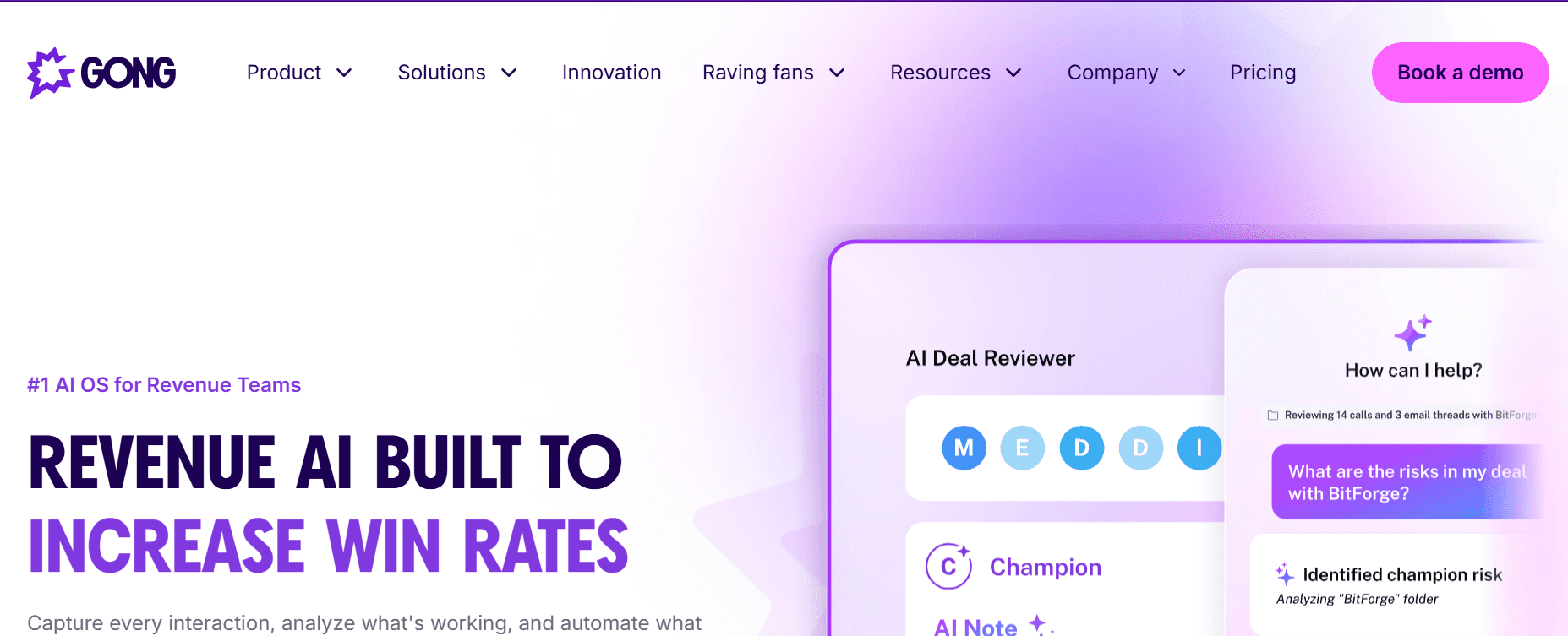
Gong is the market-leading conversation intelligence and AI coaching platform. Its coaching capabilities include: AI-generated call summaries, topic-tagged coaching playlists, coaching scorecards from call data, market intelligence from aggregated call patterns across the team, and rep-level performance analytics.
Gong's coaching differentiation is the scale at which it can extract coaching signals: across a 20-rep sales team making 15 calls each per week, Gong analyzes all 300 calls and produces a ranked coaching agenda for each rep rather than requiring the manager to review a sample.
Best for: Growth-stage and enterprise revenue organizations where call volume is high enough to justify the Gong investment and where coaching at scale is a primary priority.
Chorus (now ZoomInfo Chorus)
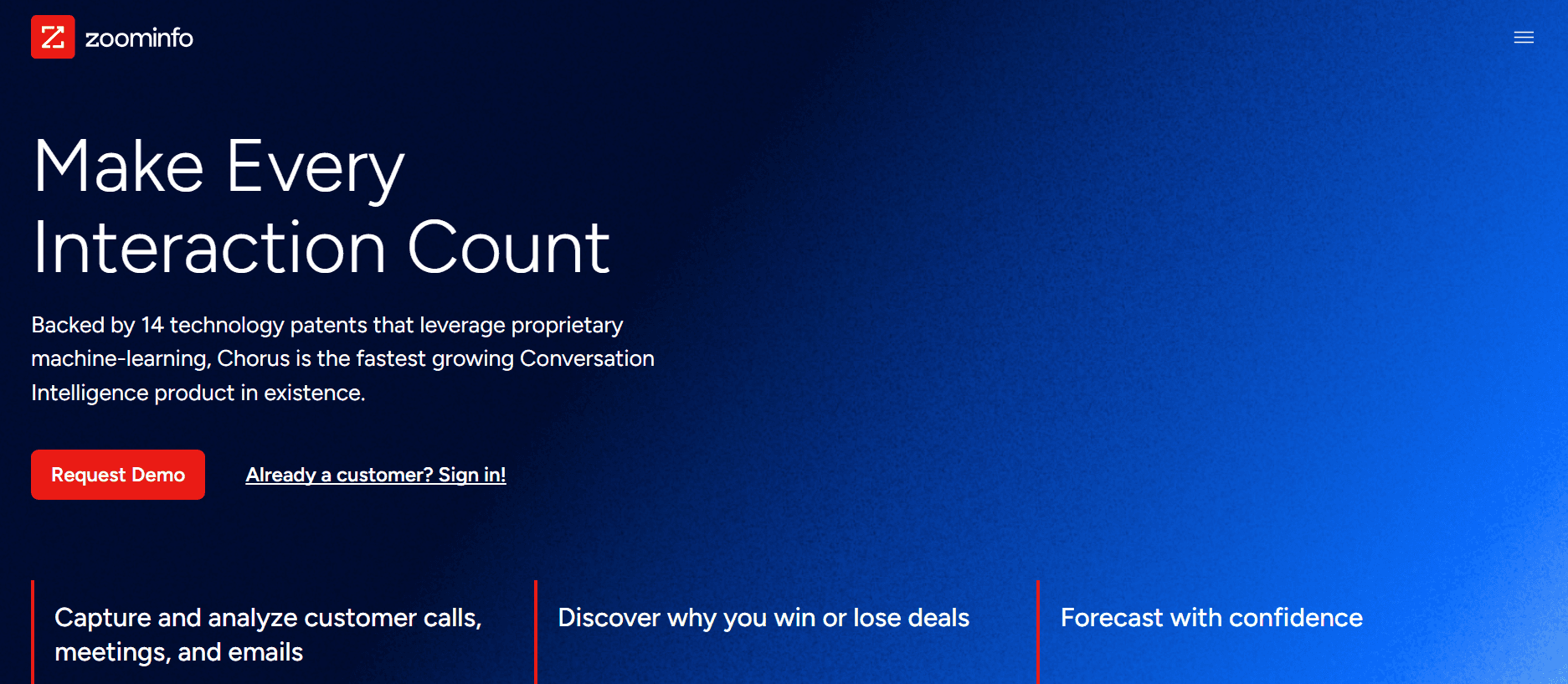
Chorus provides conversation intelligence with detailed call analytics and coaching comment tools that allow managers to annotate specific call moments with coaching feedback that the rep reviews asynchronously.
The annotation workflow makes coaching specific and timestamped: "At 8:32, when the buyer mentioned their evaluation timeline, you could have confirmed whether Q3 is a hard deadline or an aspiration. Listen to how [rep name] handled the same moment in this call."
Best for: Organizations that want coaching to happen through recorded call annotation rather than requiring synchronous review sessions.
Salesloft Conversations
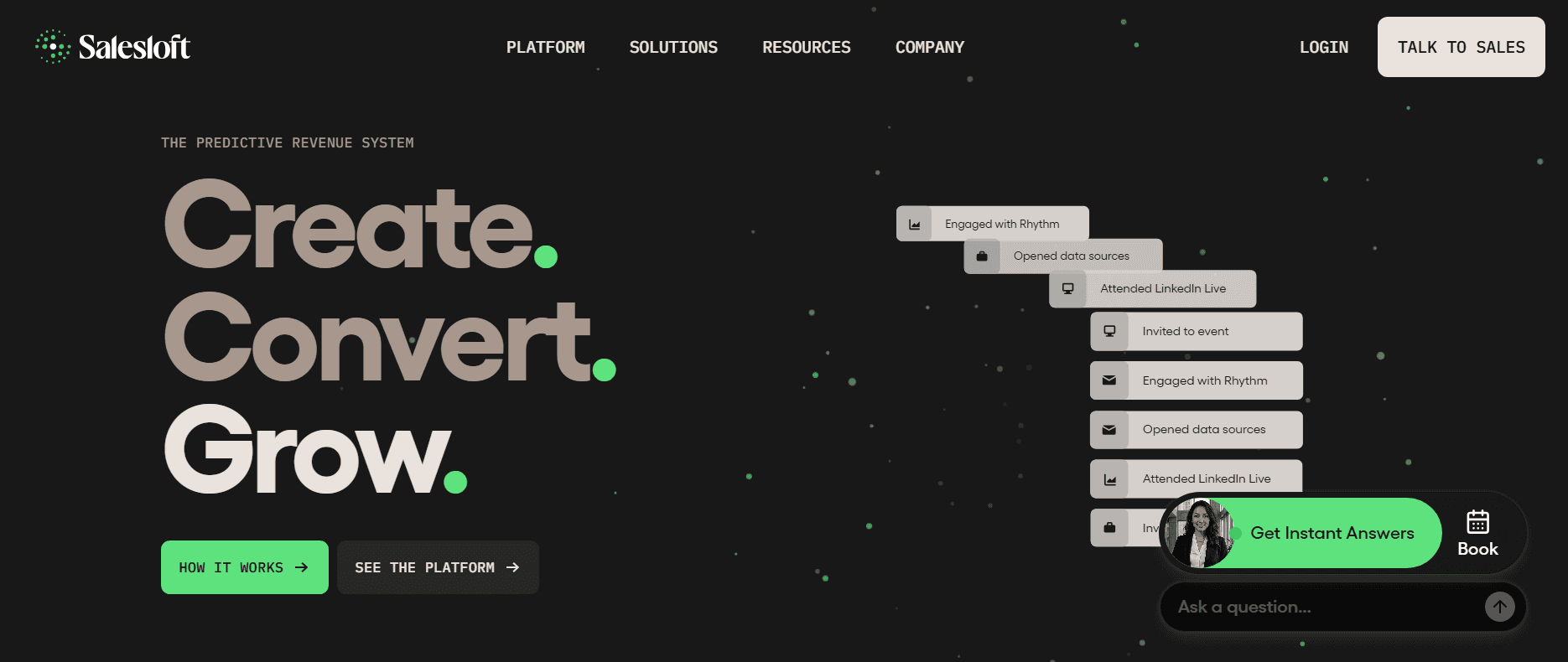
Salesloft Conversations is the call recording and conversation intelligence layer within the Salesloft platform. Less analytically granular than Gong for deep coaching pattern analysis, but sufficient for organizations that want a single platform for sequencing, pipeline management, and call recording rather than a separate conversation intelligence tool.
Best for: Organizations already on Salesloft who want integrated call recording and basic coaching analytics without adding a separate vendor.
Mindtickle
Mindtickle is a sales readiness platform that combines AI coaching with structured enablement: reps complete training modules, submit role-play video recordings for AI and peer assessment, and receive coaching feedback that is connected to the enablement content that addresses their gaps.
This integration of coaching with training content delivery is Mindtickle's primary differentiation from pure conversation intelligence platforms.
Best for: Organizations that want to manage both the skill introduction (training) and the skill reinforcement (coaching) in a single platform, particularly for new rep onboarding where the learning and coaching cycles are closely linked.
Building an AI-assisted sales coaching program
Step 1: Define the behavioral competencies for the role
Before any AI tool can surface coaching-relevant patterns, the organization must define what "good" looks like for the specific role. The behavioral competencies for an enterprise AE are different from those for an SMB SDR. A competency framework for AI coaching purposes specifies:
The 8 to 12 specific behaviors that differentiate top-performing reps from average ones in this specific sales motion
The observable evidence requirement for each competency (what does "good discovery" look like in a call transcript?)
The performance threshold that distinguishes coaching-needed from performing (what talk ratio range is acceptable? What question rate?)
Without a defined competency framework, AI coaching tools surface data but not coaching priorities. The framework is what converts the data into a coaching agenda.
Step 2: Configure the AI coaching platform against the competency framework
Once the competency framework is defined, configure the AI coaching platform to track the metrics and extract the signals relevant to each competency.
Gong and Mindtickle both allow custom coaching scorecard configuration that maps platform metrics to the organization's specific competency framework.
For organizations building a custom coaching analytics layer (using a BI tool connected to call recording data), the competency framework governs the metrics tracked and the benchmarks applied to each.
Step 3: Establish the coaching cadence and protect it from operational displacement
The most consistent finding in sales coaching research is that coaching impact is a function of cadence consistency as much as coaching quality.
Weekly 1:1s that are protected from pipeline discussion, monthly skills sessions focused on a single competency, and quarterly calibrations against the full competency framework produce behavioral change over time.
Sporadic coaching, however high-quality in individual sessions, does not.
AI coaching tools reduce the preparation time required for each session (from 30 minutes of call review to 5 minutes of scorecard review) but do not replace the session itself.
The manager's role shifts from evidence collection to coaching delivery: arriving with a pre-built agenda and focusing the session time on the specific behavioral change the rep needs to make.
The coaching sales strategies guide covers the full coaching program design, including the cadence structure and the behavioral change methodology that produces durable performance improvement.
Step 4: Close the loop from coaching to pipeline outcomes
The ultimate validation of an AI coaching program is whether the coached behaviors produce better deal outcomes.
Closing this loop requires: tracking the coached competency score before and after coaching interventions, connecting the competency score improvement to the deal-level conversion rate for the coached rep, and reporting the correlation to both the rep and the sales leadership team.
When the rep who improved their next step commitment rate from 42% to 68% also shows a 15% improvement in their SQL-to-close rate over the same period, the coaching program has produced a validated commercial impact.
When there is no connection between coaching effort and commercial outcome, the coaching program needs diagnostic review.
How AI is advancing sales coaching in 2026?
Real-time in-call coaching
The most advanced current application of AI in sales coaching is the real-time coaching assistant that provides guidance during the live sales call itself: surfacing the relevant competitive battlecard when a competitor is mentioned, prompting the rep to ask a discovery question when they have been talking for more than two minutes without a buyer response, and alerting when a key qualifying question has not been asked.
This in-call coaching is the AI equivalent of a sales manager whispering in the rep's ear during the call, without the manager needing to be present and without the rep needing to pause the conversation to consult a reference document.
AI-generated role play scenarios
AI coaching platforms are beginning to offer rep-facing practice environments: AI that plays the role of a specific buyer persona (enterprise CTO evaluating a revenue intelligence tool) and challenges the rep with the objections, questions, and dynamics typical of that persona.
The AI evaluates the rep's responses against the coaching scorecard criteria and provides immediate feedback on what worked and what should be different.
This AI role play capability compresses the practice cycle that previously required a manager's time or a peer practice partner's availability.
Predictive rep performance modeling
AI models trained on historical rep performance data identify the behavioral patterns in the first 30 to 60 days of a new rep's calls that most strongly predict their eventual quota attainment.
This predictive modeling allows managers to identify at-risk new hires at Week 6 rather than Month 4, when there is still enough ramp period to intervene meaningfully.
FAQ
What is AI sales coaching?
AI sales coaching uses artificial intelligence to analyze sales conversations, extract behavioral metrics (talk-to-listen ratio, question frequency, competitor mention handling, next step commitment rate), correlate those behaviors with deal outcomes, and deliver targeted coaching feedback to reps and managers without requiring the manager to listen to every call.
How do AI sales coaching platforms work?
AI sales coaching platforms record and transcribe sales calls, tag the transcript by topic (discovery, objection handling, pricing, next steps), extract quantitative behavioral metrics from the tagged transcript, correlate those metrics against deal outcomes in the company's historical data, and generate coaching scorecards that rank coaching priorities by expected revenue impact.
What behavioral metrics does AI measure in sales calls?
The primary behavioral metrics AI sales coaching platforms extract from call recordings are: talk-to-listen ratio (percentage of call time the rep is speaking versus listening), question rate (number of questions per minute of call time), filler word frequency (um, uh, like correlated with rep confidence and preparation on specific topics.
Which AI sales coaching platforms are most effective?
Gong is the market leader for call volume at scale with the deepest behavioral analytics and coaching scorecard capability. Chorus (ZoomInfo) is strong for annotation-based coaching where managers comment on specific call moments.
How does AI sales coaching improve quota attainment?
AI sales coaching improves quota attainment through three mechanisms: it ensures coaching attention is distributed to every rep proportional to their actual behavioral gaps rather than to their relationship with the manager, it prioritizes coaching interventions by their expected revenue impact (behaviors most strongly correlated with deal losses get coaching attention first).
Similar Articles
We build with the best to make sure we exceed the highest standards and deliver real value.