9 Best Customer Success Software Tools for 2026: Features, Pricing & Buying Guide
Leah Clapper

So you’ve finally closed the deal with an exciting new prospect. Now, it’s time to ensure they have a smooth, rewarding experience with your product. That’s where customer success management comes in. Success teams guide users through onboarding, resolve early challenges, and support renewals to maintain long-term engagement.
Specialized customer success software makes this process simple and efficient, and it’s a must for both mid-market and enterprise-level teams. These digital tools can help you prevent churn before it happens and find exciting upsell opportunities to boost customer lifetime value (CLV). Let’s explore the best customer success tools on the market to help you find the right option for your business.
What is customer success software tool?
So what is customer success software? These platforms help teams proactively manage the customer journey from onboarding to renewals. They work to ensure a smooth customer experience by addressing needs before they escalate into problems. They also reduce manual work for customer success managers by automating key workflows.
What are the different types of customer success software?
Not every customer success platform serves the same purpose. Some focus on customer health and renewals, while others specialize in onboarding, product adoption, or customer support. Understanding the different categories can help you choose a solution that fits your business goals.
Customer success management platforms
These all-in-one platforms help customer success teams manage the entire post-sale customer journey. They typically include customer health scoring, lifecycle management, renewal tracking, playbooks, and automation. Examples include Gainsight, ChurnZero, Totango, and Planhat.
Product adoption and onboarding platforms
These tools help new customers learn your product through interactive walkthroughs, onboarding checklists, and in-app guidance. They also track feature adoption and user engagement to improve activation rates. Userpilot is a popular example in this category.
Customer support platforms
Customer support software focuses on resolving customer issues after they arise. While they aren’t dedicated customer success platforms, many include features like knowledge bases, live chat, AI agents, and customer satisfaction surveys that contribute to long-term customer retention. Zendesk Suite and HubSpot Service Hub fall into this category.
Revenue operations and customer intelligence platforms
These platforms connect customer success with sales and revenue operations. They help teams identify expansion opportunities, automate workflows, and gain deeper visibility into customer accounts using AI-powered insights.
Top 9 customer success tools for 2026
Unlike CRM systems, customer success software focuses on the post-sale experience. It also differs from customer support software, which focuses on responding to customers’ problems after they arise.
Customer success automation tools have several key benefits for your business, including:
Preventing customer churn, improving new feature adoption rates, streamlining renewals, improving customer visibility, and finding strategic growth opportunities
Here are some of the top customer success tools currently on the market to help improve your onboarding and customer retention strategies. Pricing for most of these tools is only available upon request and depends on the specific features you need.
Gainsight
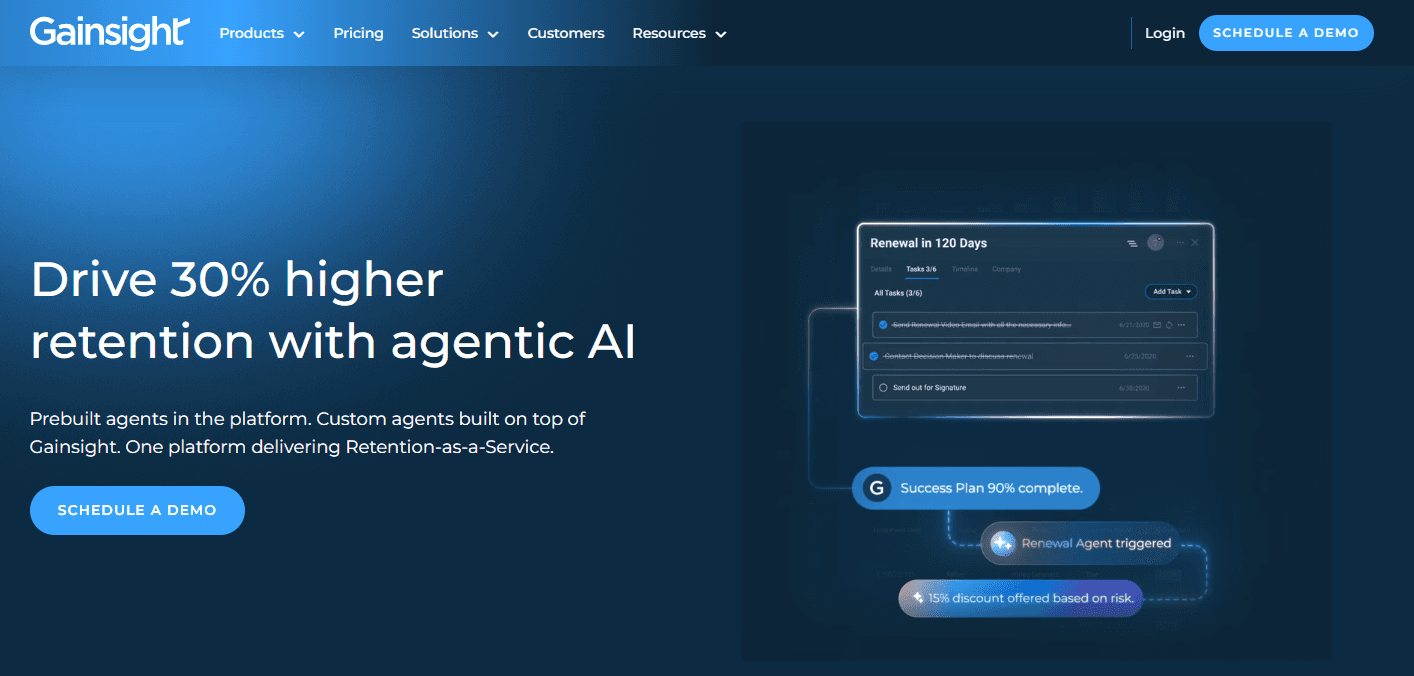
Gainsight is a customer success platform that uses agentic AI to onboard customers and improve retention rates. Detailed analytics help you spot customers at risk of churning and implement solutions to keep them engaged.
Key features:
Customer health scoring
Journey orchestration and playbooks
AI-powered churn prediction
Customer lifecycle automation
Revenue and renewal management
Advanced analytics and reporting
Pros and cons:
Pros | Cons |
|---|---|
Enterprise-grade customization | Steep learning curve |
Powerful analytics and automation | Expensive for small and mid-sized businesses |
Price:
Pros | Cons |
|---|---|
Enterprise-grade customization | Steep learning curve |
Powerful analytics and automation | Expensive for small and mid-sized businesses |
ChurnZero
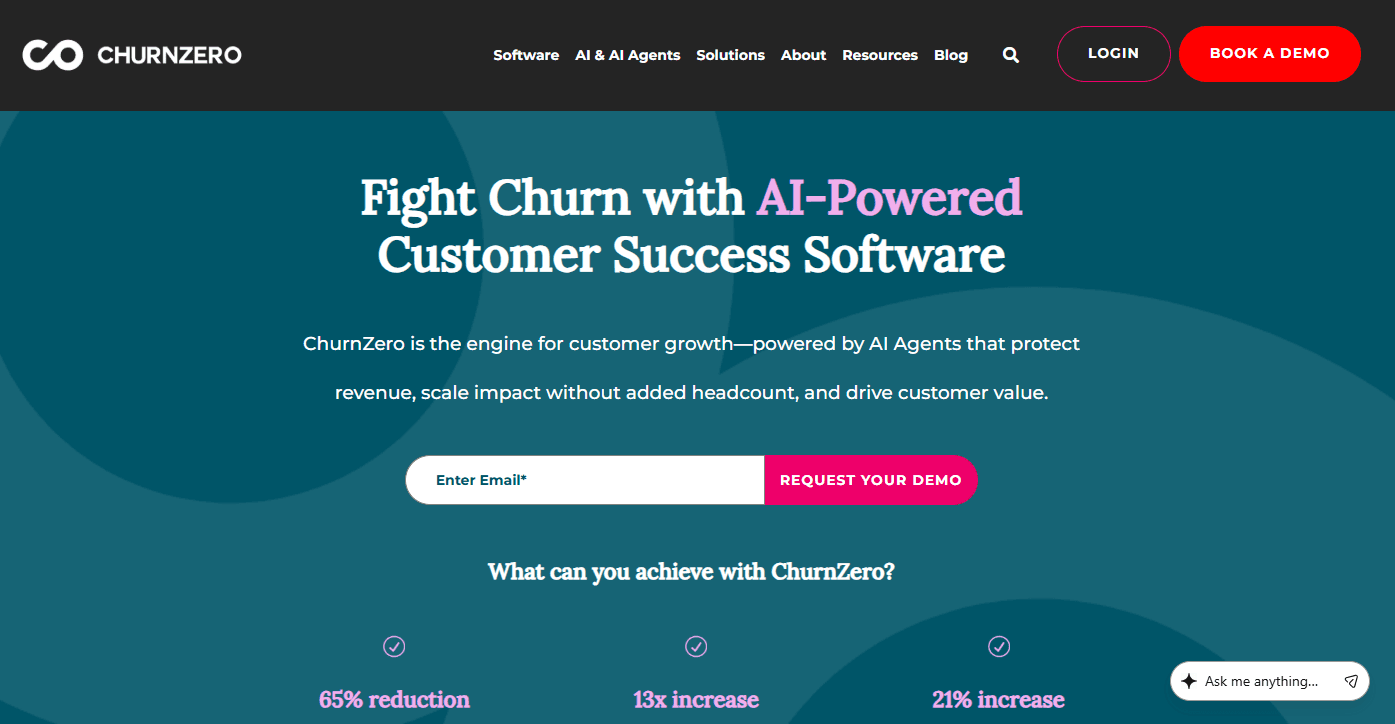
ChurnZero is designed for enterprise brands. It helps success managers monitor customer engagement and forecast renewals.
Key features:
Real-time customer health monitoring
Automated customer journeys
In-app messaging and alerts
Renewal and churn forecasting
Task automation
Customer segmentation
Pros and cons:
Pros | Cons |
|---|---|
Easy-to-use automation tools | No transparent pricing |
Strong customer engagement features | Limited customization compared to enterprise platforms |
Price
Plan | Pricing |
|---|---|
Standard | Custom pricing (Typically starts around $2,000/month; quote-based) |
Totango
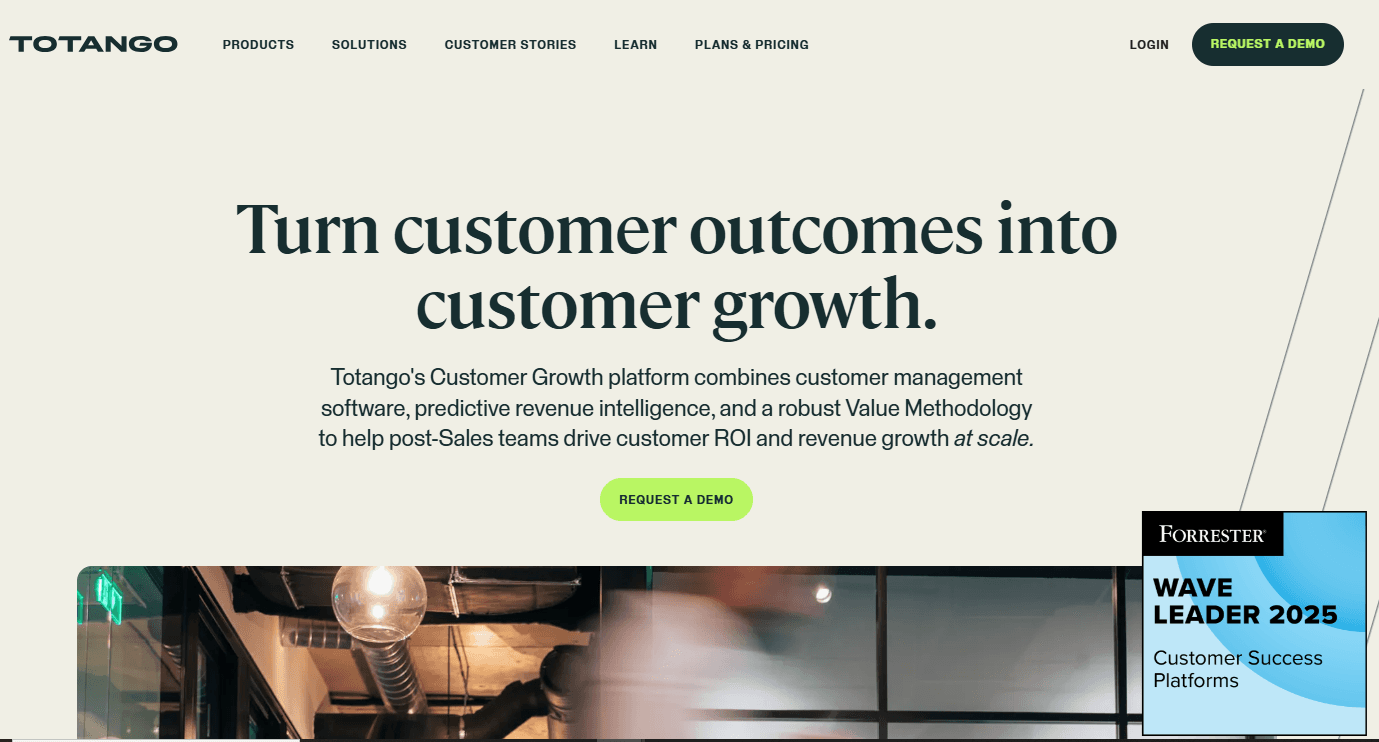
Totango helps customer success managers, revenue operations teams, and sales teams track and improve customer relationships. It focuses on detailed reporting to identify customer trends and churn risks.
Key features:
Customer health scoring
Success playbooks
Customer journey mapping
Workflow automation
Segmentation and reporting
Multi-product customer management
Pros and cons:
Pros | Cons |
|---|---|
Flexible and scalable platform | Initial setup can take time |
Good value for mid-market businesses | Some advanced features require higher-tier plans |
Price
Plan | Pricing |
|---|---|
Standard | Custom pricing (Contact sales) |
Planhat

Planhat uses AI tools for customer success to help you onboard new clients, track relationship health, and execute churn prevention playbooks. It integrates with your existing tech stack to create a centralized management hub.
Key features:
Customer health dashboards
Revenue forecasting
Workflow automation
Customer collaboration portal
Powerful data management
Custom reporting and integrations
Pros and cons:
Pros | Cons |
|---|---|
Highly flexible data model | Can be complex for new users |
Excellent reporting and collaboration features | Pricing isn’t publicly available |
Price
Plan | Pricing |
|---|---|
Standard | Custom pricing (Contact sales) |
HubSpot Service Hub
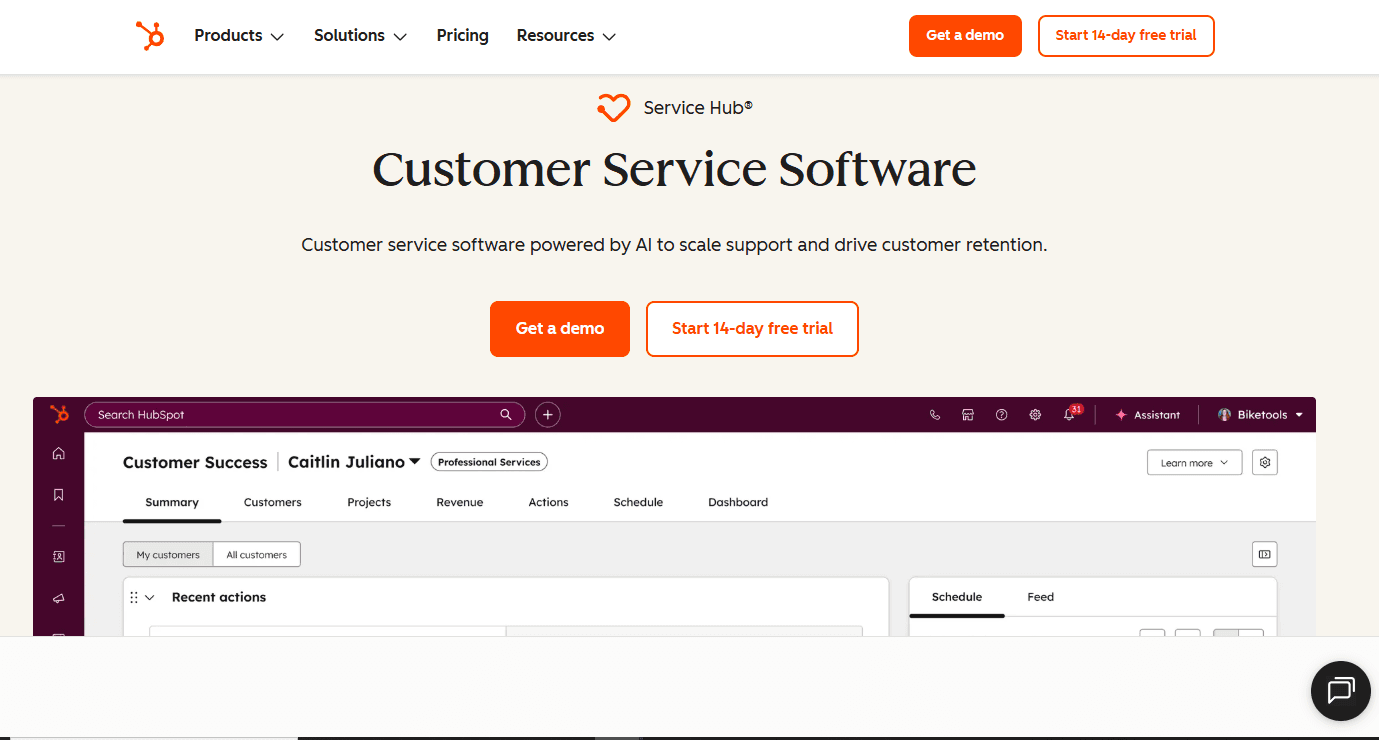
Service Hub is part of the broader HubSpot ecosystem. It combines customer success and support features in one convenient dashboard, helping you stay on top of your relationships.
If you’re already using HubSpot for your CRM, sales or marketing, this could be a good solution that integrates nicely with your existing operations. Pricing starts at $90 per month per seat for the Professional plan and $150 per month per seat for the Enterprise plan.
Key features:
Omnichannel customer support
Knowledge base creation
Customer feedback surveys (NPS, CSAT, CES)
Live chat and chatbot automation
Customer success workspace and reporting
Pros and cons:
Pros | Cons |
|---|---|
Seamlessly integrates with HubSpot CRM | Advanced features require higher-tier plans |
User-friendly interface with robust automation | Can become expensive as your team grows |
Price
Pros | Cons |
|---|---|
Seamlessly integrates with HubSpot CRM | Advanced features require higher-tier plans |
User-friendly interface with robust automation | Can become expensive as your team grows |
ClientSuccess
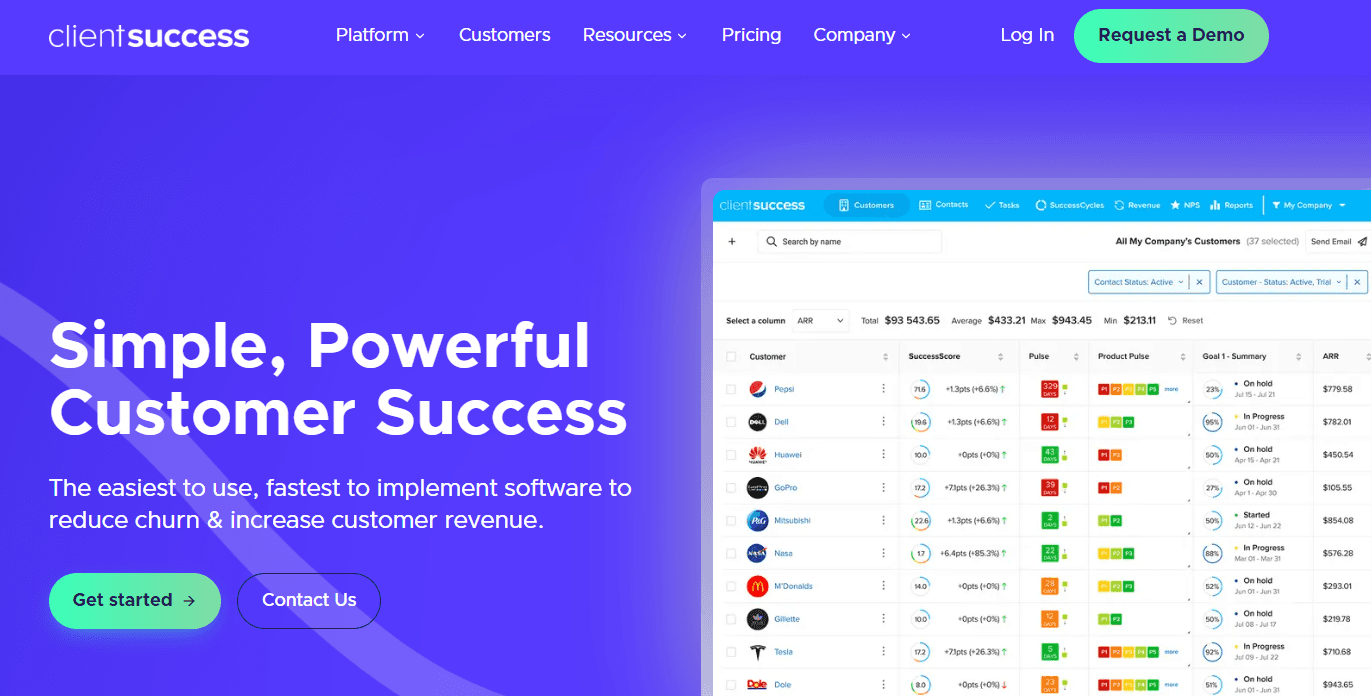
ClientSuccess is built for fast implementation and ease of use. It tracks the customer journey in centralized dashboards for easy reference and manages renewals.
Key features:
Customer health scoring
Success playbooks
Renewal and churn tracking
Customer lifecycle management
Executive Business Reviews (EBRs)
Revenue forecasting and reporting
Pros and cons:
Pros | Cons |
|---|---|
Easy to implement and use | Fewer third-party integrations than competitors |
Strong renewal and account management features | Pricing is not publicly available |
Price
Plan | Pricing |
|---|---|
Standard | Custom pricing (Contact sales) |
Zendesk Suite
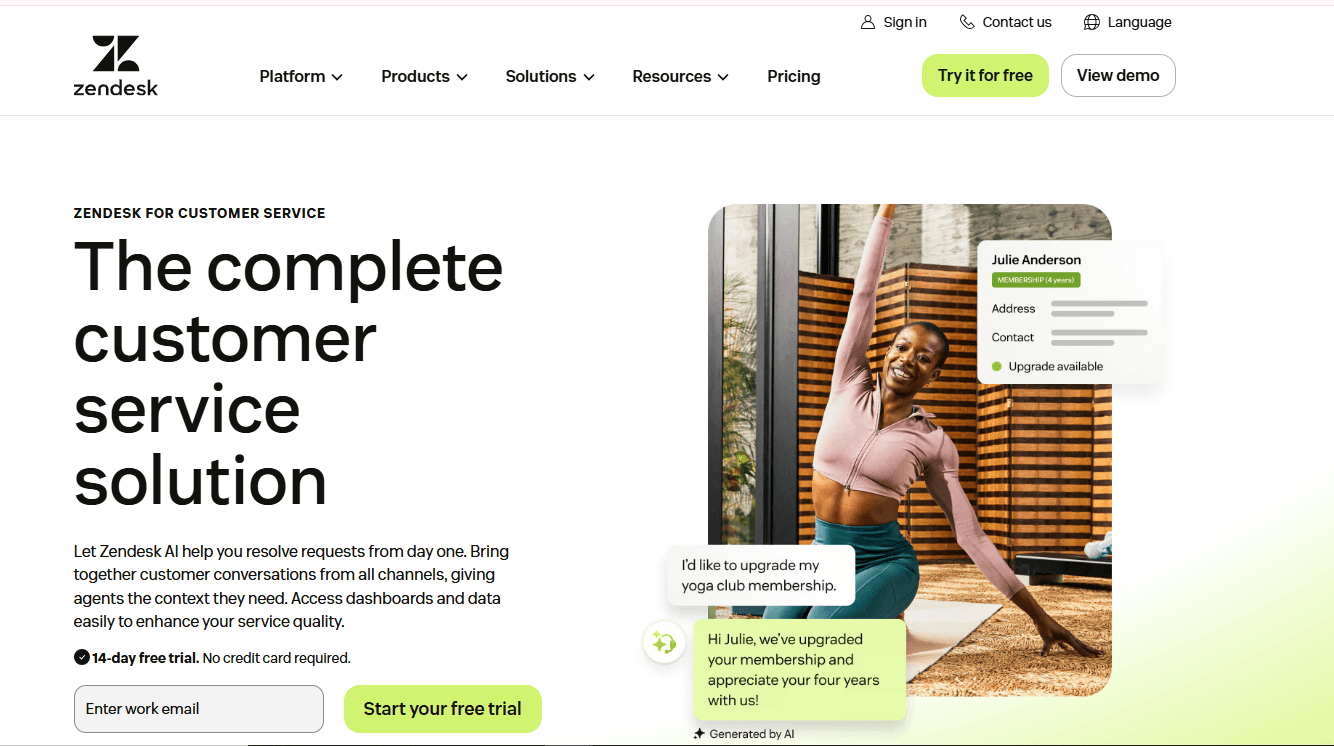
Zendesk is a customer service platform that also has some customer success features. It’s ideal for fast-growing businesses that need to stay on top of customer queries but don’t need detailed customer analytics or forecasting.
Zendesk’s AI agents handle basic customer requests, giving support teams more time to focus on complex problems.
Key features:
Omnichannel customer support
AI-powered ticket routing
Help center and knowledge base
Live chat and messaging
Workflow automation
Analytics and reporting dashboards
Pros and cons:
Pros | Cons |
|---|---|
Comprehensive customer support capabilities | Advanced automation requires premium plans |
Highly scalable for businesses of all sizes | Customization can be complex |
Price
Plan | Pricing |
|---|---|
Suite Team | From $55/agent/month |
Suite Professional | From $115/agent/month |
Suite Enterprise | Custom pricing |
Custify
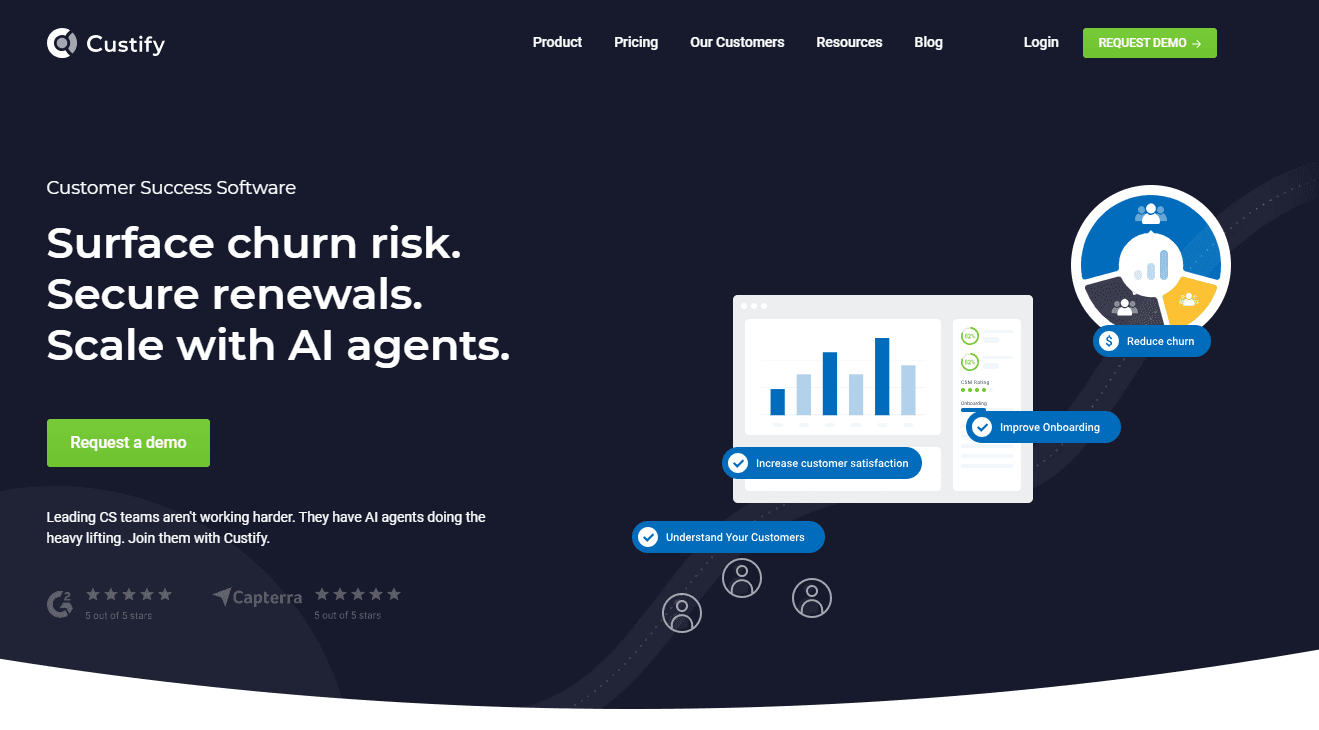
Custify helps brands track customer engagement and monitor their progress through the customer lifecycle. Feedback surveys and analytics help you measure your net promoter score and other key metrics.
Key features:
Customer health scoring
Automated success workflows
Churn prediction and alerts
Customer segmentation
Lifecycle management
Revenue and renewal tracking
Pros and cons:
Pros | Cons |
|---|---|
Intuitive interface with fast onboarding | Limited native integrations |
Excellent health scoring and automation | No free plan or transparent entry-level pricing |
Price
Plan | Pricing |
|---|---|
Standard | Custom pricing (Contact sales) |
Userpilot
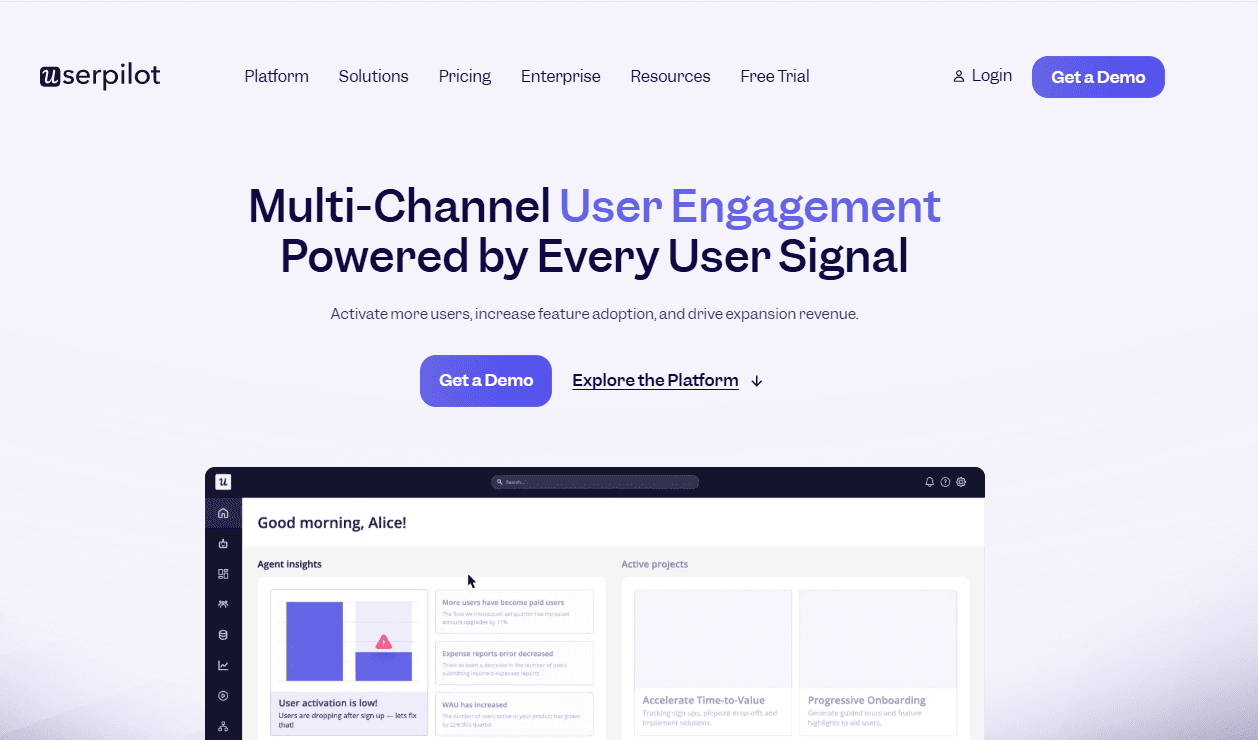
Userpilot helps you better understand customer engagement patterns and visualize how customers use your product. With this information, you can identify what’s causing churn and improve your customer satisfaction rates. The platform offers a free trial, with a starter plan costing $299 per month.
Key features:
In-app onboarding experiences
Product tours and walkthroughs
Feature adoption tracking
User segmentation
In-app surveys and feedback
Product analytics
Pros and cons:
Pros | Cons |
|---|---|
No-code onboarding and feature adoption tools | Limited customer success management features |
Powerful user segmentation and analytics | Advanced capabilities are available only in higher-tier plans |
Price
Plan | Pricing |
|---|---|
Starter | From $299/month |
Growth | Custom pricing |
Enterprise | Custom pricing |
What are the benefits of customer success management tools?
Customer success software helps businesses build stronger customer relationships while reducing the manual work required to manage accounts. Instead of reacting to problems, teams can proactively improve customer outcomes throughout the customer lifecycle.
Some of the biggest benefits include:
Lower customer churn: Identify at-risk accounts early through customer health scores, usage analytics, and automated alerts.
Faster onboarding: Standardize onboarding with automated workflows, playbooks, and guided product experiences.
Higher product adoption: Track feature usage and encourage customers to adopt valuable functionality through in-app messaging and personalized guidance.
Improved renewal rates: Monitor contract milestones, automate renewal workflows, and prioritize high-risk accounts before renewal dates.
More upsell opportunities: Analyze customer behavior to identify expansion opportunities and increase customer lifetime value (CLV).
Greater team efficiency: Automate repetitive tasks such as customer check-ins, health monitoring, reporting, and follow-up communications.
Better visibility into customer health: Consolidate customer data into a single dashboard, making it easier to prioritize accounts and measure success.
What are the key features of CSM software?
The best customer success platforms combine customer insights, automation, and analytics to help teams deliver a consistent customer experience. While features vary between providers, most leading solutions include:
Customer health scoring
Track customer engagement, product usage, support activity, and account data to identify healthy accounts and customers at risk of churning.
Workflow automation
Automate repetitive tasks such as onboarding sequences, follow-up emails, customer check-ins, and renewal reminders to improve team productivity.
Customer journey mapping
Visualize every stage of the customer lifecycle, from onboarding to expansion, and create playbooks for each milestone.
Customer segmentation
Group customers based on factors like industry, account size, product usage, or lifecycle stage to deliver more personalized engagement.
Analytics and reporting
Measure key metrics such as customer retention, Net Promoter Score (NPS), customer health, feature adoption, renewal rates, and revenue growth through customizable dashboards.
CRM and software integrations
Connect your customer success platform with CRMs, support tools, product analytics, communication platforms, and marketing software to centralize customer data.
AI-powered insights
Many modern platforms use AI to predict churn risk, recommend next-best actions, surface upsell opportunities, and automate customer communications.
How to select the right customer success tool?
With such a large customer success platform market, SaaS companies need to compare options to find the right program for their business. Here’s a step-by-step guide to building your customer success tech stack.
Identify your customer success goals: First, decide what you want to accomplish with this software. For example, you might want to lower churn rates, improve your onboarding process, or increase your customer segmentation strategy.
Evaluate feature fit:
When assessing CSM tools, look for specific features that align with your goals. For example, if growing your revenue is a priority, choose a platform that identifies upsell opportunities.
Check integration capabilities:
Your customer success tool should integrate with your CRM and other systems. This ensures centralized data and avoids manual work.
Assess scalability:
Look for a customer success tool that aligns with your projected growth. Ideally, it should scale with you as your brand grows and you onboard a large volume of customers.
Consider ease of adoption:
Ask about onboarding timelines and available support. A long training process can delay customer success outcomes.
Test through a pilot:
Before committing to a long-term contract, consider launching a short-term pilot program to evaluate performance. Be sure to track key metrics like churn, average contract value, and CSAT scores for a tangible comparison.
Give your customer success strategy a boost with Rox
The right customer success tools help you create long-lasting relationships. However, every CSM needs operational support to drive true revenue growth.
Rox is a revenue operations platform that uses agentic AI to automate manual tasks and manage your pipeline. With Rox handling research, outreach, and follow-up, your team can consistently deliver customer success outcomes at scale.
Try Rox today to automate research and accelerate wins.
Conclusion:
Customer success software has become an essential investment for businesses that want to build long-term customer relationships and drive sustainable growth. From streamlining onboarding and improving product adoption to reducing churn and increasing renewals, these platforms help customer success teams deliver a more proactive and personalized experience throughout the customer lifecycle.
The best customer success tool depends on your business size, goals, and existing technology stack. While enterprise organizations may benefit from advanced platforms like Gainsight or Totango, smaller businesses may find solutions like HubSpot Service Hub, ClientSuccess, or Userpilot better suited to their needs.
If you’re looking to take your customer success strategy even further, pairing a customer success platform with a revenue operations solution like Rox can help your team automate repetitive tasks, uncover growth opportunities, and strengthen customer relationships at scale.
FAQ
What tool helps you the most in your customer success role?
The best tool depends on your needs. Platforms like Gainsight, HubSpot Service Hub, and ChurnZero help automate onboarding, monitor customer health, reduce churn, and improve renewals.
What are some good customer success platforms for early-stage startups?
Early-stage startups should consider HubSpot Service Hub, ClientSuccess, or Userpilot. These platforms offer user-friendly onboarding, automation, and customer insights while remaining scalable as the business grows.
Can small teams benefit from enterprise-level customer success software?
With advanced features and complex dashboards, enterprise-level CSM tools may be overwhelming for small customer success teams. Instead, look for a more flexible customer success platform built for small-to-midsized businesses.
Which customer success tools are best for SaaS startups vs. enterprise companies?
Tools like HubSpot and ClientSuccess are accessible options for startups, while options like Gainsight, Planhat, and Totango are more enterprise-focused. However, the right tool for you will depend on your brand’s unique business model.
What types of businesses benefit from customer success software?
Customer success software is valuable for any business that relies on recurring customer relationships. It’s particularly beneficial for SaaS companies, subscription businesses, B2B software providers, managed service providers (MSPs), financial services, healthcare technology companies, and enterprise software vendors.
Small and mid-sized businesses can benefit from user-friendly platforms that simplify onboarding and account management, while enterprise organizations often require advanced automation, forecasting, and customer analytics to manage large customer portfolios.
What’s the difference between CRM and customer success software?
A CRM primarily helps sales and marketing teams manage leads, opportunities, and customer information before and during the sales process. Its focus is on acquiring new customers and tracking revenue opportunities.
How can CS software improve customer onboarding and adoption?
Customer success onboarding software automates the onboarding process to provide a fast and consistent experience for every client. It also improves product adoption with detailed knowledge bases and engagement campaigns.
Similar Articles
We build with the best to make sure we exceed the highest standards and deliver real value.