Revenue Intelligence Software Powered by AI for Real-Time Insights
Leah Clapper

Revenue intelligence software is experiencing explosive growth, projected to surge from $3,828.4 million in 2024 to $10,702.2 million by 2033. Sales teams using AI-powered analytics see up to 21% higher quota attainment rates and 15% improvement in forecast accuracy.
This explains why revenue intelligence platforms are becoming essential for high-performing teams. These platforms collect and analyze sales data to uncover insights about performance and hidden opportunities.
In this piece, we’ll explore what revenue intelligence software is, how AI powers immediate insights, key features to look for, and how to select the best revenue intelligence software for your organization.
What Is Revenue Intelligence Software?
Most sales teams drown in data yet remain blind to what matters. Revenue intelligence software solves this paradox. It automatically ingests all data across the sales cycle, analyzes it with AI, and generates live alerts with useful recommendations. Traditional tools simply store or report information. Revenue intelligence acts as a co-pilot for your revenue operations.
Revenue intelligence platforms automatically capture 100% of commercial interactions without manual entry. This has CRM data, emails, calls, meetings, and customer success interactions. The software analyzes call content to identify objections raised, competitors mentioned, and buying signals.
How Revenue Intelligence Is Different from CRM and Sales Analytics
The difference between revenue intelligence and CRM comes down to purpose. A CRM is a system of record that stores deal data, contact information, and activity history. Revenue intelligence is a system of action built on top of the CRM.
Revenue intelligence captures data the CRM misses because reps didn’t enter it. It analyzes patterns the CRM cannot detect because it lacks AI capabilities. It automates workflows the CRM doesn’t execute because it wasn’t designed for that purpose.
Sales analytics focuses on the sales process and provides insights to boost productivity and optimize the sales funnel. Revenue intelligence takes a macro view across the entire customer trip. It connects dots between marketing teams, sales operations, and customer success.
The Move to AI-Powered Revenue Intelligence
The first generation of revenue intelligence from 2018 to 2023 focused on analysis: recording calls, surfacing insights, and displaying dashboards.
The current generation focuses on execution: writing CRM updates, drafting follow-ups, tracking next steps, and flagging risks. This move matters because insights without action produce no ROI.
Businesses that have adopted AI applications have seen a 19% increase in profits. AI’s knowing how to predict future trends based on past and current data represents its biggest contribution to revenue intelligence.
Revenue intelligence saves revenue operations teams an average of 30 hours per week on manual work and helps achieve over 95% forecast accuracy. Organizations adopting AI-powered sales forecasting have seen an average improvement in forecast accuracy of 10-20%.
How AI Powers Revenue Intelligence for Real-Time Insights
AI technologies are the foundations of modern revenue intelligence platforms. They transform raw data into insights that improve measurable performance.
These systems work behind the scenes and analyze conversations, score deals, and identify pipeline risks with precision impossible through manual methods.
Natural Language Processing for Conversation Analysis
Natural Language Processing enables revenue intelligence software to extract valuable insights from every sales conversation. This technology processes human language at scale and changes how teams understand customer interactions.
NLP performs several critical functions at once. Immediate transcription converts spoken language into text while detecting emotional cues that help sales representatives adapt their approach. Sentiment analysis identifies subtle emotional signals in customer communications and reveals how prospects feel about offerings.
NLP powers broader sales intelligence by uncovering patterns in any customer interaction. Conversation intelligence platforms analyze call recordings to extract topics discussed, questions asked, objections raised, competitor mentions, and sentiment shifts. This replaces subjective call debriefs with objective, analytical coaching.
Predictive Analytics and Deal Scoring
Predictive modeling assigns probability scores to deals based on hundreds of variables at once. Best-in-class models achieve 80-85% accuracy in identifying deals that will close within the quarter.
This approach evaluates communication frequency, stakeholder involvement, competitive positioning, and external economic indicators. Manual scoring based on intuition cannot match this.
Organizations that implement predictive deal scoring see remarkable results. Companies using AI-powered forecasting experience average improvements in forecast accuracy of 10-20%.
Automated Activity Capture and Data Integration
Revenue intelligence platforms collect engagement data and eliminate the manual entry burden that plagues traditional CRM systems. Over 50% of salespeople admit forgetting to enter lead and customer data into their CRM.
Automated capture ensures 100% of interactions are recorded without relying on rep memory.
Immediate Pipeline Monitoring and Alerts
AI-powered risk detection provides early warning of potential deal failures. These systems analyze hundreds of variables and identify at-risk deals 60+ days before traditional indicators would surface problems.
Organizations using systematic risk prevention strategies report 67% fewer late-stage deal failures and 31% shorter sales cycles compared to those relying on reactive problem-solving.
What are the key features and capabilities of revenue intelligence software?
Modern revenue intelligence software deliver capabilities that directly affect forecast accuracy, pipeline health, and revenue growth. These features work together to create a unified system for managing the entire revenue lifecycle.
AI-Powered Forecasting Accuracy
Forecast accuracy remains a critical challenge. 67% of sales operations leaders agree that creating accurate sales forecasts is harder now than three years ago. Revenue intelligence platforms address this challenge.
They combine historical deal data with AI-powered insights to achieve 98% forecast accuracy by week two of the quarter. These systems perform scenario modeling and allow teams to run multiple what-if scenarios. Teams can understand how pipeline changes affect revenue targets.
Conversation Intelligence and Call Analysis
Conversation intelligence software automatically captures, transcribes, and analyzes business conversations across calls, meetings, and emails. AI models analyze conversations for key topics, objections, competitor mentions, and buying signals.
The system surfaces insights in up-to-the-minute fashion. The technology flags key moments in every conversation. This includes competitor likes and dislikes, objections, pricing attitudes, and customer questions.
Deal Risk Detection and Pipeline Visibility
AI-powered deal risk detection analyzes deal activities and identifies risks as they emerge. The system examines every buyer-seller interaction. It analyzes CRM field updates and communication patterns for sentiment and signs of engagement.
Teams see a short description for each flagged risk. They get an explanation of why it matters and references to what the buyer said that raised the flag.
Revenue Operations Automation
Agentic AI executes tasks autonomously and frees sales professionals for high-impact work. AI agents schedule follow-ups, track deals, and execute CRM updates. The system maintains clean and current information.
GenAI speeds deal execution. It generates RFPs and drafts contracts using preapproved legal language.
CRM Enrichment and Data Quality
AI-powered data enrichment adds intelligence to records beyond simple cleaning or normalizing. Pattern detection lets AI identify anomalies and inconsistencies that humans miss.
The system scans thousands of records to flag outliers. Up-to-the-minute validation uses AI to flag potential errors at the point of entry. It catches mistakes before they’re saved.
What are the top revenue intelligence software platforms?
Selecting the right revenue intelligence tool requires understanding how each platform approaches the core challenge of turning data into useful insights. Three platforms represent distinct architectural approaches to revenue intelligence.
Rox
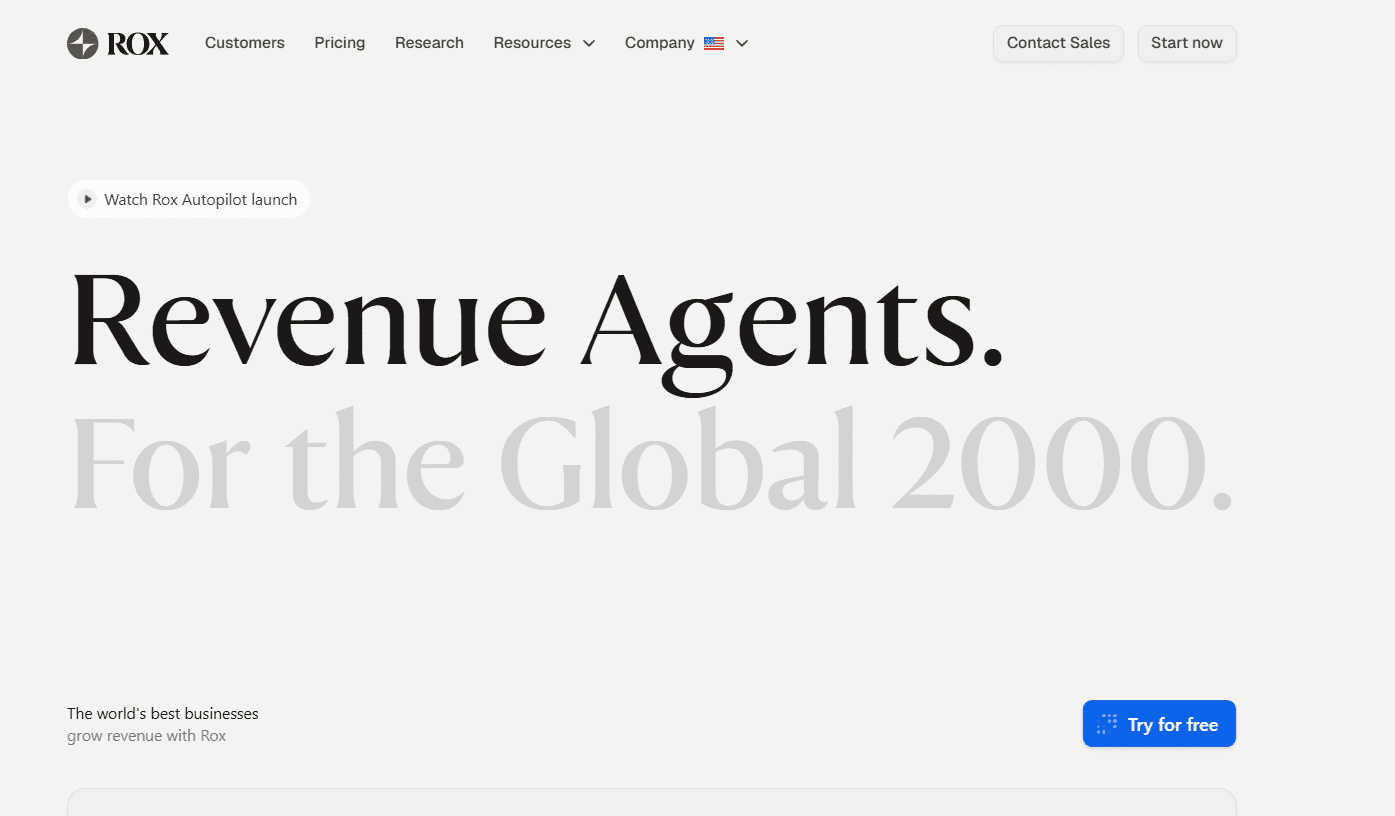
Rox operates as an intelligent revenue operating system built warehouse-native on Snowflake and deploys hundreds of AI agents that monitor accounts, research prospects, and update CRM systems without manual input. Ishan Mukherjee, former New Relic chief growth officer, founded the platform in 2024.
The platform reached a $1.2 billion valuation with customers including Ramp, MongoDB, and New Relic. The Agent Swarm system pairs each AI agent with specific customers and account executives. These agents monitor and manage relevant information across both public and private data sources.
Results speak to execution speed: teams see 10-15% conversion rate increases, strategic account managers close 2.5x more ARR, and new reps ramp 50% faster with 90%+ adoption across 250+ representatives.
Rox compresses admin, prep, and CRM work. Sellers spend more time in conversations that move deals forward. The platform maintains SOC 2 Type II compliance with AES-256 encryption.
Get started with Rox to deploy AI agents across your revenue workflows.
Clari
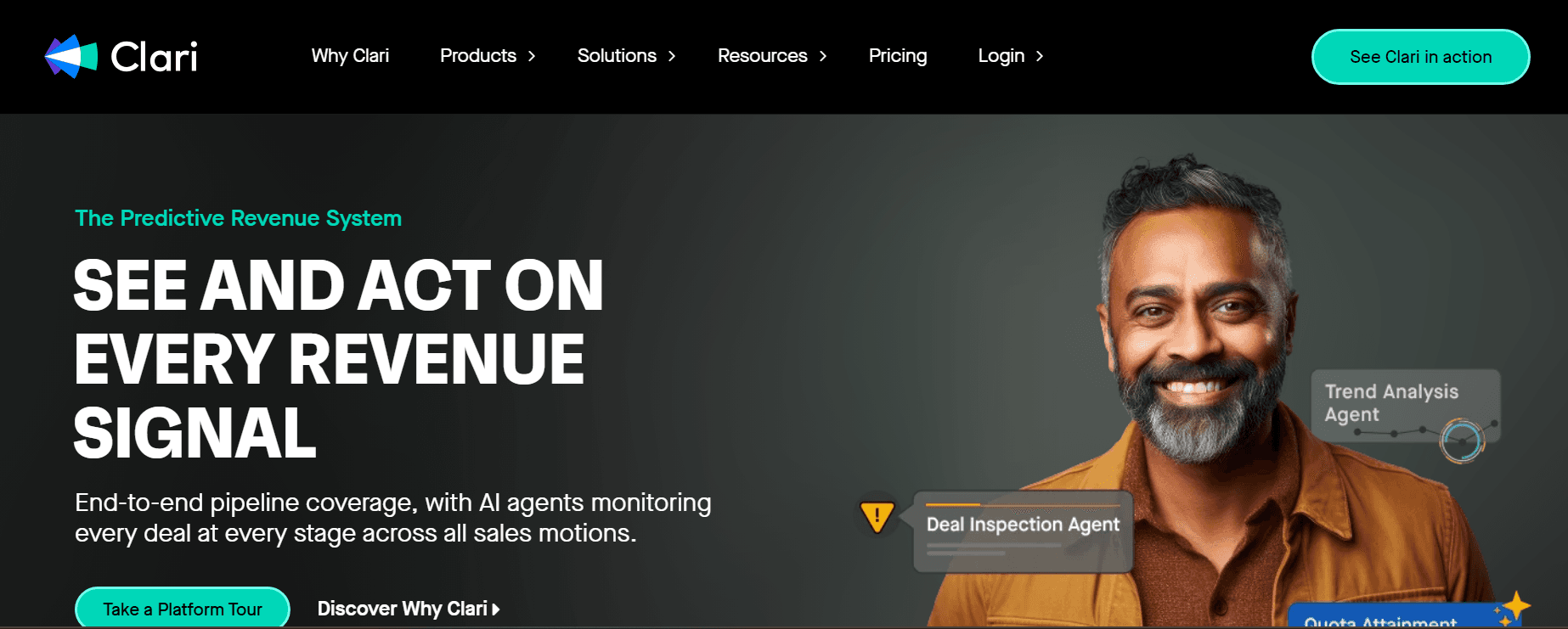
Clari positions as a unified revenue platform following its Salesloft merger and combines Forecast + engagement + Copilot conversation intelligence for enterprise RevOps teams. Clari achieves 98% forecast accuracy by week two of the quarter and is trusted by 75,000+ teams.
A Forrester study documented 398% ROI at enterprise scale. The platform uses 15 proprietary AI agents processing 5x more sales conversation data than competing solutions, with integration across 200+ partner tools.
ZoomInfo Revenue Intelligence
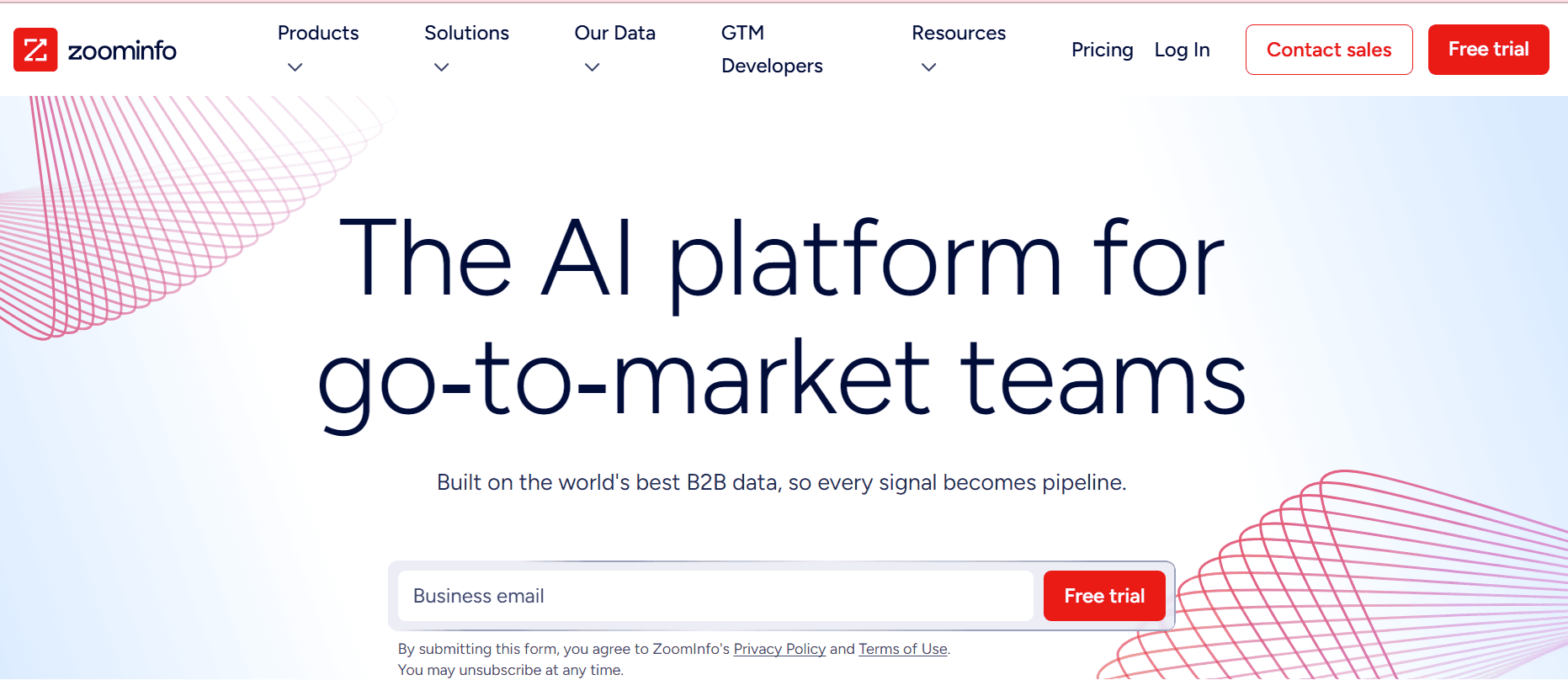
ZoomInfo delivers an all-in-one AI GTM platform processing 1.5B+ daily data points, powered by Chorus conversation intelligence. The GTM Context Graph reasons across verified B2B data, CRM activity, intent signals, and conversation intelligence.
It surfaces root cause investigation rather than just risk scores. ZoomInfo serves 35,000+ customers worldwide and offers free consumption-based starting options with GDPR and SOC 2 compliance.
How to Select the Right Revenue Intelligence Tool?
Your biggest operational gap should guide platform selection, not vendor feature lists. Identify whether forecast inaccuracy, weak CRM data, poor conversation visibility, or slow rep execution causes the most revenue leakage. The platform architecture must match this pain point.
Any shortlisted platform needs testing against your actual pipeline data before signing. Demos built on clean sample datasets mask how tools perform against messy real-life opportunities. Run a proof of concept with live deals to see which system surfaces insights you’d act on.
Budget for total implementation cost, not just per-seat licensing. Training, integration work, and adoption overhead can double first-year expenses. Organizations using hundreds of applications but integrating only 28% of them waste resources on disconnected tools. So verify that your revenue intelligence platform connects with your CRM, engagement tools, and dialers without custom development. Native integration matters.
The best platform fails if reps avoid using it. Tools that automate CRM updates and follow-ups achieve stronger adoption than those requiring manual input.
Get started with Rox to deploy AI agents that handle administrative work and drive 90%+ rep adoption automatically.
Conclusion
Revenue intelligence software delivers measurable improvements when you choose platforms that match your specific operational challenges. The key difference between systems that drive adoption and those that collect dust comes down to execution, not just insights. As long as your chosen platform automates administrative work rather than creating more manual tasks, your team will use it.
Test the vendor’s solution against your real pipeline data to verify it surfaces insights you’ll act on. You need to do this step before you commit to any vendor. Most important, budget for total implementation costs and ensure native integrations with your existing tech stack.
Get started with Rox to deploy AI agents that handle CRM updates and research on autopilot, then free your sellers to focus on the conversations that close deals.
FAQs
What exactly is revenue intelligence software and how does it work?
Revenue intelligence software analyzes customer data and sales interactions to provide actionable insights about performance, market trends, and opportunities.
It automatically captures data from CRM systems, emails, calls, and meetings, then uses AI to identify patterns, predict outcomes, and generate real-time recommendations that help sales teams improve their results.
Which companies offer the leading AI-powered revenue intelligence platforms?
The top revenue intelligence platforms include Rox, which uses AI agents to automate revenue workflows; Clari, known for achieving 98% forecast accuracy; and ZoomInfo Revenue Intelligence, which processes over 1.5 billion daily data points.
How does revenue intelligence software differ from traditional CRM systems?
While CRM systems serve as a record-keeping database for storing deal data and contact information, revenue intelligence acts as a system of action built on top of the CRM. Revenue intelligence automatically captures data that reps might miss, uses AI to analyze patterns the CRM cannot detect, and provides predictive insights rather than just historical reporting.
What kind of results can companies expect from implementing revenue intelligence software?
Companies using revenue intelligence platforms typically see 10-20% improvements in forecast accuracy, up to 21% higher quota attainment rates, and 50% increases in leads. Organizations also experience 19% profit increases, 45% higher win rates, and can reduce forecast errors by up to 50%.
Similar Articles
We build with the best to make sure we exceed the highest standards and deliver real value.

Get started today
See how the Rox agent can put your pipeline generation, deal management, and account expansion on autopilot.