Rox vs. Belkins: AI Revenue Agents vs. Outsourced Outbound Agencies
Callia Peterson

Rox is a software platform that runs outbound prospecting through autonomous AI agents, while Belkins is an outbound lead generation agency that staffs human SDR teams to run omnichannel outreach (email, cold calling, LinkedIn, and appointment setting) on a client's behalf.
The distinction is structural: Rox is technology a company operates internally, while Belkins is a service a company hires externally.
What Belkins Is
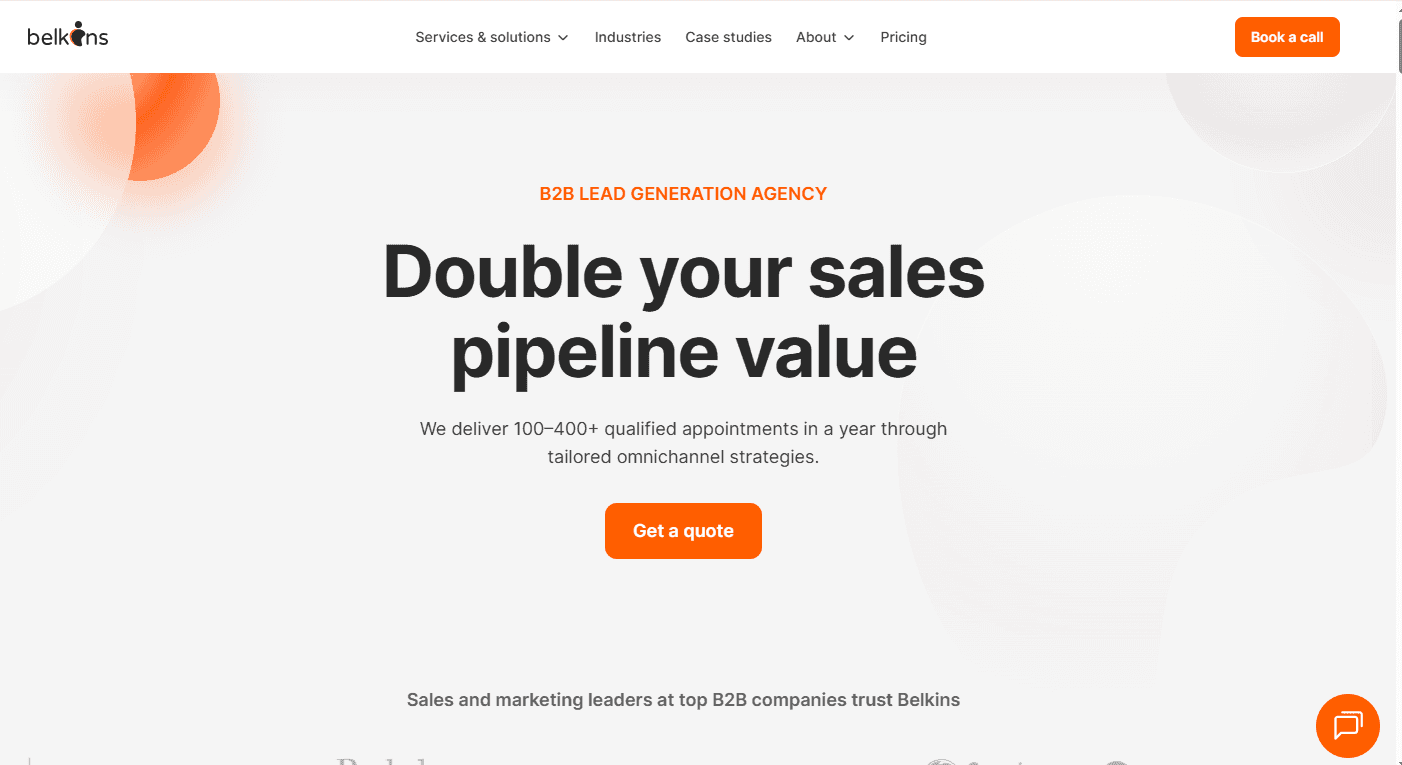
Belkins is a B2B lead generation agency, founded in 2017, that runs outsourced outbound campaigns across email, cold and intent calling, LinkedIn, SMS, and paid advertising.
It assembles dedicated teams of SDRs and researchers for each client engagement, targeting appointment setting and pipeline generation as its core deliverables.
How an Outbound Agency Engagement Typically Works?
Belkins structures its client engagements as a phased, sequential process. The steps below reflect the standard agency model the company describes publicly.
Discovery and strategy. The engagement opens with a scoping phase: Belkins learns the client's ICP, existing sales motion, competitive context, and revenue targets, then documents a tailored outbound strategy before any outreach begins.
Center of Excellence team assembly. Belkins assigns a dedicated team drawn from its Center of Excellence, typically including SDRs, a team lead, researchers, and a copywriter. The team is built for the specific client engagement rather than pooled across accounts.
List building and manual research verification. Researchers build prospect lists using automated data tooling, then layer in manual verification to confirm contact accuracy, company fit, and trigger signals before any record enters an active sequence.
Omnichannel campaign launch. Outreach runs across email, cold calling, intent-based calling, LinkedIn, and SMS. Channels are prioritized based on the ICP and the strategy defined in step one.
Ongoing optimization. The team monitors reply rates, meeting acceptance rates, and pipeline conversion throughout the engagement, adjusting messaging, targeting, and channel mix based on live performance data.
Asset handoff at contract end. When an engagement concludes, Belkins transfers the deliverables it built: prospect databases, email sequences, CRM records, and campaign documentation. These assets become the client's property at offboarding.
Omnichannel appointment setting across email, calling, LinkedIn, and SMS.
Dedicated SDR teams and a Center of Excellence that builds a client-specific outbound strategy.
Manual research layered on top of automated tooling to verify lead quality before outreach.
Deliverability and CRM consulting alongside outbound execution.
Engagements typically suit deal sizes with an annual contract value in the $15,000 to $25,000 range or higher, sustained over a multi-month engagement.
What Rox Is?
Rox is a revenue orchestration platform built as a system of context: a warehouse-native architecture running a revenue-specific knowledge graph under every production agent.
Its Outbound Agent runs an end-to-end prospecting workflow, finding prospects, researching them, writing sequences, handling replies, and booking meetings from a one-sentence audience description, without a human team executing each step.
Rox is the warehouse-native revenue agent for the Global 2000, with a dedicated agent per account that acts autonomously and compounds as plays are added and models improve, accurate because of the context graph, an always-on current understanding of every account built from the full data warehouse rather than just what made it into the CRM.
Based on Rox customer data, organizations running on Rox see 50% or more gains in rep productivity, 20% faster sales cycles, and 2X revenue per seller.
Total Cost of Ownership: Software vs. Agency Model
The financial comparison between an internal AI agent platform and an outsourced agency retainer is not limited to the headline price.
Each model carries distinct cost layers that compound over time.
Internal AI agent platform (e.g., Rox).
The primary cost is a software subscription. Secondary costs include the internal time spent on initial configuration, integration with the existing tech stack, and ongoing prompt or workflow iteration as markets and ICPs shift.
Because the platform runs autonomously, there is no recurring labor cost for execution, and the company owns its data and configuration from day one.
Outsourced agency retainer (e.g., Belkins).
The primary cost is a monthly service fee, typically structured to scale with the deal size being pursued.
Belkins' own stated model targets engagements where the client's ACV is in the $15,000 to $25,000 range or higher, since the retainer cost needs to be justified by the deal economics downstream.
Secondary costs include internal time spent on onboarding, feedback loops with the agency team, and re-ramp periods when team members change.
Cost dimension | AI agent platform | Outsourced agency |
|---|---|---|
Primary cost | Software subscription | Monthly service retainer |
Execution labor cost | None (agent executes) | Included in retainer |
Internal oversight time | Low (configuration and review) | Moderate (feedback, coordination) |
Suitable ACV range | Flexible; no minimum floor | Typically $15,000 to $25,000+ ACV |
Data ownership | Continuous; owned throughout | Transferred at offboarding |
Cost predictability | Fixed subscription | Variable with scope and team size |
Exit cost | None; platform access ends | Re-ramp cost if rebuilding internally |
Rox vs. Belkins: Core Differences
Attribute | Rox | Belkins |
|---|---|---|
Delivery model | Software platform operated by the company | Outsourced agency staffed with human SDRs |
Execution unit | Autonomous AI agent | Dedicated human team per client |
Ramp time | Deployed directly against existing data and workflows | Requires team assembly, strategy development, and onboarding |
Ownership at offboarding | Platform and data remain fully owned by the company at all times | Databases, sequences, and CRM records transfer at contract end |
Cost structure | Software subscription | Retainer-based service fee, typically scaled to deal size |
Build vs. Buy: The Real Decision Enterprises Face
Every company deciding between Rox and Belkins is ultimately making a build-versus-buy decision: whether to develop an internal outbound execution capability or to purchase that capability from an external provider.
The right answer depends on what the company already has and what it is trying to own long-term.
Building an internal outbound motion with an AI agent platform means the company controls the execution layer directly. The outbound logic, the data, the sequences, the targeting criteria, and the iteration cycle all live inside the company's own systems.
An AI agent like Rox's Outbound Agent handles the workload volume that a human SDR team would otherwise perform, compressing the headcount required to run the motion without removing internal ownership.
The tradeoff is that internal setup is still required: someone owns the ICP definition, the tech stack integrations, and the ongoing feedback loop with the agent. The company's outbound capability grows as an internal asset.
Buying agency execution means outsourcing both the strategy and the labor to a specialized team. The company gains immediate access to an experienced outbound operation without needing to hire, train, or manage SDRs internally.
Ramp time is compressed because the agency brings established playbooks, tooling, and researchers. The tradeoffs are dependency on the vendor relationship and a recurring service cost that does not build internal infrastructure during the engagement.
When the engagement ends, the assets built by the agency transfer, but the execution capacity itself does not stay; rebuilding internally or re-engaging another provider requires a new ramp.
The clearest signal for each path: companies that want to own outbound as a durable internal capability choose the build path.
Companies that need qualified pipeline without the bandwidth to build the capability themselves choose the buy path. For companies at the intersection, meaning they have some internal capacity but not enough to run a full outbound motion, a staged approach is worth evaluating: start with an agency to generate early pipeline and validate targeting assumptions, then migrate to an AI agent platform once the ICP is proven and the internal team is ready to own execution.
Where Each Fits
Companies that want to build and own an internal outbound motion, with an agent handling the workload a human SDR team would otherwise perform, are better matched to Rox.
Companies that lack the internal bandwidth to run outbound at all and want a specialized team to execute a strategy and hand over reusable assets are better matched to an agency model like Belkins.
The two are not mutually exclusive: an agency-run outbound program and an AI agent-run outbound program both aim at the same outcome, a qualified pipeline, through a build-versus-buy decision on execution capacity.
The real question for a company evaluating Belkins versus Rox is not which one executes more outbound touches, but who ends up owning the account intelligence once the engagement ends, and whether outreach stays grounded in accurate, current context as volume scales.
Context-free execution at volume, whether human or automated, is a liability, not just a limitation.
What Transfers vs. What Doesn't
Ownership of outbound assets is a practical concern that surfaces at the end of any vendor relationship, but it also shapes the ongoing value a company extracts while that relationship is active.
With an AI agent platform like Rox, the company owns its data and platform configuration continuously throughout the subscription. The prospect data ingested into the system, the knowledge graph built from that data, the sequences written by the agent, and the CRM records created from activity all exist within the company's own infrastructure at all times.
There is no offboarding event required to receive this data because the company never transferred ownership in the first place. If the company ends its Rox subscription, its historical data, CRM records, and any exported sequences remain fully in its possession.
With an outsourced agency like Belkins, the operational picture differs. During the engagement, the agency's team is executing within tools and systems the agency manages or has access to on the client's behalf.
Belkins' own stated practice is to transfer the deliverables it built, specifically prospect databases, email sequences, and CRM records, to the client at the conclusion of the engagement.
This transfer is a defined offboarding step rather than a continuous state of ownership.
The practical implication: a company using an AI agent platform has immediate, ongoing access to every asset the agent produces. A company using an agency receives a defined set of deliverables at contract end.
Both models ultimately result in the company holding usable outbound assets. The difference is timing of access, depth of the asset base at any given moment during the engagement, and who controls the systems those assets live in while the work is being done.
Companies evaluating either model should ask two questions up front: what do we own today if we paused this program, and what would we own tomorrow if we ended the relationship entirely. The answers determine how much of the outbound infrastructure actually belongs to the company at any given point.
Which Companies Choose an Agency vs. an AI Agent Platform?
The choice is not primarily about the size of the company. It is about organizational structure, internal bandwidth, deal economics, and how the company wants to own its outbound capability over time.
Companies That Tend to Choose an Agency
Companies with no existing SDR function and no near-term plan to hire one, who need pipeline generated now.
Companies with average contract values in the $15,000 to $25,000+ range where the agency retainer is justifiable relative to the deal economics.
Companies launching into a new market segment where they want expert playbooks and external perspective before building internal processes.
Companies that have tried to build outbound internally and stalled, and need a working external operation to generate momentum while internal capacity is rebuilt.
Companies where the executive team wants outbound to happen but no internal owner exists to run it.
Companies That Tend to Choose an AI Agent Platform
Companies that have or want an internal revenue operations function and want outbound to be a durable owned capability rather than a vendor dependency.
Companies with ACV ranges below the threshold where an agency retainer makes economic sense, but where automated outbound at scale can still generate positive returns.
Companies already running a CRM and data warehouse who want an agent that integrates directly with their existing data infrastructure rather than building a parallel agency-managed data layer.
Companies where speed of iteration on targeting and messaging is a competitive advantage, requiring tighter internal control over the outbound loop than an agency relationship provides.
See what an AI agent replaces when it takes over outbound execution. Start free.
Frequently Asked Questions
Can a company use both an agency and an AI outbound agent?
Yes. The two models are not mutually exclusive. A company could run an agency engagement to generate pipeline in a new segment while simultaneously deploying an AI agent platform against a different ICP or market.
The more common pattern is sequential: a company uses an agency to generate initial momentum and validate a market, then transitions to an internal AI agent platform once it wants to own the motion and reduce ongoing vendor dependency.
How fast can each model start producing pipeline?
An AI agent platform like Rox can begin running outbound sequences against an existing data set within days of deployment, since there is no team assembly or onboarding phase.
An agency like Belkins requires an upfront period to complete discovery, assemble the dedicated team, build and verify lists, and launch campaigns. That ramp is a structural feature of the model rather than a deficiency; the strategy and research work done in that phase is what the agency delivers as expertise alongside the execution itself.
What happens to outbound assets if the vendor relationship ends?
With an AI agent platform, there is no offboarding event for assets. The company's data and configurations exist in its own infrastructure continuously and remain there when the subscription ends.
With an outsourced agency, the agency's stated practice is to transfer deliverables, including prospect databases, sequences, and CRM records, to the client at the conclusion of the engagement.
The key distinction is that agency-built assets transfer at a defined endpoint, while platform-built assets are owned throughout.
Related Reading
Explore how Rox's Outbound Agent works. Visit Rox.
Similar Articles
We build with the best to make sure we exceed the highest standards and deliver real value.

Get started today
See how the Rox agent can put your pipeline generation, deal management, and account expansion on autopilot.