Salesforce Alternatives: Top CRM Competitors for Businesses
Rox Editorial Team

Choosing a CRM used to be relatively straightforward. Most businesses simply needed a place to manage contacts, track deals, and organize sales activity.
Today, the CRM landscape looks very different.
Modern go-to-market teams expect their CRM to support pipeline visibility, workflow automation, AI-powered insights, forecasting, customer engagement, RevOps alignment, and revenue intelligence all while remaining easy for sales teams to actually use.
That is why many businesses are actively searching for Salesforce alternatives.
While Salesforce remains one of the most recognized enterprise CRM platforms in the market, it is not always the right fit for every organization. Some teams struggle with implementation complexity, rising costs, customization overhead, slow adoption, or fragmented workflows across multiple tools.
As a result, companies are exploring CRM competitors that offer:
Simpler workflows
Faster onboarding
Better automation
Lower total cost of ownership
AI-driven sales workflows
Easier integrations
More intuitive user experiences
RevOps-friendly reporting
Flexible scaling for modern GTM teams
In this blog, we will explore the best Salesforce alternatives for businesses in 2026, including platforms designed for startups, mid-market teams, enterprise organizations, and AI-driven sales operations.
Best Salesforce Alternatives for Businesses
Rox
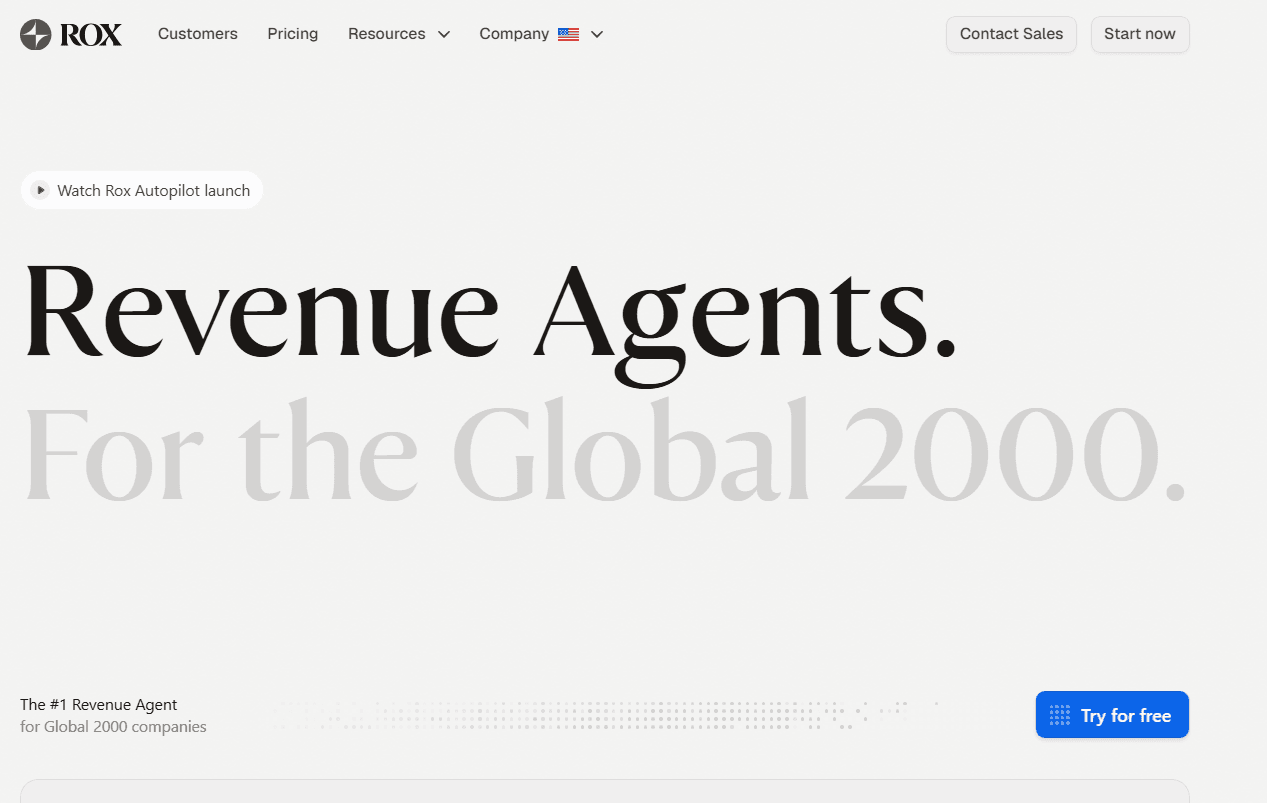
Rox positions itself differently from traditional CRM platforms by focusing on AI-powered revenue orchestration and signal-driven sales execution.
Instead of functioning only as a system of record, Rox is designed to help GTM teams operationalize customer signals, automate workflows, and improve enterprise revenue execution across the sales lifecycle.
The platform assigns AI agents to customer accounts, helping revenue teams capture context, identify buying intent, prioritize opportunities, and reduce manual operational work.
Best For
Enterprise sales teams
AI-first GTM teams
Signal-based outbound and pipeline management
Key Strengths
AI-powered revenue workflows
Buying signal intelligence
Account context automation
GTM orchestration support
Workflow-centric pipeline management
Revenue intelligence positioning
Potential Limitations
May be more workflow-focused than traditional lightweight SMB CRMs
Best suited for organizations with mature GTM operations
Rox is especially relevant for companies looking beyond traditional CRM data storage and toward AI-assisted revenue execution infrastructure.
HubSpot CRM
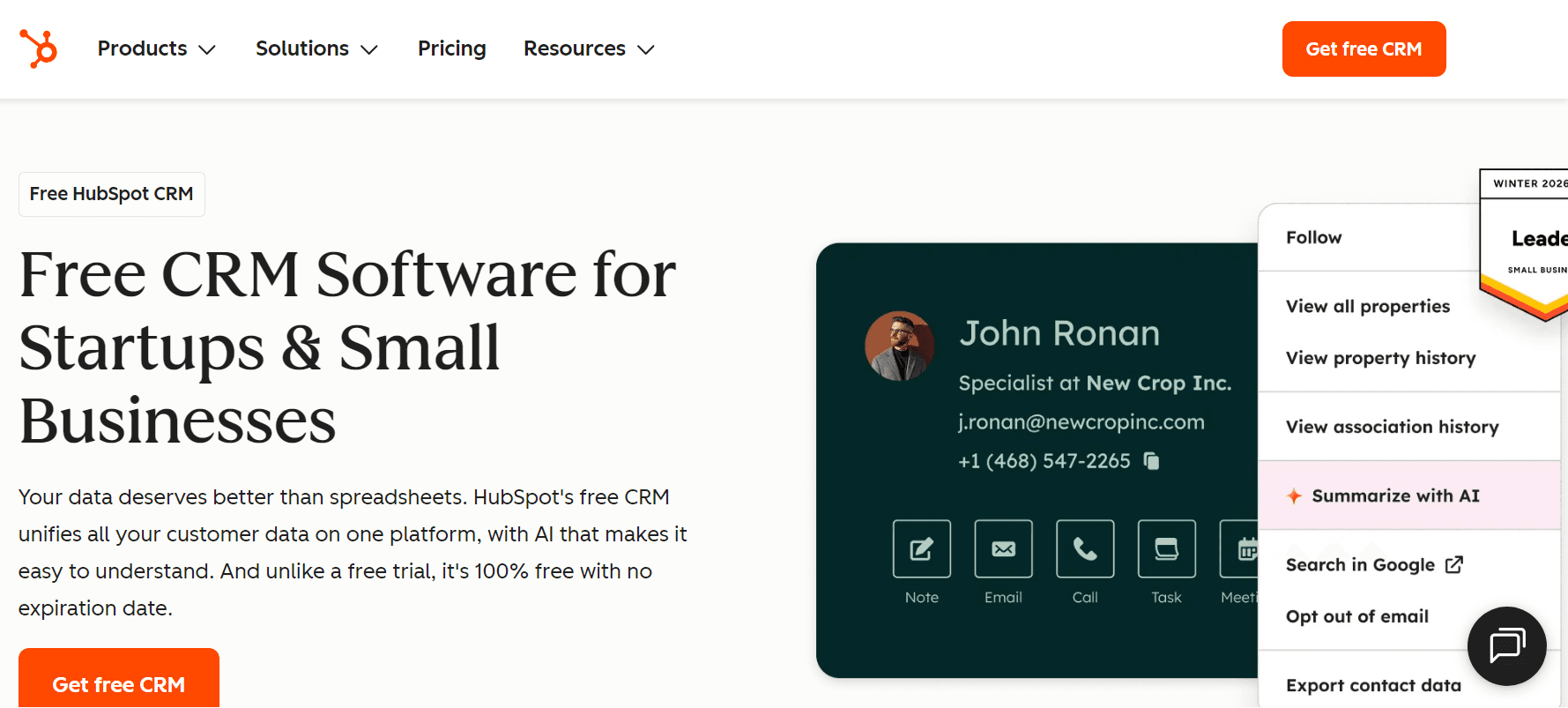
HubSpot has become one of the most popular Salesforce alternatives for growing businesses.
The platform is known for its user-friendly interface, strong marketing integration, and relatively fast implementation process.
Best For
Startups
SMBs
Mid-market SaaS companies
Marketing and sales alignment
Key Strengths
Easy onboarding
Strong automation tools
Integrated marketing ecosystem
Clean UI and reporting
Fast CRM adoption
Potential Limitations
Enterprise customization can become limited at scale
Advanced features may require higher-tier plans
HubSpot works especially well for businesses looking to unify marketing, sales, and customer success workflows without heavy implementation complexity.
Microsoft Dynamics 365
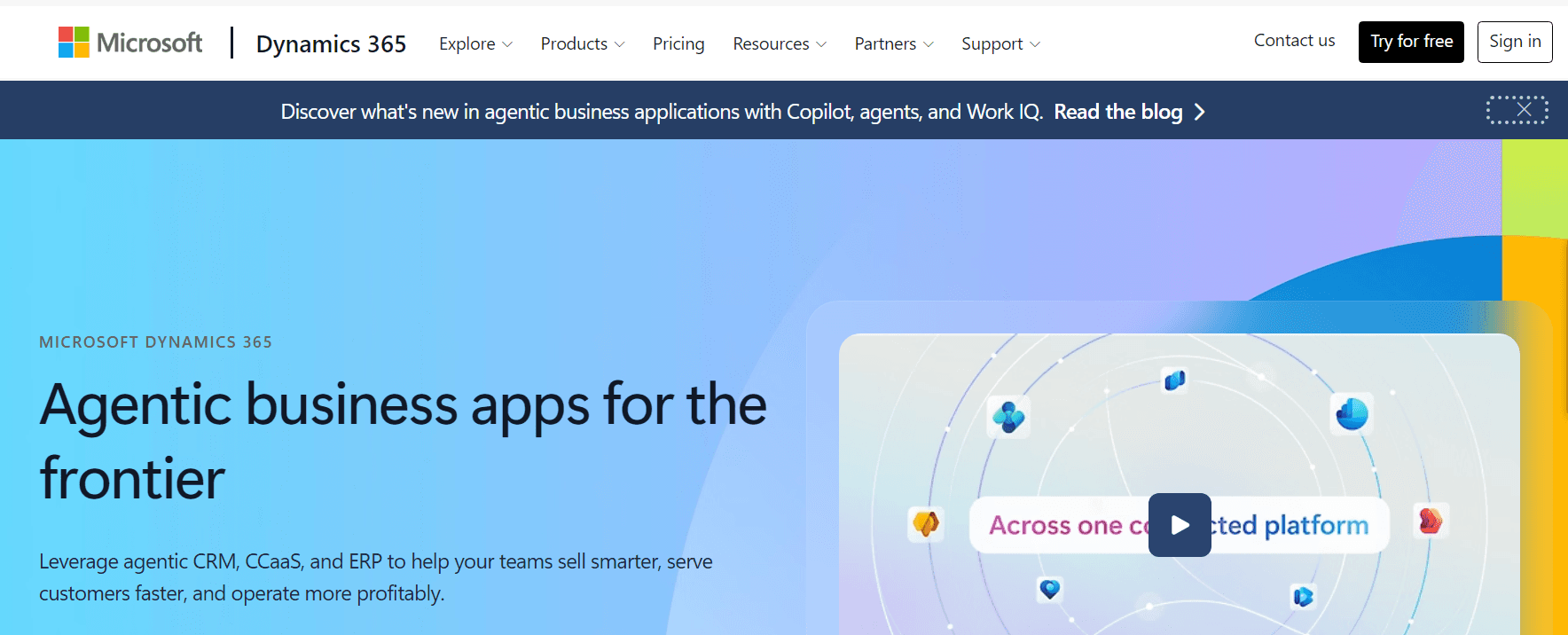
Microsoft Dynamics 365 is often considered a strong enterprise alternative to Salesforce.
It combines CRM functionality with broader business applications across finance, operations, and customer engagement.
Best For
Enterprise organizations
Microsoft ecosystem users
Complex operational environments
Key Strengths
Deep Microsoft integration
Enterprise scalability
Strong reporting capabilities
Advanced workflow customization
AI-powered analytics
Potential Limitations
Implementation can still require technical expertise
User experience may feel complex for smaller teams
For companies already invested in Microsoft infrastructure, Dynamics 365 can provide tighter operational alignment across departments.
Zoho CRM
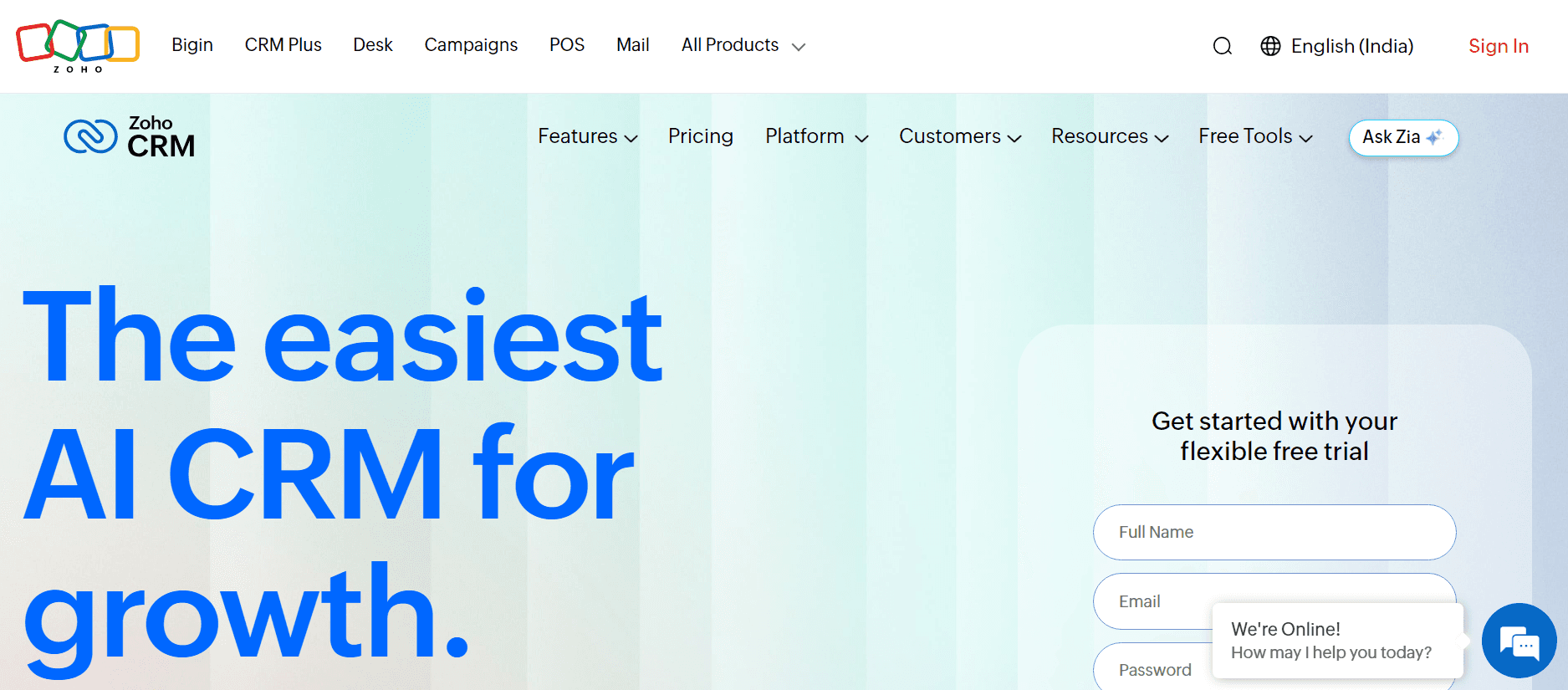
Zoho CRM is popular among businesses looking for affordability and flexibility.
It offers a wide range of sales, automation, and reporting features without enterprise-level pricing.
Best For
SMBs
Budget-conscious teams
Growing businesses
Key Strengths
Competitive pricing
Broad feature set
Workflow automation
Multi-channel communication tools
Extensive app ecosystem
Potential Limitations
UI may feel less polished than competitors
Advanced enterprise workflows can become complex
Zoho often appeals to companies that want operational functionality without high CRM costs.
Pipedrive
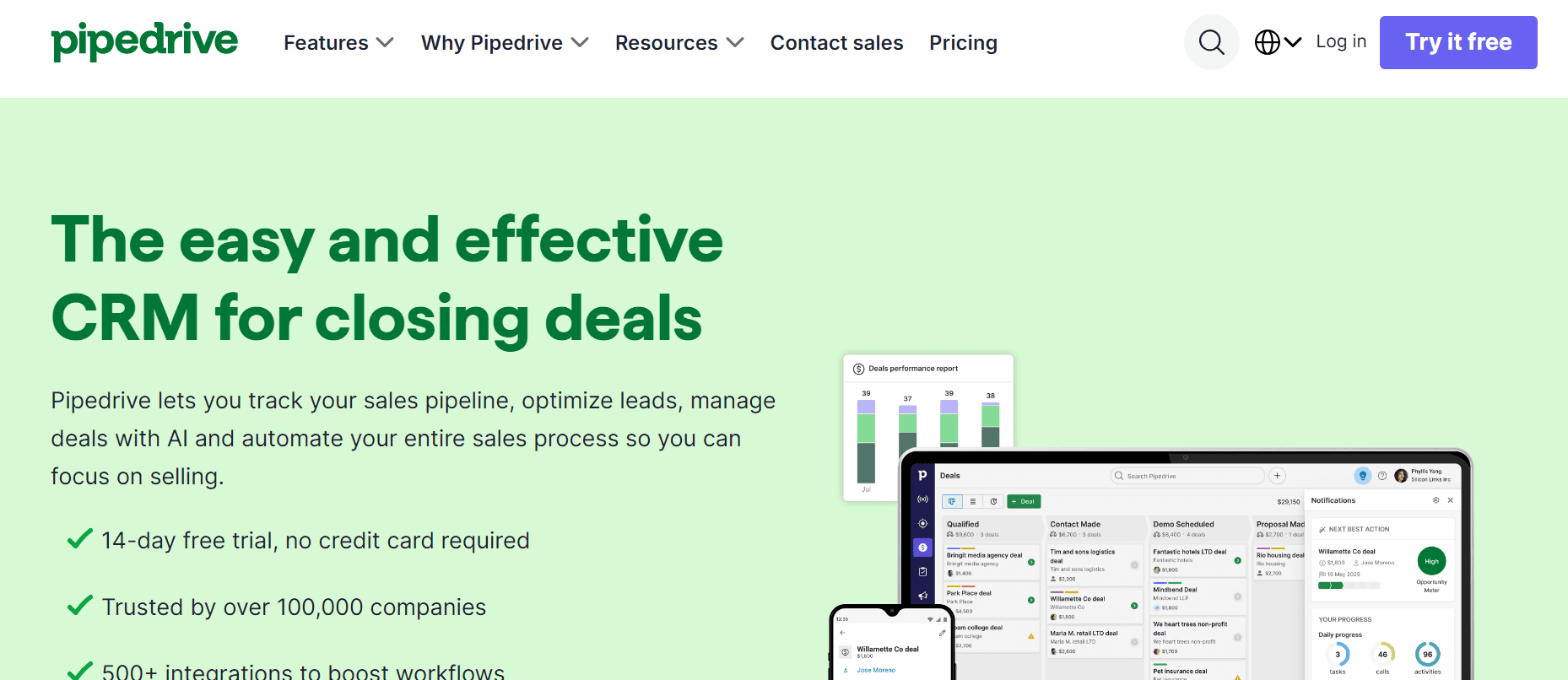
Pipedrive focuses heavily on pipeline simplicity and sales activity & usability.
Unlike highly customizable enterprise CRMs, Pipedrive prioritizes fast adoption and straightforward deal management.
Best For
Sales-focused SMB teams
Lean outbound teams
Companies prioritizing simplicity
Key Strengths
Intuitive pipeline management
Easy setup
Strong visual workflows
Good automation support
Minimal training requirements
Potential Limitations
Limited enterprise reporting depth
Less suitable for highly complex GTM operations
Pipedrive works well for businesses that want reps spending more time selling and less time managing CRM workflows.
Freshsales
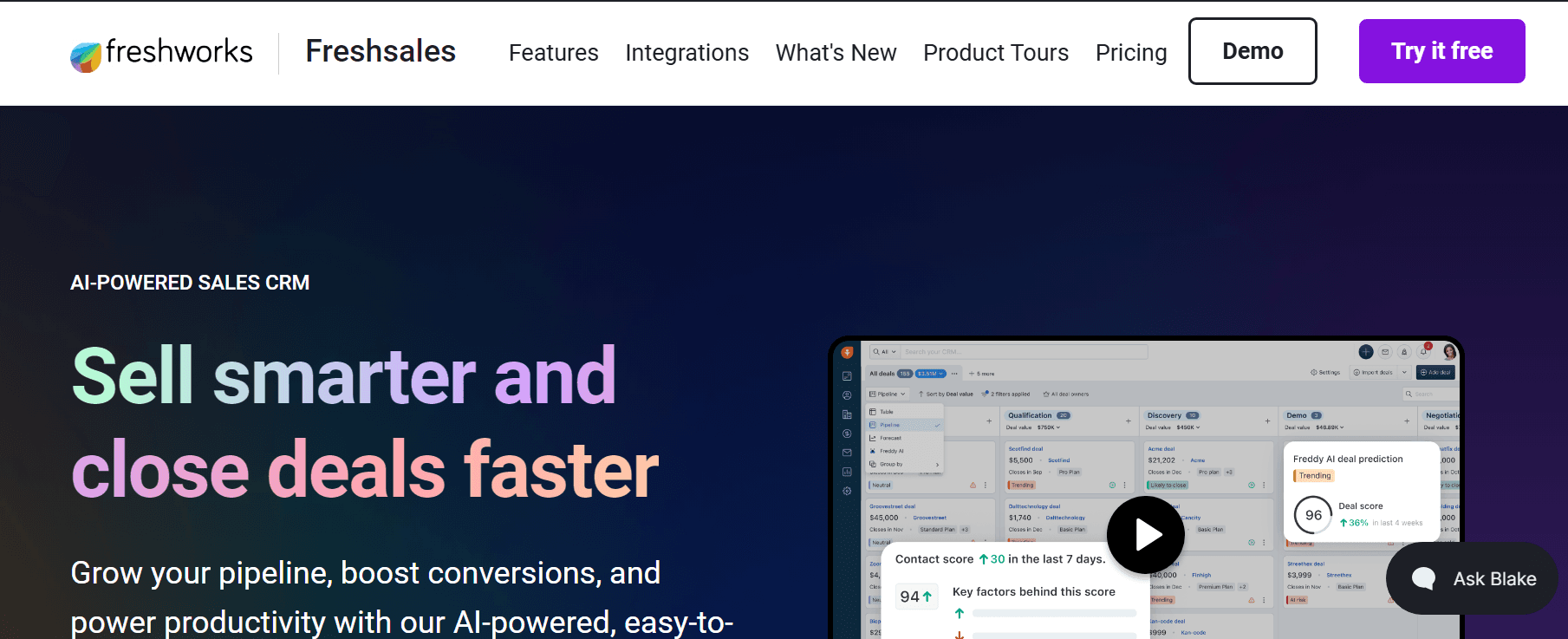
Freshsales combines CRM functionality with AI-powered engagement tools.
The platform focuses on helping sales teams improve productivity through automation and contextual customer insights.
Best For
Mid-market businesses
Customer engagement teams
AI-assisted sales workflows
Key Strengths
Built-in communication tools
AI-based lead scoring
Workflow automation
Easy-to-use interface
Omnichannel customer engagement
Potential Limitations
Enterprise customization may be limited
Reporting depth varies by plan
Freshsales is often attractive for teams looking to modernize sales engagement without overwhelming operational complexity.
Monday CRM
Monday CRM takes a workflow-first approach to customer relationship management.
The platform is designed around customizable operational workflows rather than traditional CRM rigidity.
Best For
Cross-functional teams
Workflow-heavy organizations
Collaborative GTM operations
Key Strengths
Highly visual workflows
Strong customization flexibility
Easy collaboration features
Simple automation setup
Fast onboarding
Potential Limitations
Less enterprise CRM depth than Salesforce
Advanced forecasting capabilities may be limited
Monday CRM works well for organizations that want flexible workflow management across multiple teams.
Productive
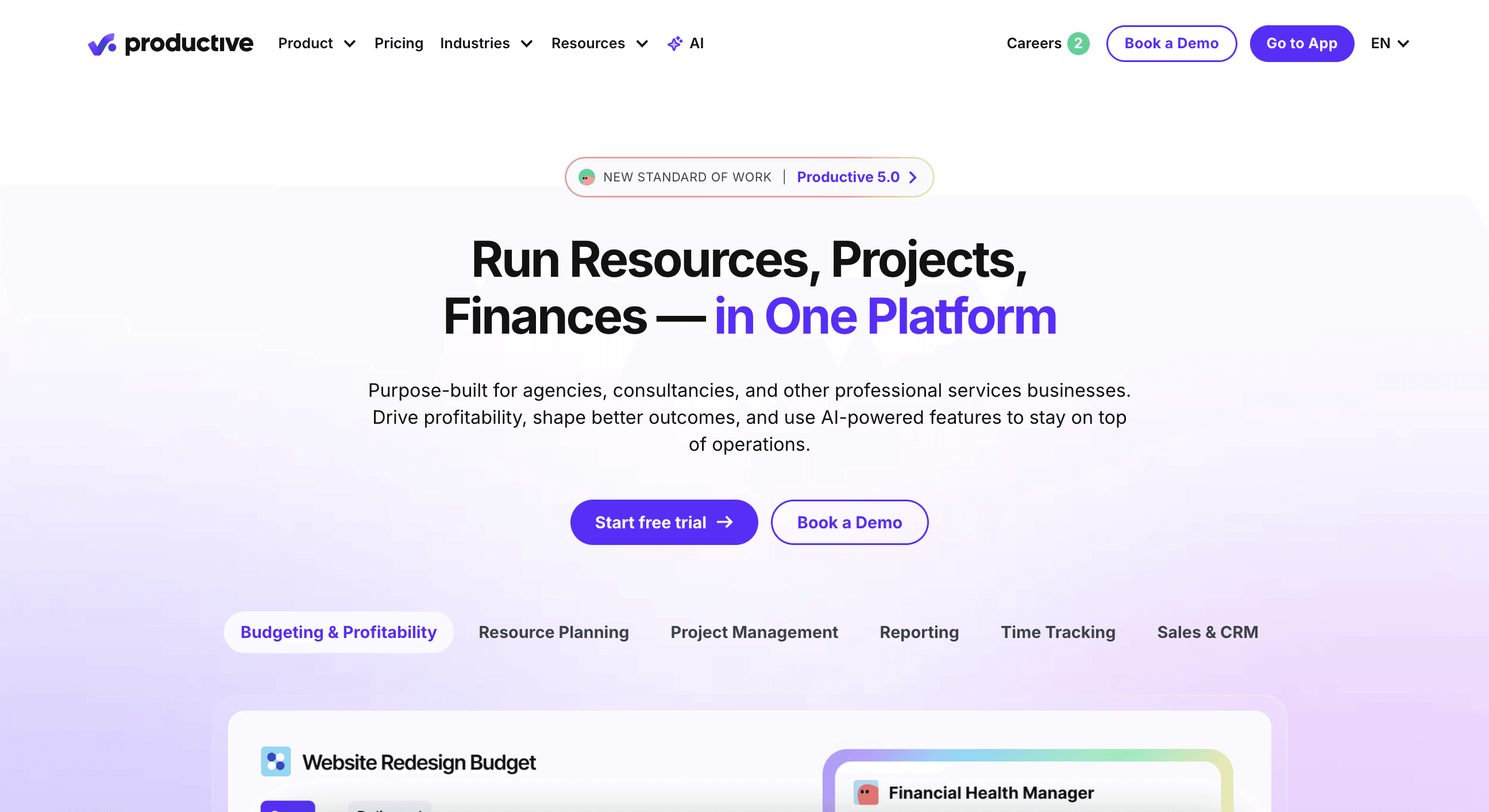
Productive takes a different approach than most CRM competitors by combining sales pipeline management with full agency operations project management, resourcing, time tracking, budgeting, and invoicing in a single platform.
Rather than treating the CRM as a standalone system, Productive is built for agencies and professional services firms that want deal tracking, proposals, and client data to flow directly into project delivery and profitability reporting, without switching tools once a deal closes.
Best For
Agencies and consultancies
Professional services firms
Teams that want sales, delivery, and financial reporting unified in one system
Key Strengths
Built-in sales pipeline and deal management with customizable stages
Proposal building using agency rate card data, plus a Scenario Builder for comparing pricing/resourcing options
Won deals convert directly into projects with full context carried over
Profitability-focused reporting (revenue, costs, margins) alongside standard sales reporting
Gmail integration for managing deals from the inbox
Productive AI for drafting specs, proposals, and summaries
Potential Limitations
Less suited to non-services businesses (retail, product-led SaaS) that don’t run on project-based delivery
CRM feature depth is lighter than dedicated sales-first platforms like Pipedrive for teams with no operational/delivery component
Productive works especially well for agencies that find traditional CRMs like Salesforce too heavy for their sales process, but still need more sales rigor than a plain project management tool provides, bridging the gap between “winning the deal” and “delivering the work.”
Choose Productive If:
You run an agency or professional services business
You want sales pipeline and project delivery in one system
Profitability reporting matters as much as pipeline visibility
You’re tired of re-entering deal data into a separate PM tool once you win
Why Businesses Look for Salesforce Alternatives
Salesforce is powerful, but power often comes with operational complexity.
For many organizations, the challenge is not whether Salesforce can support enterprise sales processes. The challenge is whether teams can manage the implementation, customization, maintenance, and adoption required for the platform to operate efficiently.
Some businesses discover that their CRM stack becomes overly dependent on consultants, admin-heavy workflows, and disconnected integrations.
Others simply want a faster, more flexible system that aligns with modern sales workflows.
What are the common reasons companies switch from Salesforce?
1. High Total Cost
Salesforce pricing can increase quickly as businesses scale.
Additional costs often include:
Add-on products
Third-party integrations
Advanced reporting tools
Admin support
Custom development
Workflow automation tools
User expansion
For growing SaaS companies and mid-market teams, CRM operational costs can become difficult to justify.
2. Complex Implementation
Salesforce is highly customizable, but that flexibility can also create friction.
Many teams require:
Dedicated admins
Technical consultants
Long onboarding cycles
Workflow configuration support
Custom dashboard development
This can slow deployment and delay GTM execution.
3. Low CRM Adoption
One of the biggest operational problems in B2B sales is poor CRM hygiene.
Sales reps often avoid updating systems that feel overly manual or difficult to navigate.
When CRM adoption drops:
Forecasting accuracy declines
Pipeline visibility weakens
RevOps reporting becomes unreliable
Leadership loses operational clarity
Many modern CRM competitors now focus heavily on usability and workflow simplicity.
4. Fragmented GTM Workflows
Modern revenue teams use dozens of tools across:
Sales engagement
Prospecting
Marketing automation
Customer success
Revenue operations
AI intelligence platforms
Businesses increasingly want CRM platforms that centralize workflows rather than creating additional operational silos.
What to Look for in a Salesforce Alternative?
Not every CRM competitor solves the same problem.
Some platforms focus on SMB simplicity, while others specialize in enterprise forecasting, AI automation, or RevOps infrastructure.
Before choosing a Salesforce alternative, businesses should evaluate:
Ease of Use
A CRM only works if sales teams actually use it consistently.
Look for platforms with:
Clean interfaces
Fast onboarding
Simple navigation
Minimal manual data entry
Workflow automation
AI and Automation Capabilities
Modern CRM platforms increasingly support:
AI-generated insights
Deal risk detection
Automated data capture
Workflow automation
Pipeline forecasting
Intent signal analysis
AI-driven automation helps reduce administrative overhead for sales teams.
Reporting and Forecasting
Strong CRM reporting helps RevOps and GTM leaders improve:
Pipeline visibility
Forecast accuracy
Revenue planning
Team performance analysis
Conversion tracking
Enterprise teams should prioritize operational reporting flexibility.
Integration Ecosystem
Your CRM should connect smoothly with:
Marketing automation tools
Sales engagement platforms
Customer support software
Product analytics systems
Data enrichment providers
AI workflow tools
Disconnected systems create operational inefficiencies.
Scalability
The best Salesforce alternatives grow alongside your business.
A CRM should support:
Multi-team collaboration
Enterprise account management
Advanced permissions
Workflow customization
Global sales operations
Cross-functional reporting
How AI Is Changing CRM Platforms?
The CRM category is evolving quickly.
Modern businesses no longer want systems that only store contact records. They want platforms that actively help revenue teams execute faster and make better decisions.
AI-powered CRM platforms now support:
Automated note capture
Deal risk analysis
Intent signal monitoring
Pipeline forecasting
Personalized outreach recommendations
Workflow automation
Conversation intelligence
Revenue insights
This shift is changing how GTM teams think about CRM infrastructure.
The future CRM is becoming less of a static database and more of an operational revenue intelligence layer.
Which Salesforce Alternative Is Best?
The right CRM depends heavily on your business model, GTM maturity, operational complexity, and growth stage.
Choose Rox If:
You want AI-powered revenue orchestration
Your team relies on buying signals and GTM intelligence
You need workflow automation across enterprise sales operations
You want deeper RevOps and pipeline visibility
Your organization is moving toward AI-assisted sales execution
Choose HubSpot If:
You want marketing and sales alignment
You prioritize usability
You need fast onboarding
Your team is scaling quickly
Choose Microsoft Dynamics 365 If:
You operate at enterprise scale
You rely heavily on Microsoft products
You need advanced operational integrations
Choose Zoho CRM If:
Budget efficiency matters most
You want broad functionality at lower cost
You run a growing SMB operation
Choose Pipedrive If:
Your focus is pipeline simplicity
You want faster sales adoption
Your workflows are sales-first rather than enterprise-heavy
Choose Freshsales If:
You want AI-assisted engagement workflows
You need built-in communication tools
You prioritize productivity automation
Choose Monday CRM If:
You manage highly collaborative workflows
You need operational flexibility
You want customizable process management
Final Thoughts
Salesforce remains one of the most influential CRM platforms in the market, but it is no longer the default choice for every business.
Modern revenue organizations are prioritizing:
Faster execution
Simpler workflows
Better automation
AI-driven intelligence
Cross-functional visibility
Operational scalability
That shift is driving increased demand for Salesforce alternatives that align more closely with modern GTM operations.
For some businesses, the right CRM will be a lightweight platform focused on usability and pipeline management.
For others, the priority may be enterprise forecasting, RevOps visibility, AI-powered workflow automation, or operational scalability across global sales teams.
The most important thing is not choosing the most popular CRM.
It is choosing the platform that fits how your teams actually sell, collaborate, forecast, and grow revenue.
As CRM technology continues evolving alongside AI and revenue operations, businesses that invest in workflow-aligned, intelligence-driven CRM systems will be in a much stronger position to scale predictable growth.
FAQs
What is the best alternative to Salesforce?
Some of the best Salesforce alternatives include HubSpot CRM, Microsoft Dynamics 365, Zoho CRM, Pipedrive, Freshsales, and Monday CRM.
The right choice depends on your business size, budget, workflow complexity, and operational requirements.
Why do companies switch from Salesforce?
Businesses often switch from Salesforce due to high costs, implementation complexity, low CRM adoption, workflow fragmentation, and operational overhead.
Which CRM is easiest to use?
HubSpot CRM and Pipedrive are often considered among the easiest CRM platforms for sales teams to adopt and manage.
Are Salesforce alternatives better for SMBs?
Many Salesforce competitors are designed specifically for SMBs and growing businesses that want simpler workflows, lower costs, and faster onboarding.
What should businesses look for in a CRM?
Businesses should evaluate CRM platforms based on usability, automation capabilities, AI features, integrations, reporting, scalability, and workflow alignment.
How is AI changing CRM software?
AI is helping CRM platforms automate workflows, improve forecasting, identify buying signals, personalize outreach, and reduce manual administrative work for GTM teams.
Similar Articles
We build with the best to make sure we exceed the highest standards and deliver real value.