Hybrid Automation in CRM: The Future of Intelligent Customer Management
Leah Clapper

Hybrid automation in CRM blends machine-driven execution with human judgment and solves a critical challenge sales teams face today.
Sales reps waste hours each week on administrative tasks that automation can handle.CRM automation tools replace repetitive workflows and preserve the strategic oversight that only humans can provide.
This hybrid approach has become the preferred strategy for businesses that need bothoperational efficiencyand deep customization.
This piece explores what makes automation hybrid, how it is different from traditional CRM vs marketing automation approaches, and which tools deliver the best results for intelligent customer management.
What is CRM automation and why does it matter?
CRM automation guides repetitive manual tasks in marketing, sales, and customer service operations. According to industry definitions, it’s the use of software to automate and arrange customer-related workflows across the whole sales pipeline and customer lifecycle.
This goes beyond simple workflow rules inside your CRM platform. Modern CRM automation connects your customer relationship management system to ERP, billing systems, and support tools. It keeps data synchronized and processes running across your organization.
The technology has evolved substantially. Early CRM automation worked with simple triggers and task assignments within platforms like Salesforce or HubSpot. Now, AI-powered systems can analyze lead data, predict quarterly sales targets, and recommend next best actions for sales reps.
AI agents can handle complex workflows on their own, from drafting sales emails to resolving routine service requests without human intervention. Self-service tools powered by AI chatbots address simple customer issues fast. More than 60% of customers prefer using self-service to solve simple problems.
Understanding CRM Automation Definition
CRM automation definition centers on using technology to reduce manual workload for sales reps, marketing teams, and customer support staff. It captures everything from automated data entry and lead scoring to email campaigns and follow-ups.
The modern view of CRM automation has two distinct layers. Native CRM automation operates inside platforms through workflow rules, triggers, task assignments, and email sequences.
Cross-system automation arranges workflows that span multiple applications. This second layer accepts that deals affect finance systems, product usage affects renewals, and marketing teams need behavioral data from multiple sources.
Since 93% of companies are now piloting AI in one or more departments, knowing how to unify data across systems becomes critical for accurate predictions and insights.
Key Functions That Drive Value
CRM systems automate several core functions that affect your revenue operations directly:
Contact management stores and organizes customer details. It provides a single source of truth for every team
Lead generation and management track new leads through your sales cycle, with automated lead scoring that analyzes behavior and engagement history to identify conversion likelihood
Sales pipeline management monitors deal progress, flags at-risk opportunities, and accelerates closure by ensuring accuracy in pricing across all customer touchpoints
Marketing campaigns run through automated ad scheduling, email sends, and social media management, with A/B testing handled on autopilot
Customer support routes cases to the best-suited agent and generates recommended replies, reducing resolution times by 32% for first-interaction closures
Workflow automation reduces manual processes across these functions. It cuts human error while saving time that can be redirected to tasks requiring human judgment. For service teams, automated contact logs and searchable knowledge bases help reps handle customers fast and smoothly.
Who benefits most from CRM automation?
Businesses across sectors use automated CRM systems to improve efficiency and customer experiences. Healthcare facilities manage appointments, send patient reminders, and handle insurance pre-authorizations through CRM automation.
This reduces costs in man-hours for digitizing patient information. The fitness industry, worth almost USD 100 billion annually, relies on automated CRM software to increase customer retention by freeing staff from backend administrative tasks.
Ecommerce businesses benefit from the wide range of automation and third-party integration options. Single business owners can run large storefronts with low operating costs. Legal firms use chatbots and CRM automation to prioritize new client leads while providing responsive customer experiences to current clients.
There’s no size requirement for adoption. Sales software exists for small businesses and enterprise solutions alike. The deciding factor is whether your business relies on healthy, eco-friendly customer relationships to maximize profits.
Understanding hybrid automation in CRM
What makes automation hybrid?
Hybrid automation definition centers on intelligent automation tools that support machine-driven execution among strategic human intervention. Organizations automate core customer relationship management functions within their CRM software while sales managers step in at critical junctures.
Not every workflow benefits from complete automation. High-value decisions, complex negotiations and sensitive customer interactions require human judgment that machines can’t replicate.
The hybrid model gives you manual control over workflows that matter most while AI handles routine tasks with speed and efficiency. Your CRM and sales automation runs in the background, but humans retain authority over moments that shape customer relationships and revenue outcomes.
Real-life examples of hybrid CRM automation
Hybrid CRM automation appears in different business scenarios:
AI-triggered outreach with manual customization: AI scrapes a contact’s recent news and triggers a task, then a rep customizes the outreach manually
Automated deal monitoring with human review: The system flags a stalled deal in the sales pipeline and generates a pre-written check-in email, but a manager reviews and adjusts before sending
Tiered campaign execution: Marketing automation triggers a product announcement campaign, whereas account executives handle high-tier clients with personalized calls
These examples show how hybrid automation in CRM preserves the human element in customer management while repetitive work gets eliminated.
How is hybrid different from full automation?
Full automation removes humans from the process entirely. Hybrid models maintain strategic touchpoints where your team adds value. The difference matters because customer relationships depend on context, empathy and adaptability that automated CRM systems can’t always provide.
Hybrid models deliver specific advantages. Workload portability allows marketing automation tools to run across both cloud and on-premise systems. Data control becomes possible when companies store sensitive CRM data on-premise while using cloud services for outreach or workflow automation.
You can scale without compromising control or compliance. Business continuity improves because no single point of failure exists; hybrid systems keep operations running during downtime.
These benefits come with real challenges, though. IT complexity requires careful coordination and sometimes niche expertise for managing hybrid infrastructure.
Compliance risk emerges when inconsistencies between environments pose data governance challenges. Configuration overhead means sales reps must monitor workflows across tools like Salesforce, ERPs and CRM software systems constantly.
What are the benefits and challenges of hybrid CRM automation?
Businesses adopting hybrid CRM automation face a decisive tradeoff between operational efficiency and implementation complexity. Understanding both sides helps you make informed decisions about where automation fits in your customer management strategy.
Core Advantages of Hybrid Models
Hybrid automation delivers measurable productivity gains in your organization. Automated systems detect and neutralize threats within seconds, compared to hours or days with manual processes. Customer satisfaction improves as a direct result.
Companies deploying AI-powered chatbots report up to a 30% reduction in customer service costs, while these systems handle 60-80% of routine FAQ-style questions without human involvement.
Strategic work becomes possible when time savings create space for it. You reduce operational costs and allocate human resources to activities that demand judgment and creativity by automating repetitive tasks.
Data Control and Security Benefits
Hybrid models excel at protecting sensitive information while maintaining operational flexibility. Automated data discovery and classification systems monitor your customer data and apply immediate risk assessment with policy enforcement. Access control automation allows only authorized personnel to reach sensitive records.
Automated remediation responds to security incidents right away, while detailed reporting simplifies compliance management. These security capabilities justify the hybrid approach over full cloud automation for industries handling protected health information or financial data.
Common Implementation Challenges
Hybrid CRM automation introduces complexity that demands careful planning. Organizations must make automation tools work naturally with existing systems and workflows, which creates integration complexity at the top of the challenge list.
CRM systems often need to integrate with many business applications, each with its own data structure and APIs. Integration projects become time-consuming because of this technical complexity.
Smaller organizations face barriers from the high upfront costs that advanced automation platforms require. Teams may need training to manage and optimize automated systems, which creates skill gaps. Poor-quality or outdated data compromises results and undermines automation effectiveness.
Security teams get overwhelmed with false positives when systems generate excessive alerts from improper tuning. Customer experience suffers when over-automation creates impersonal interactions that aren’t managed properly.
Balancing Automation with Human Oversight
Brands that build lasting loyalty make customers feel heard when it counts. Automation buys you time. How you use that time determines whether customers come back.
Use automation for instant replies, handling repetitive questions and reducing response time. Reserve human conversations for situations where context matters, emotions surface, or trust needs building.
Establish clear protocols for when human intervention becomes necessary and make customer interactions transition naturally from automated processes to human touchpoints.
Gather feedback from customers about their experiences with automated processes regularly, then refine your automation strategies based on what you learn.
What are the top CRM automation tools for hybrid environments?
The right CRM automation tools determine whether your hybrid model delivers results or creates workflow friction. Six platforms stand out for knowing how to balance automated execution with human control.
Rox: AI-Powered Hybrid CRM Platform
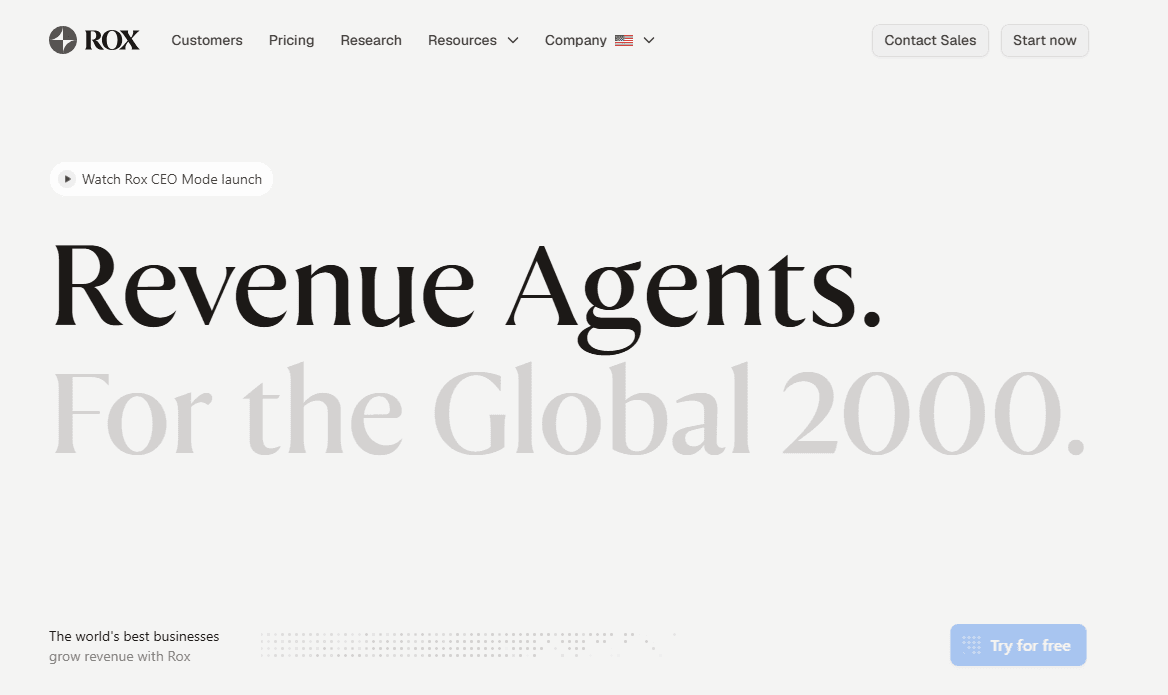
Rox operates as a next-generation CRM built for the AI era. Agentic AI powers every aspect from task automation to workflow execution. The platform functions as a revenue operating system that unifies CRM, finance, support, and product telemetry data into a governed knowledge graph.
Agent swarms reason over this unified data and arrange multi-step workflows like research, outreach, and proposal generation. Rox delivers 50% higher representative productivity, 20% faster sales velocity, and twofold revenue per rep. The core plan starts at USD 20.00 per month.
Explore Rox’s platform if you seek hybrid control with advanced workflow automation.
You’ll experience how AI agents handle execution while humans maintain strategic oversight.
Salesforce and Einstein Automation
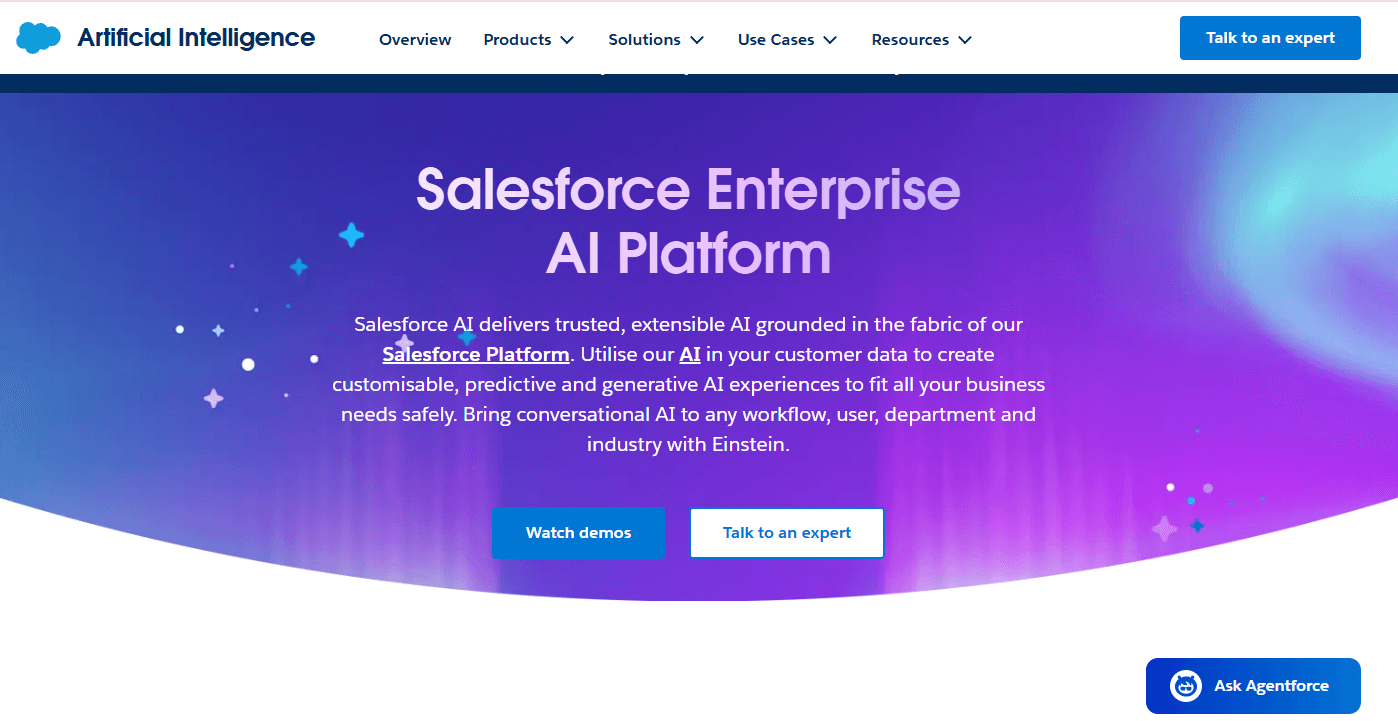
Salesforce provides the complete AI CRM platform. It embeds predictive, generative, and agentic AI into business workflows. Einstein Automation offers predictive lead scoring, opportunity insights, and automated data entry that reduces manual updates.
The platform starts at USD 25.00 per user monthly, though implementation fees add major costs. Large enterprises with dedicated admin resources needing deep customization will find Salesforce suitable.
HubSpot Marketing Automation and CRM

HubSpot combines marketing automation with CRM capabilities. Businesses with marketing-heavy workflows find it appealing. HubSpot customers acquire 129% more leads after one year. The free CRM tier provides generous functionality for smaller teams. Advanced automation requires paid tiers.
Zoho CRM with Zia Assistant
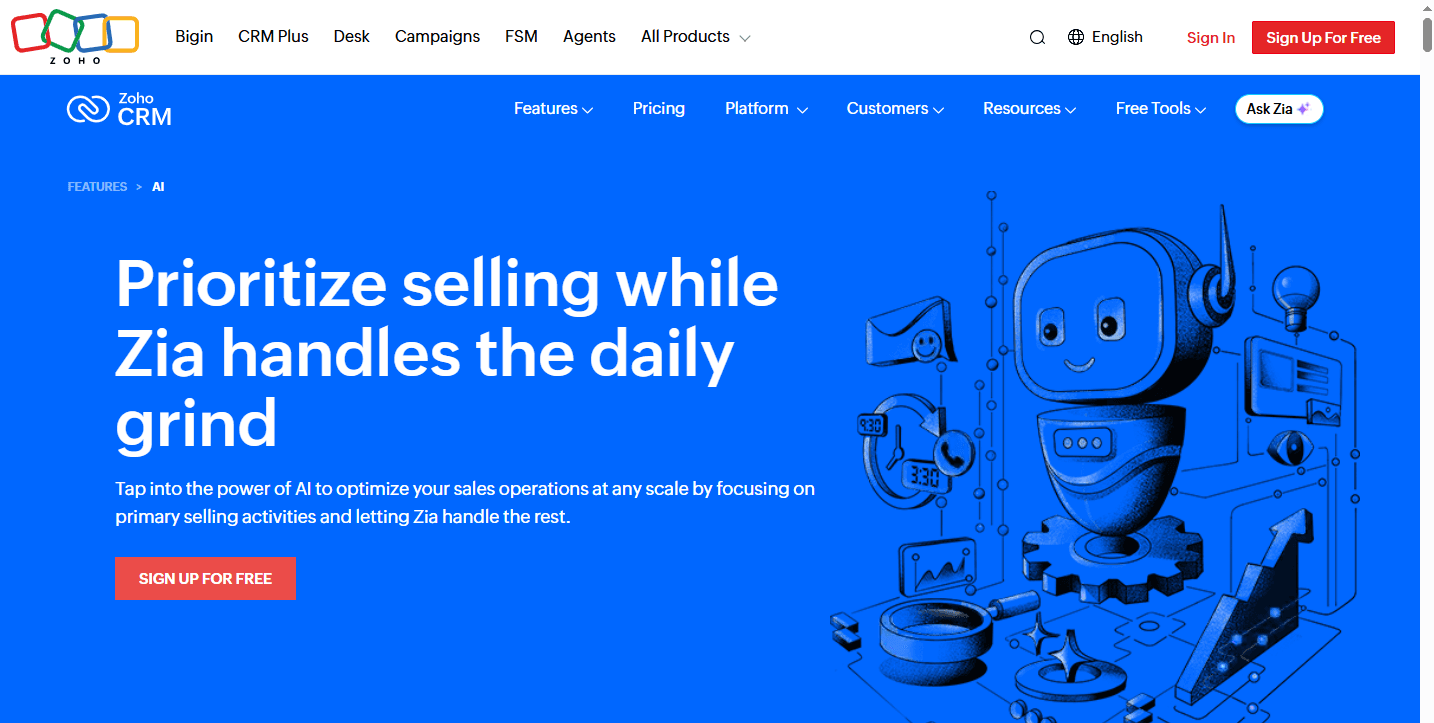
Zoho CRM integrates Zia, an AI assistant that provides predictions, anomaly detection, and workflow suggestions. Zoho offers budget-friendly automation with broad features at USD 14.00 per user monthly. It lacks the depth of specialized platforms.
Affinity for Relationship Intelligence
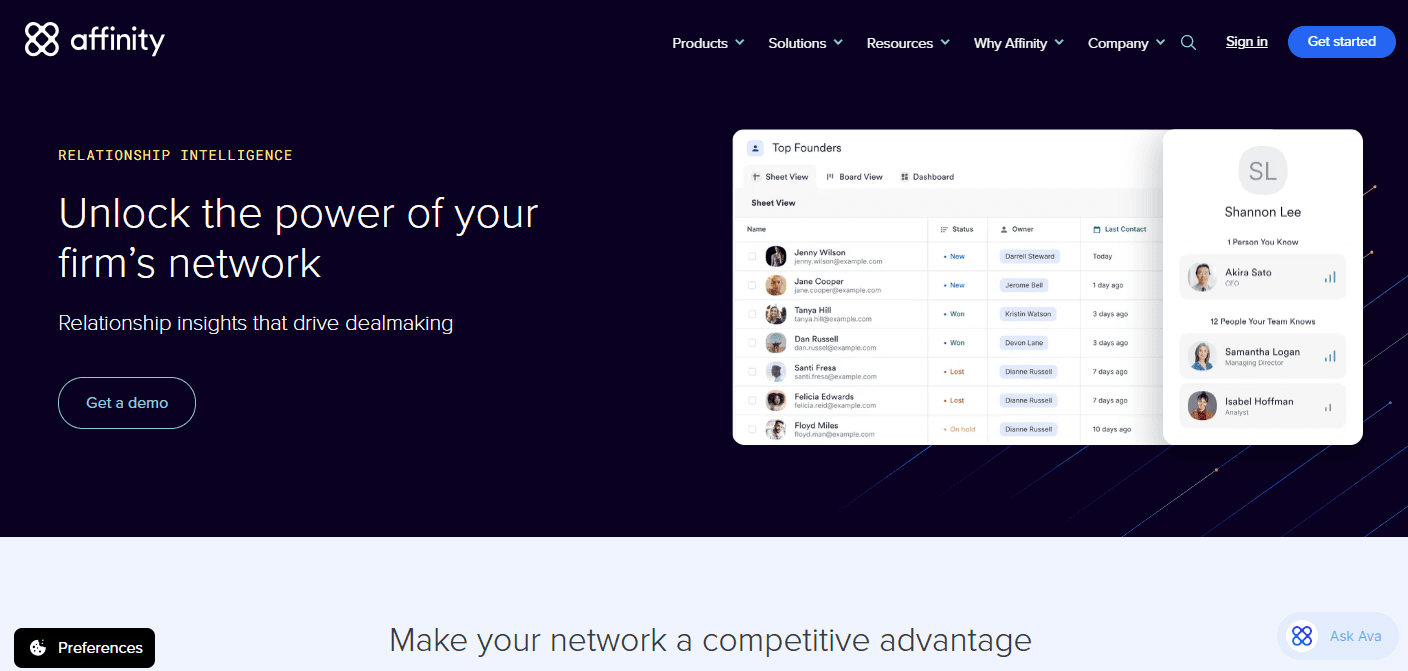
Affinity targets private capital dealmakers with automatic relationship intelligence and firmwide data capture. The platform runs approximately USD 2,000 per seat annually. Relationship-driven deal teams find it valuable despite the price.
Evaluating Tools for Your Business Needs
Match tools to your workflow complexity, team size, and budget constraints. Platforms like Rox that unify siloed systems benefit organizations requiring sophisticated hybrid models. Growing businesses often find HubSpot or Zoho adequate for standard automation needs.
What are the best practices for implementing hybrid CRM automation?
Implementation success depends on methodical execution in four critical areas that convert CRM sales automation from software purchase to revenue driver.
Start with High-Impact Workflows
Document every step from first contact to closed-won before you activate any automation agent. Identify where data gets created, where it disappears, and which handoffs depend on human memory.
Prioritize tasks that consume the most rep time and produce downstream data value. That means contact creation, activity logging, meeting summaries, and follow-up drafting for most teams. This sequence alone recovers 8 to 12 hours weekly that manual entry consumes.
Keep Data Clean for Better Results
Data quality determines whether hybrid automation delivers value or noise. Systems struggle when reps enter data inconsistently, and most skip entries under pressure.
Automated systems ingest unstructured data like email threads and call transcripts. They write clean records back to your CRM without human input. Job titles, funding data, and LinkedIn profiles append via enrichment partners.
Arrange Automation with Customer Journey Stages
Establish clear processes for how customer information flows through your organization. Define workflows that AI agents boost while you keep proper governance and human oversight.
Think about which tasks autonomous agents handle, where human judgment matters, and how handoffs between AI and humans keep experiences smooth.
Train Your Team for Success
Identify two or three early adopters and onboard them before full rollout. Their visible productivity gains create organic pull from the rest of your team. A rep who recovers two hours daily for selling activities proves more persuasive than vendor presentations.
Explore hybrid automation platforms that combine AI efficiency with strategic human control.
Conclusion
Hybrid automation transforms CRM from a data repository into an intelligent system that handles execution while you focus on strategy. The approach above delivers concrete results: higher productivity and better customer experiences. The platforms exist and best practices are proven. Your next step is implementation, not evaluation.
Start with one high-effect workflow and ensure your data foundation is solid. Train a small group of early adopters. Scaling becomes straightforward once you see results.
Explore hybrid automation platforms that combine AI efficiency with the strategic control your team needs to achieve long-term growth.
FAQs
How does AI enhance CRM systems for better customer relationship management?
AI-powered CRM transforms sales operations by turning data into actionable insights, creating a predictable revenue engine. It helps revenue teams shorten sales cycles, improve forecast accuracy, and automate repetitive administrative tasks, allowing sales reps to focus on building meaningful customer relationships and strategic activities.
What role does AI play in the future of CRM technology?
AI-powered CRM technology is becoming central to modern customer management platforms. These systems help companies organize customer information more effectively, reduce repetitive manual tasks, and enhance sales force automation.
How does hybrid automation differ from complete CRM automation?
Hybrid automation combines machine-driven execution with strategic human oversight, whereas full automation removes humans entirely from the process. The hybrid approach maintains critical touchpoints where human judgment, empathy, and context are essential for customer relationships, while automating routine tasks to improve efficiency and reduce manual workload.
What are the main benefits of implementing hybrid CRM automation?
Hybrid CRM automation delivers measurable productivity gains, including up to a 30% reduction in customer service costs and the ability to handle 60-80% of routine questions automatically.
Similar Articles
We build with the best to make sure we exceed the highest standards and deliver real value.