The 10 Best Sales Prospecting Tools in 2026 (Tested & Ranked)
Rox Editorial Team

The best sales prospecting tools are not optional. Last year, 84% of sales reps missed their quota, and 67% don’t expect to meet it this year. Manual prospecting takes 6-8 hours weekly and drains time from actual selling.
We tested and ranked the top prospecting tools that automate contact discovery, surface buyer intent signals, and help teams close more deals. You’ll see which tools deliver the highest ROI in 2026, from b2b prospecting software to AI-powered prospecting platforms.
What are the prospecting tools?
Sales prospecting tools are software and technologies designed to help sales teams identify, work with, and convert potential customers. These platforms streamline lead generation by replacing manual research with intelligent automation. They automate repetitive tasks while providing practical insights that let teams focus on high-value work such as relationship building and deal progression toward close.
Prospecting tools fall into four distinct categories. CRM systems like Salesforce manage relationships and pipeline data but don’t find new prospects. Sales intelligence platforms provide contact databases and company insights.
Sales engagement platforms arrange multichannel sequences that include email cadences, call tasks, and social touches. Email outreach tools handle cold email at scale with deliverability infrastructure.
What Are Sales Prospecting Tools?
Your competitors already use b2b prospecting software, putting you at a disadvantage if you rely on manual methods alone. Sales reps spend just 30% of their time selling. The remaining 70% vanishes into research, data entry, and tracking down outdated contacts. This imbalance explains why 42% of salespeople identify prospecting as the single hardest part of their job.
The best sales prospecting tools solve this productivity crisis. Prospecting consumes 40% of the average salesperson’s working day, yet without automation, most teams don’t maintain consistent pipeline growth. Manual prospecting creates a bottleneck where reps contact more people but close fewer deals because they skip targeting and personalization steps.
Why are sales prospecting tools important?
Prospecting tools deliver value that other sales technologies can’t match. Research shows 25% of sales professionals believe prospecting tools bring more value than sales enablement, sales mapping, and CRM software solutions.
This stems from their knowing how to target the right prospects with intelligent information, optimizing resources and are the foundations of effective sales strategies.
The accuracy factor separates effective prospecting from wasted effort. Platforms that use AI to update and confirm data substantially boost prospecting efficiency. Sales professionals focus on engaging high-quality leads rather than verifying whether an email address still works or if a contact changed companies six months ago when AI manages data complexities.
Top 10 Sales Prospecting Tools (2026)
Rox
Rox operates as an AI-powered revenue platform that deploys autonomous agents to handle account research, personalized outreach, and CRM updates. Founded in 2024 and backed by USD 50 million from Sequoia, General Catalyst, and GV, this b2b prospecting software positions itself as an “Agentic CRM” that integrates with Salesforce, Zendesk, and major ERPs.
The Command interface lets you arrange multiple agents with natural language requests. Ask it to prepare an account renewal and it executes research, stakeholder mapping, outreach drafting, and CRM updates in one workflow.
Teams using Rox report saving eight hours per week on average and boost customer activity by 35%. The platform’s warehouse-native architecture keeps your data within your existing infrastructure rather than copying it to external servers.
Key Features
Rox assigns dedicated AI agents to each customer account that perform automated lead qualification, meeting preparation, and sentiment analysis. The platform supports multi-channel engagement across email and social media.
Natural language processing enables conversational interactions with prospects. Immediate analytics provide instant insights into sales performance and customer engagement patterns.
Try Rox free to deploy your first revenue agents without upfront costs.
Pros & Cons
Pros:
Free Starter tier with 2,500 agent actions monthly
Warehouse-native security maintains data in your infrastructure
Multi-platform access via web, Slack, macOS, and iOS apps
Cons:
Action-based metering lacks clarity for budgeting
Limited customization options
Pricing
Plan | Price | Actions/Month | Agents |
|---|---|---|---|
Starter | Free | 2,000 | 10 |
Core | USD 50.00 | 10,000+ | 100 |
Enterprise | Custom | Custom | Unlimited |
Action consumption varies by task complexity. A multi-step workflow consuming research, drafting, and CRM updates may use 5-50 actions.
LinkedIn Sales Navigator
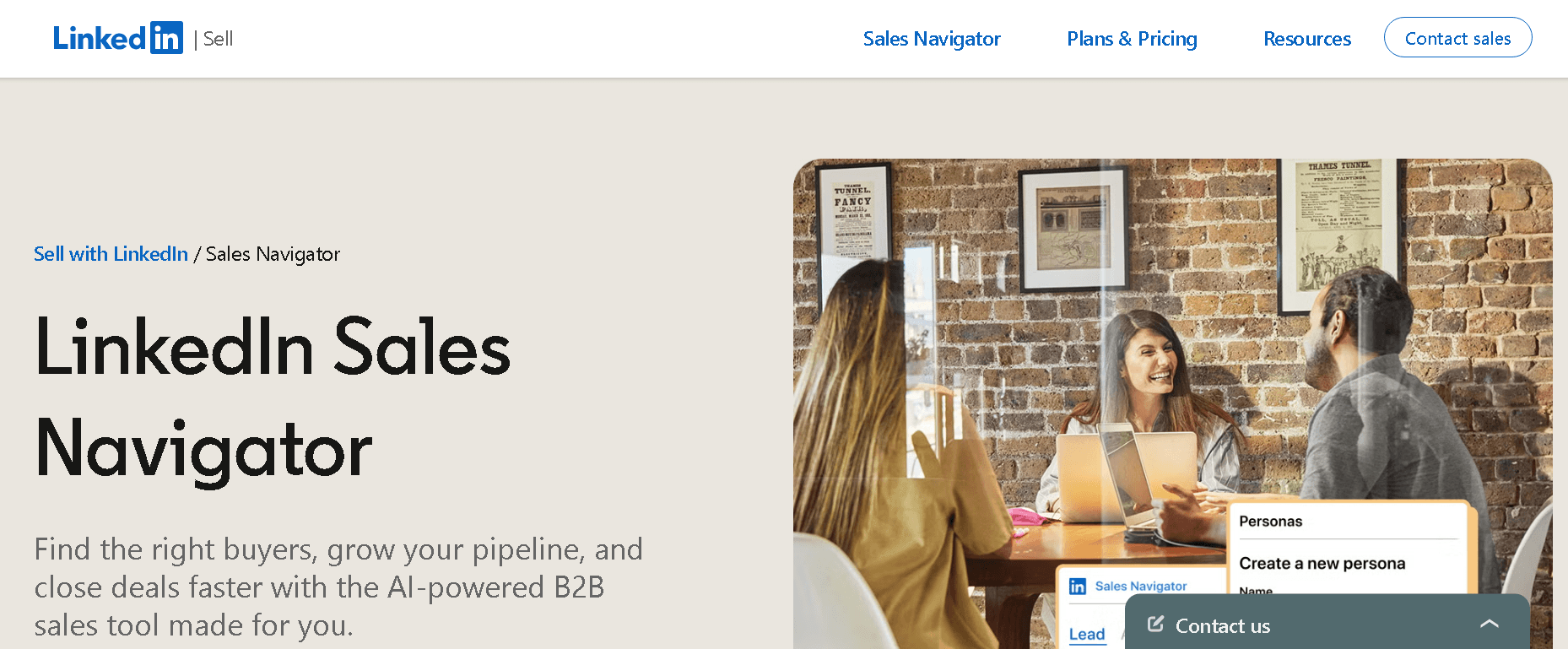
LinkedIn Sales Navigator is LinkedIn’s flagship b2b sales prospecting tool, used by 134.5 million daily active users. This sales prospecting platform delivers advanced search capabilities, InMail messaging, and relationship intelligence within the world’s largest professional network.
Sales Navigator changes basic LinkedIn profiles into practical prospecting workflows through features unavailable in standard LinkedIn accounts.
Key Features
Sales Navigator provides 50+ advanced search filters spanning function, seniority level, years at company, and company size. The platform’s Lead and Account IQ features use AI to generate instant summaries for faster research and planning.
Live alerts notify you when saved leads change jobs, post content, or update profiles. InMail grants 50 monthly message credits for reaching prospects outside your network. TeamLink utilizes your team’s collective connections to identify warm introduction paths.
Smart Links track how prospects engage with shared content. CRM integration syncs bidirectionally with Salesforce, HubSpot, and Microsoft Dynamics.
Pros & Cons
Pros: Sales Navigator integrates natively with LinkedIn’s trusted environment where professionals already spend time. CRM integration eliminates manual data entry. Relationship Explorer reveals second and third-degree connections for warmer outreach approaches.
Cons: Data accuracy presents challenges, with LinkedIn Sales Navigator testing at only 33% accurate. The platform relies on user-generated information, which results in outdated job titles and company affiliations. Y
ou cannot export lead or account lists for use in external campaigns. The learning curve is steep for teams new to CRM tools. The interface freezes during Boolean searches.
Pricing
Plan | Monthly | Annual | Savings |
|---|---|---|---|
Core | USD 119.99 | USD 1079.88 | 25% |
Advanced | USD 159.99 | USD 1799.88 | 6% |
Advanced Plus | Custom | Custom | N/A |
Core suits individual sellers needing basic prospecting capabilities. Advanced adds TeamLink, Smart Links, and AI-powered insights for teams. Advanced Plus has deep CRM integration and ROI reporting at enterprise scale.
Apollo.io
Apollo.io combines sales intelligence with engagement automation in a single b2b prospecting platform. The system maintains 275M+ contacts in 73M+ companies and positions itself as an all-in-one solution for prospecting and pipeline management. This sales prospecting software delivers 96% email accuracy according to Apollo’s internal data, though independent testing shows different results.
Key Features
The platform’s prospecting capabilities include persona settings that group prospects by role and seniority, buyer intent alerts at the time companies show active interest, and website visitor identification through IP matching.
Email sequencing automates follow-ups while voice dialer makes direct calls with automatic CRM logging. Apollo’s conversation tracking maintains interaction history across touchpoints. The analytics suite offers customizable metrics and goal tracking with data visualization.
Advanced filters span job titles, company size, industry, technologies used, and buying intent signals. The Chrome extension makes prospecting possible from LinkedIn profiles. AI features generate personalized talking points, create email copy, and score leads based on conversion likelihood.
Pros & Cons
Pros:
Massive contact database with 275M+ verified contacts
Easy-to-use interface that requires minimal training time
Generous free plan with 1,200 annual credits
Transparent pricing without hidden enterprise fees
Cons:
Data accuracy averages 65% overall and drops to 60-73% outside US
Email bounce rates reach 15-25% versus industry standard under 5%
Performance slowdowns during high-usage periods
Limited third-party integrations compared to competitors
Pricing
Plan | Annual | Monthly | Credits/Year |
|---|---|---|---|
Free | USD 0 | USD 0 | 1,200 |
Basic | USD 49/user | USD 59/user | 30,000 |
Professional | USD 79/user | USD 99/user | 48,000 |
Organization | USD 119/user | USD 149/user | 72,000 |
Credits expire at billing cycle end without rollover. Verified emails cost 1 credit, phone numbers require 8 credits.
Salesforce Sales Cloud
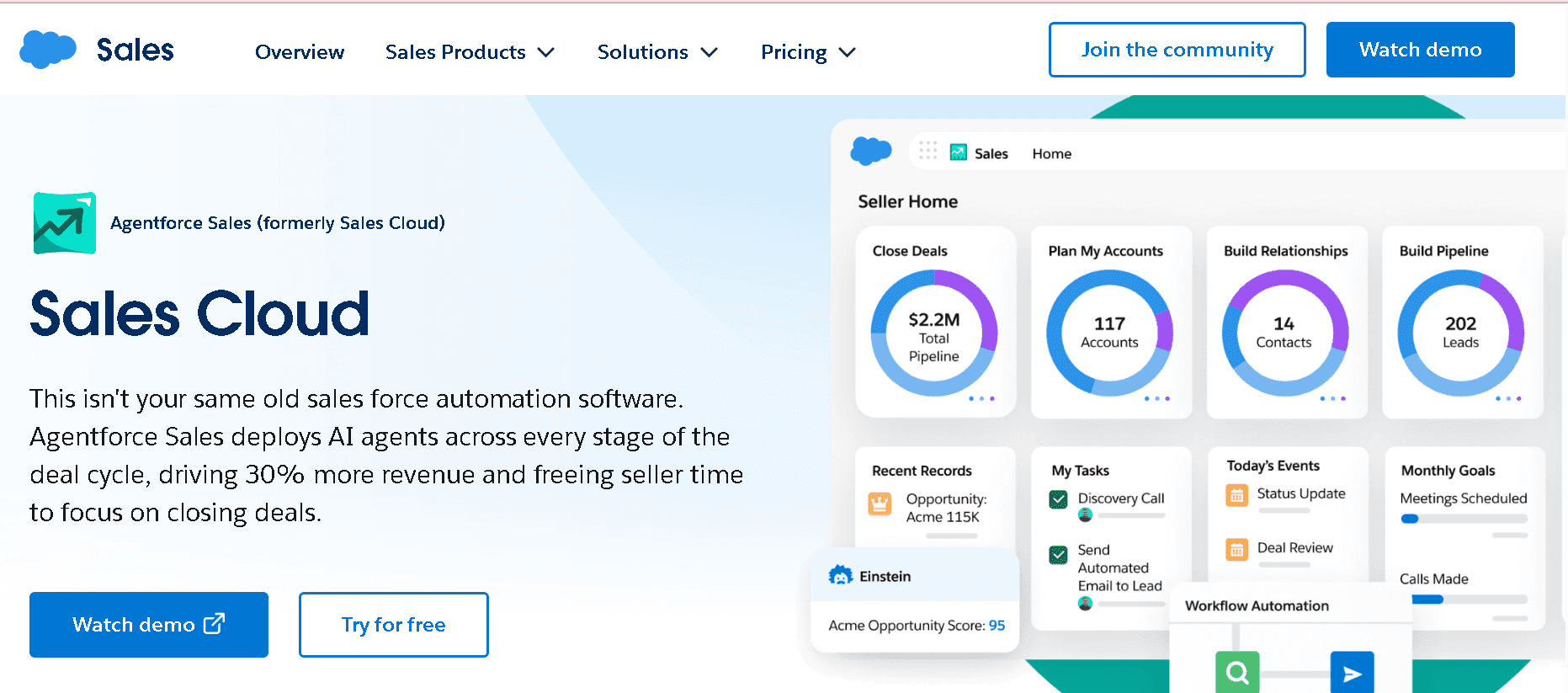
Salesforce Sales Cloud functions as an enterprise-grade CRM platform that has prospecting capabilities rather than a dedicated prospecting tool. Now branded as Agentforce Sales, this b2b sales intelligence platform serves over 150,000 businesses with sales automation, pipeline management, and AI-driven insights.
The system positions itself as a complete sales lifecycle solution where prospecting represents one component within a broader sales operations framework.
Key Features
AI agents handle prospecting tasks autonomously and engage leads 24/7 on your website. They qualify prospects without manual intervention. Activity management unites emails, calls and meetings into unified timelines.
Lead scoring uses AI to prioritize prospects based on customer profiles that generate revenue. Pipeline management provides up-to-the-minute visibility with built-in charts tracking deal progression. Forecast management analyzes historical data and current trends for revenue predictions.
Conversation intelligence joins sales calls, gets recaps automatically and identifies action items. Workflow automation routes leads, manages territories and handles approval processes through drag-and-drop configuration.
Pros & Cons
Pros:
Highly customizable with powerful configuration capabilities requiring no coding skills
Integration capabilities work with virtually any software including ERPs and ecommerce platforms
Easy-to-use interface despite extensive functionality
Cons:
Steep learning curve requires substantial training investment
Poor customer support at lower pricing tiers, with premium support costing extra
High total cost when factoring implementation, admin salaries and required add-ons
Pricing
Plan | Price/User/Month | Key Additions |
|---|---|---|
Free Suite | USD 0 | 2 users max, basic CRM |
Starter Suite | USD 25 | Lead routing, AI email sync |
Pro Suite | USD 100 | Customization, forecasting, AppExchange |
Enterprise | USD 175 | Pipeline management, Agentforce add-on |
Unlimited | USD 350 | Predictive AI, full sandbox, premier support |
Agentforce 1 Sales | Unmetered AI, Spiff, Tableau, Maps |
Implementation costs range from USD 5,000 for basic setups to USD 300,000+ for enterprise deployments.
HubSpot Sales Hub
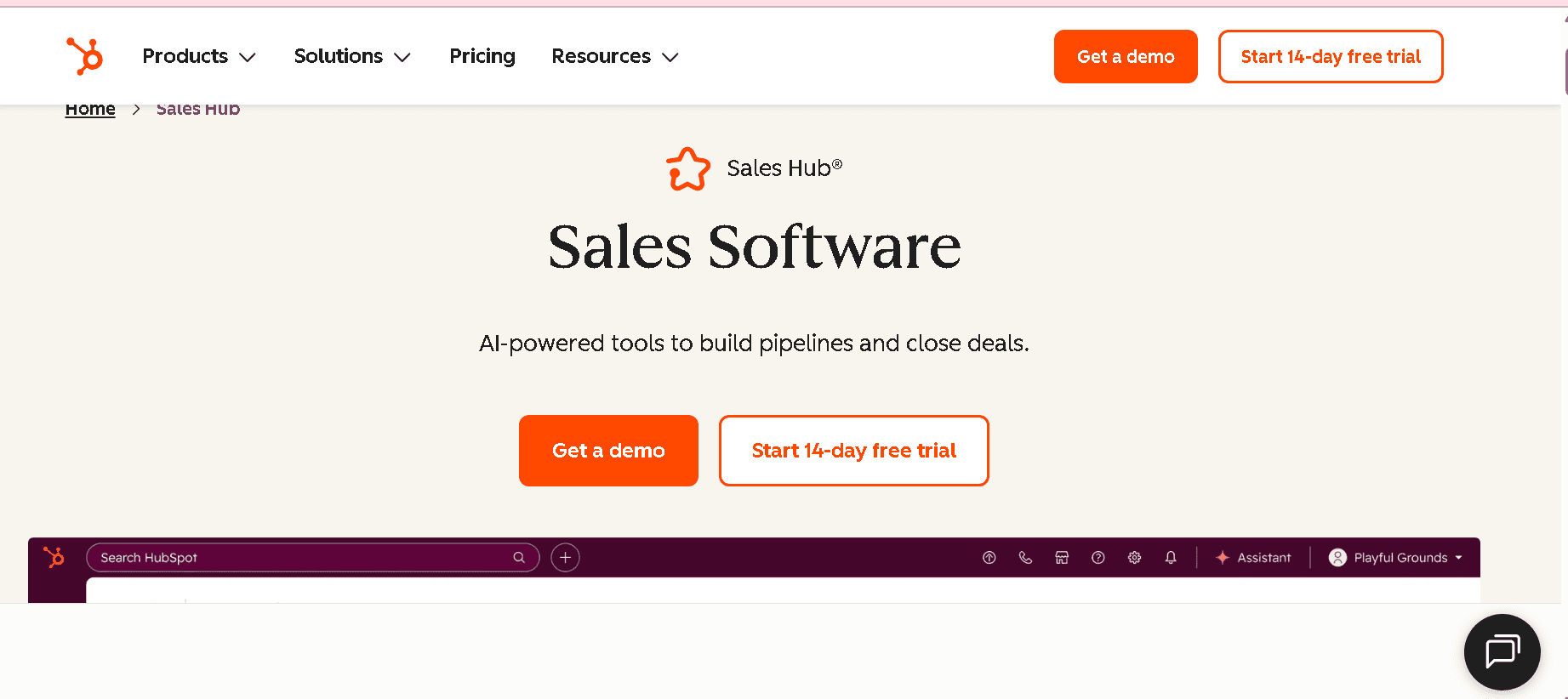
HubSpot Sales Hub embeds prospecting capabilities within its broader CRM ecosystem rather than operating as a standalone b2b prospecting tool. The platform supports up to 1,000,000 contacts with its free tier, which makes it available for startups graduating from spreadsheets. This sales prospecting platform earns consistent praise for shallow learning curves compared to Salesforce or Zoho. New reps become productive within hours.
Key Features
Breeze AI handles prospecting through automated lead qualification, meeting preparation and sentiment analysis in email, chat and social channels. The prospecting workspace combines leads, deals, tasks and target accounts with AI-recommended daily actions.
Sequences automate multi-step email cadences that pause when contacts reply and maintain a personal feel. Workflows trigger lead rotation and deal stage updates through visual drag-and-drop configuration.
Email tracking shows opens, clicks and attachment views with up-to-the-minute data. Built-in calling has power dialer and voicemail drops with automatic CRM logging.
Pros & Cons
Pros:
Free CRM supports 2 users with functional pipeline management and email tracking
Best-in-class ease of use with straightforward activity logging
Tight sales-marketing arrangement provides closed-loop attribution when you use both hubs
Cons:
Pricing escalation from Starter ($20/seat) to Professional ($100/seat) proves steep
Most useful features like sequences require Professional tier
Reporting hits a ceiling without Professional or Enterprise plans
Pricing
Plan | Monthly | Annual | Onboarding Fee |
|---|---|---|---|
Free | $0 | $0 | $0 |
Starter | $20/seat | $240/seat | $0 |
Professional | $100/seat | $1,200/seat | $4,500 |
Enterprise | $150/seat | $1,800/seat | $12,000 |
Cognism
Cognism specializes in GDPR-compliant contact data for b2b sales intelligence. European sales teams that prioritize regulatory adherence recognize it as a leader. This b2b prospecting software maintains 400 million contacts with particular strength in EMEA markets.
Diamond Data phone-verified mobile numbers deliver connect rates 3x higher than industry averages. The platform partners with Bombora for intent data. It emphasizes compliance and checks contacts against 15 global do-not-call lists.
Key Features
Diamond Data provides mobile numbers verified by phone with claimed 98% accuracy. Sales Companion delivers AI-powered prospect recommendations and up-to-the-minute signals like job changes and funding announcements.
It also offers one-click business summaries. Data enrichment operates through instant, scheduled and on-demand CSV methods. Intent data tracks buying signals in 11,000+ topics through Bombora integration.
The Chrome extension pulls verified contact data from LinkedIn profiles. Native integrations connect with Salesforce, HubSpot, Pipedrive, Outreach and Salesloft.
Pros & Cons
Pros:
Data accuracy for UK and EMEA contacts is outstanding
Strong GDPR and CCPA compliance framework
Easy-to-use with short learning curve
Customer support averages 20-second live chat response times
Cons:
Data coverage gaps in North America and APAC regions
Pricing lacks transparency and requires demo to get quotes
Diamond Data availability inconsistent across geographies
Platform fee structure penalizes small teams
Pricing
Plan | Platform Fee | Per User | 5-User Total |
|---|---|---|---|
Standard | ~USD 15,000/yr | ~USD 1,500/yr | ~USD 22,500/yr |
Pro | ~USD 25,000/yr | ~USD 2,500/yr | ~USD 37,500/yr |
Onboarding fees range USD 500-USD 1,500. Intent topics beyond 12 included cost USD 1,600-USD 6,000 per year.
Lusha
Lusha provides instant contact revelation through a Chrome extension that surfaces verified emails and phone numbers on LinkedIn profiles. This b2b sales intelligence platform maintains access to over 300 million business profiles and delivers contact data with 95%+ email deliverability according to verified customer reports.
The credit-based model charges 1 credit per email reveal and 5 credits per phone number. This creates a pay-per-use structure that teams either appreciate or find restrictive depending on prospecting volume.
Key Features
The Chrome extension works on LinkedIn, Sales Navigator and company websites. It reveals contact details without platform switching. CRM integrations with Salesforce, HubSpot and Pipedrive sync enriched data.
AI Playlists reshape static prospect lists into streams that update continuously and match your ICP. The Engage feature builds simple email sequences inside Lusha, though it lacks multi-channel capabilities like automated LinkedIn outreach.
Compliance certifications include GDPR, CCPA, ISO 27701 and SOC 2 Type 2.
Pros & Cons
Pros:
Excellent email accuracy with 95%+ deliverability rates
User-friendly Chrome extension that requires zero training
Strong LinkedIn integration to support social selling workflows
Cons:
Credit system burns through budgets quickly on phone reveals
Database coverage spotty outside North America and UK
No native outreach capabilities beyond simple sequences
Data accuracy averages 85-90%, so 1 in 10 contacts may be outdated
Pricing
Plan | Monthly Price | Credits/Month | Users |
|---|---|---|---|
Free | USD 0 | 40 | 1 |
Starter | USD 49.90 | 400 | 1 |
Pro | USD 69.90 | 600 | 2 |
Premium | USD 399 | 3,400 | 5 |
Scale | Custom | Custom | Custom |
Annual billing saves 25% on paid tiers. Monthly plan credits roll over up to 2x plan limits.
6sense
6sense applies AI-powered predictive analytics to identify accounts that research solutions before they request demos or fill forms. This b2b sales intelligence platform analyzes billions of digital signals across 11,000+ topics to detect anonymous buying intent and match it to actual company accounts.
The technology powers account-based marketing strategies for enterprise teams that prioritize high-value opportunities over volume prospecting.
Key Features
Sales Copilot provides AI-recommended actions, account summaries available via Chrome extension, and beta AI email writing capabilities. Predictive models score accounts by buying stage (Awareness, Consideration, Decision, Purchase) using machine learning trained on historical closed-won data.
Intent data tracks keyword searches and content consumption on thousands of B2B publisher sites. Account identification reveals which companies visit your website through IP matching without requiring form fills.
The platform coordinates campaigns across display advertising, email automation, and website personalization.
Pros & Cons
Pros: Best-in-class intent data identifies buying signals competitors miss. Predictive account scoring indicates conversion likelihood and optimal participation timing. Deep integrations with Salesforce, HubSpot, Marketo, Outreach, and Salesloft.
Cons: Enterprise pricing starts USD 25,000+ annually and creates barriers for mid-market teams. Steep learning curve requires 4-8 weeks to use productively. No built-in dialer or email sequencer means additional tool expenses. Platform complexity demands a dedicated administrator to work well.
Pricing
Plan | Annual Cost | Key Capabilities |
|---|---|---|
Free | USD 0 | 50 credits/month, basic search |
Team | USD 15,000-20,000 | Account ID, basic intent |
Growth | USD 25,000-60,000 | Advanced AI, predictive analytics |
Enterprise | USD 60,000-100,000+ | Custom AI models, dedicated support |
Real deployment costs reach USD 58,000 annually for five-person teams after factoring user seats, credit overages, and RevOps allocation.
Lavender.ai
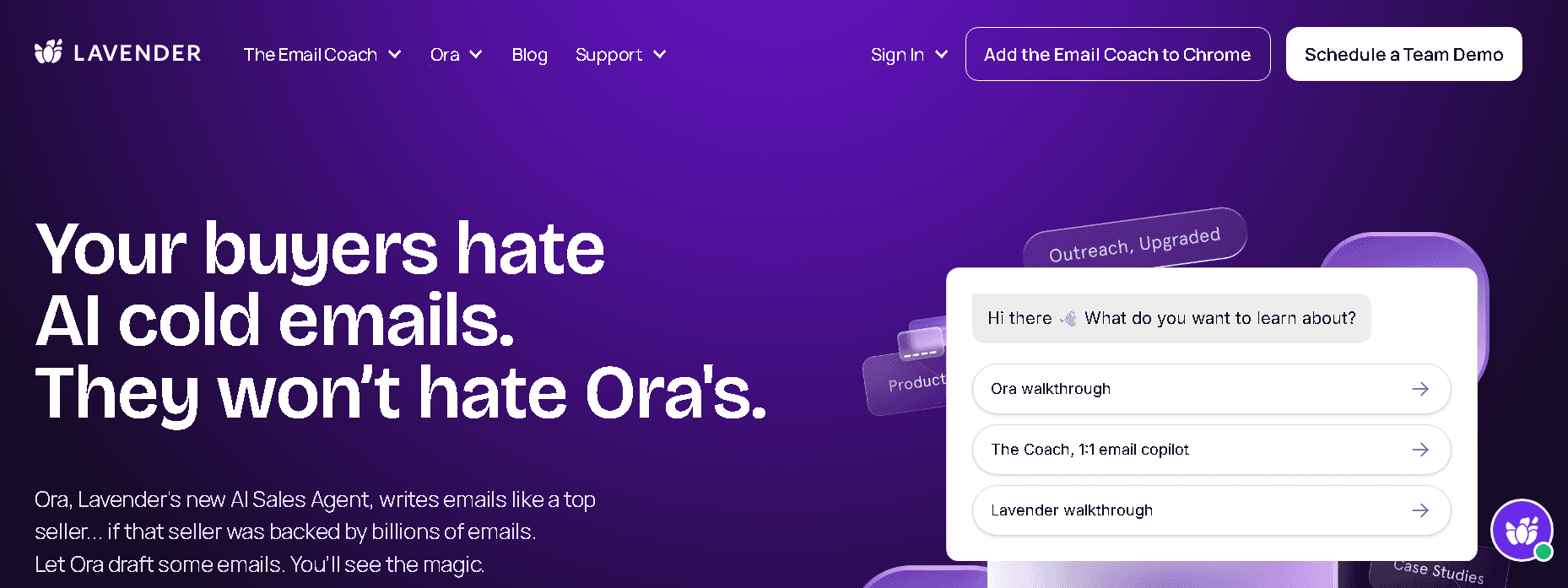
Lavender functions as an AI email coaching layer that operates inside your inbox through a Chrome extension. It scores cold emails immediately and suggests rewrites before you hit send.
This prospecting software integrates with Gmail, Outlook, Salesloft, Outreach, and HubSpot. It positions itself at the coaching stage rather than the prospecting database layer that tools like Apollo or Cognism cover.
Key Features
The Email Coach assigns scores between 1-100 based on structure and personalization while flagging spam triggers. Inline rewrite suggestions generate multiple alternatives that appear once you click flagged sentences.
The Personalization Assistant searches the internet for recipient details. It includes personality insights using OCEAN and DISC assessments. Mobile Editor optimizes emails for phone viewing where most recipients read messages. Integrations work natively within existing workflows without platform switching.
Pros & Cons
Pros: Measured data in 231,818 cold emails shows emails scoring A-grade improved reply rates from 3.4% to 4.3%, a 27% increase. Quick setup requires no migration since it runs where you already write emails.
Cons: Chrome extension bugs cause crashes and slow loading. The scoring system feels arbitrary, with one-sentence emails scoring 90. Price-to-value debates persist as ChatGPT achieves similar results at lower cost.
Pricing
Plan | Monthly | Annual | Key Limits |
|---|---|---|---|
Free | USD 0 | USD 0 | 5 emails/month |
Starter | USD 29 | USD 27 | Unlimited coaching |
Pro | USD 49 | USD 45 | Priority support |
Teams | USD 99/seat | USD 89/seat | Team analytics |
Seamless.AI
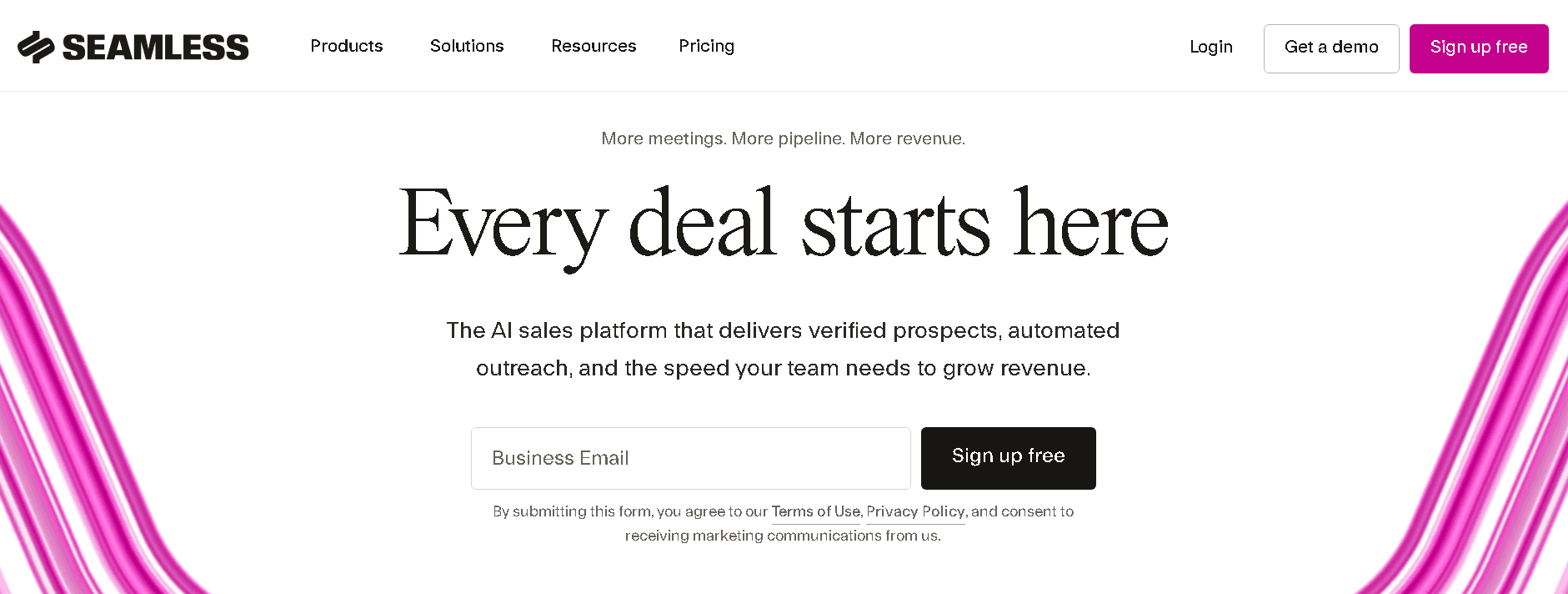
Seamless.AI operates as a real-time search engine that scans web sources continuously to surface verified contact data. The platform claims access to 1.6B+ business emails and 448M+ phone numbers. G2 reviews from 5,319 users give it a 4.4/5 rating.
This positions it among high-volume b2b prospecting tools that prioritize speed over static database accuracy.
Key Features
The Prospector applies 100+ filters to build targeted lists based on job title, industry, company size and seniority. The Chrome extension pulls contact details directly from LinkedIn profiles with one-click reveals. Autopilot refreshes prospect lists based on saved filters automatically.
Pitch Intelligence combines publicly available information into account summaries. Buyer intent data identifies companies showing purchase signals. Native CRM integrations sync with Salesforce, HubSpot, Salesloft and Outreach.
Pros & Cons
Pros: Fast lead sourcing builds 100+ contact lists within minutes. The database covers 1.7B+ contacts and 150M companies. Chrome extension workflow requires zero training.
Cons: Data accuracy averages 85% for emails and 60% for phone numbers. Opaque pricing requires sales calls to get quotes. Auto-renewal complaints dominate review platforms. The credit consumption model charges whether data verifies or not.
Pricing
Plan | Price | Credits | Refresh |
|---|---|---|---|
Free | USD 0 | 50 lifetime | One-time |
Simple | USD 147/mo | 250/month | Monthly |
Pro | USD 79-299/user/mo | 1,000/day | Daily |
What are benefits of using sales prospecting tools?
Companies implementing b2b prospecting software report measurable ROI within 90 days through three core advantages that impact revenue.
Better targeting
Sales prospecting platforms help prioritize prospects more likely to convert while delivering messaging that appeals to specific buyer needs. Conversion rates climb when representatives reach prospects through preferred channels with relevant information.
Research shows 73% of B2B buyers avoid suppliers sending irrelevant outreach, making intelligent targeting non-negotiable. SDRs using modern prospecting tools report 46% more meetings booked by making use of AI research agents and automated workflows.
Lower costs
Prospecting platforms combine 3-5 separate tools into one workspace and cut costs in half while improving data accuracy. Teams succeed with fewer hires when salespeople accomplish more in less time, reducing recruitment expenses.
Representatives who target the right prospects experience higher job satisfaction and lower turnover. Companies save on hiring and training costs by reducing employee churn.
Time and knowing how to build relationships
Reps spend nearly 72% of their day on non-selling activities. Sales prospecting tools with built-in AI functionality automate repetitive tasks from data entry to follow-up emails and free time for trust and connection. Automation will give efficient handling of prospecting tasks while minimizing errors.
Teams using modern sales tech stacks save 15-20 hours per rep per week on manual research and data entry. That capacity gets redirected toward relationship development that closes deals.
What are the key features of sales prospecting tools to look for?
Selecting the right b2b prospecting software requires evaluating five capabilities that separate functional platforms from those that create more problems than they solve.
Compliance
Regulations move across GDPR, CCPA, and CAN-SPAM frameworks. The best sales prospecting tools verify your workflow meets current best practices and legal requirements without manual intervention. Platforms should honor opt-out requests within mandated timelines (15 days for CCPA, 30 days for GDPR), maintain suppression lists, and include visible unsubscribe mechanisms in every email.
Ease of use
Your prospecting platform should simplify workflows rather than complicate them. Tools that require weeks of onboarding achieve adoption rarely. Interfaces that deliver immediate value are what you need, and they shouldn’t demand behavior changes from reps.
AI-powered analytics
Every prospecting interaction generates data on customer behavior. AI-powered analytics transform this raw data into action-based insights. To cite an instance, the system might reveal that prospects respond better on social media than email or identify optimal call times when contacts answer instead of sending calls to voicemail.
System integration
Your prospecting tools must sync with existing CRM, billing, and marketing automation systems in both directions. Stand-alone platforms create data silos that waste time and lose information. Native integrations maintain a single source of truth across your tech stack.
Customizable and adaptable
Sales processes differ across organizations of all sizes. Flexible platforms adapt to your specific workflow needs and scale as business requirements change.
Conclusion
You’ve seen how different prospecting tools solve specific challenges. Apollo.io excels at database volume. 6sense identifies buying intent. Cognism delivers GDPR-compliant European contacts. No single platform dominates every use case, which explains why most teams combine two or three solutions.
Your next step depends on your prospecting bottleneck. Teams wasting hours on manual research benefit most from contact databases like Apollo or Lusha. Organizations struggling to identify ready-to-buy accounts need intent platforms like 6sense.
Sales teams wanting autonomous prospecting workflows should start with Rox to deploy AI agents handling research and outreach.
Test the platforms matching your workflow. Most offer free trials or freemium tiers that reveal fit within days.
FAQ
Why B2B Sales Teams Need Prospecting Tools?
Competitors already use prospecting platforms. Teams without them face a disadvantage. More than that, 61% of B2B buyers prefer a rep-free buying experience. This requires intelligent tools that deliver customized outreach without feeling pushy. Manual research wastes 21% of an SDR’s day on outdated contact information.
What are different types of sales prospecting tools?
Lead generation tools flag prospects showing purchase readiness. They enable mass outreach through features like power dialers. CRM systems manage customer interactions across sales calls, service, social media and marketing emails. Sales intelligence platforms provide contact databases with verified information.
How do sales prospecting tools help with lead qualification?
These platforms use data to qualify leads by company size, role scope, budget authority and urgency tied to real pain points. AI analyzes behavior patterns to assess fit and intent. It routes qualified prospects on its own. Lead scoring prioritizes potential customers showing behavioral triggers. This ensures outreach centers on value rather than volume.
How do sales prospecting tools help with outreach?
Platforms automate follow-up cadences while maintaining customized messaging through structured data and dynamic fields. Multi-channel sequences coordinate email, LinkedIn and phone campaigns from one workspace. AI research agents gather prospect insights and personalization hooks on their own.
What tools are used for prospecting?
Teams combine 3-5 complementary tools across lead discovery, email finding and outreach automation. Common combinations include LinkedIn Sales Navigator with ZoomInfo or Apollo.io paired with engagement platforms like Outreach or Salesloft.
Similar Articles
We build with the best to make sure we exceed the highest standards and deliver real value.

Get started today
See how the Rox agent can put your pipeline generation, deal management, and account expansion on autopilot.