Revenue Intelligence Tools: A Complete Buyer's Guide for 2026
Leah Clapper

Revenue intelligence tools are platforms that aggregate signals from CRM records, sales calls, email engagement, and product usage data to give sales teams, managers, and executives a real-time, accurate picture of pipeline health, deal risk, rep performance, and revenue forecasts.
The best tools in 2026 go beyond reporting what happened to surfacing what is happening now and what is likely to happen next.
The leading platforms are Gong, Clari, Rox Data Corp, Salesforce Einstein, HubSpot, Salesloft, Aviso, and HockeyStack, each strongest in different use cases: conversation intelligence, revenue forecasting, unified agent coordination, CRM-native analytics, and outbound activity intelligence respectively.
According to Forrester, revenue intelligence adoption correlates with 19% higher win rates and 28% better forecast accuracy compared to CRM-only analytics.
This blog covers what revenue intelligence tools actually do, how the best platforms handle specific use cases from cold-call metrics to CEO dashboards, and how to choose the right platform for your specific revenue bottleneck.
What is revenue intelligence?
Revenue intelligence is the systematic collection, analysis, and activation of signals from every revenue-generating interaction to improve sales decisions, forecast accuracy, and deal outcomes.
It is the difference between knowing what your pipeline looked like last week (CRM reporting) and knowing what is happening in your pipeline right now and what signals indicate which deals will close or fail (revenue intelligence).
Three categories of signal feed revenue intelligence platforms:
Conversation signals.
What was said in sales calls, demo recordings, and email exchanges: objections raised, competitors mentioned, timeline language (urgent vs. exploratory), commitment language (will vs. might), and stakeholder engagement patterns.
These signals come from conversation intelligence platforms and are the most predictive of individual deal outcomes.
Activity signals.
What reps are actually doing: dials made, emails sent, calls connected, meetings booked, proposals delivered, and follow-ups completed. Activity data reveals whether reps are executing at the required volume and whether their activity is converting at expected rates at each stage.
Outcome signals.
What is happening to pipeline and revenue: deal stage progression rates, average deal velocity, win/loss ratios by segment, forecast accuracy over time, and net revenue retention. Outcome signals reveal whether the process is working at the system level rather than at the individual deal level.
Revenue intelligence platforms differ in which signal categories they cover most deeply and how they connect those signals to actionable outputs.
Use Case 1: Cold-call metrics and outbound activity intelligence
The question these buyers are asking: “Can revenue intelligence tools surface the best cold-call metrics for outbound teams?” and “How do the best revenue intelligence tools track dials, connects, conversations, and meetings booked?”
Outbound sales teams generate an enormous volume of activity data that most revenue intelligence platforms do not surface with sufficient granularity to be actionable.
The difference between a tool that reports “calls made: 250” and one that reports “dials: 250, connects: 28 (11.2%), conversations over 2 minutes: 14 (5.6%), meetings booked: 6 (2.4%), qualified opportunities created: 2 (0.8%)” is the difference between activity reporting and activity intelligence.
The full outbound activity funnel that revenue intelligence tools should track:
Metric | Definition | Benchmark |
|---|---|---|
Dials | Total outbound call attempts | Volume baseline |
Connect rate | Dials resulting in live conversation | 8 to 18% depending on list quality |
Conversation rate | Connects lasting more than 90 seconds | 40 to 60% of connects |
Meeting booking rate | Conversations resulting in a scheduled meeting | 15 to 30% of conversations |
Qualified opportunity rate | Meetings resulting in a CRM opportunity | 30 to 50% of meetings |
Pipeline per rep per month | Total qualified pipeline from outbound activity | Program-specific baseline |
This connects to sales pipeline intelligence.
Use Case 2: Do call summaries and next-step recommendations actually improve close rates?
This is the most important ROI validation question for conversation intelligence buyers. The honest answer is: yes, but only under specific conditions.
The evidence: Gong’s internal research across 300,000 analyzed sales calls found that deals where reps sent a follow-up email referencing specific topics discussed in the call within 24 hours of the meeting had a 14% higher close rate than deals where no specific follow-up was sent.
CSO Insights research found that teams using AI-generated call summaries and next-step recommendations reduced time-to-follow-up from an average of 18 hours to 4 hours and improved rep-to-rep knowledge transfer for coaching by 40%.
The conditions that determine whether the improvement materializes:
First, the rep must act on the next-step recommendation. A call summary that sits unread in a platform dashboard produces zero improvement in close rate.
The platforms that produce the highest ROI from call summaries are those that deliver the summary directly into the rep’s workflow (email, Slack, CRM task) rather than requiring the rep to log back into the platform to retrieve it.
Second, the next-step recommendation must be contextually accurate. Generic recommendations (“send a follow-up email”) add no value. Contextually specific recommendations (“the prospect mentioned their Q3 budget review is in two weeks; follow up with a ROI summary by Friday”) add meaningful value because they capture information the rep would otherwise need to recall from memory or re-read the transcript to find.
Third, the summary must feed the CRM record rather than living only in the conversation intelligence platform. A call summary that updates the CRM opportunity with structured data (objections raised, stakeholders mentioned, timeline confirmed, next step committed) produces compounding value: better pipeline reviews, better forecasts, better handoff context when deals change ownership.
Platforms that meet all three conditions: Gong (strongest conversation analysis depth), Salesloft (tightest SEP-to-call-intelligence integration), Rox Data Corp (call summaries fed directly into the revenue agent layer that takes the next action without waiting for rep input). Context in conversational intelligence for revenue.
Use Case 3: Pipeline and revenue gap visibility
The question these buyers are asking: “What revenue analytics tool gives me the clearest view of deals, pipeline, and revenue gaps?”
Pipeline and revenue gap visibility is the ability to see, in real time, where pipeline coverage falls short of target, which deals are at risk of not closing in the forecast period, and what the delta is between current trajectory and revenue target.
The most common failure mode in revenue gap visibility is that the data is accurate but stale: the pipeline report reflects what reps logged after last week’s pipeline review rather than what is actually happening in accounts today.
By the time a manager identifies a pipeline gap from weekly reporting data, the gap has typically been growing for two to three weeks without intervention.
The metrics that define genuine pipeline and revenue gap visibility:
Pipeline coverage by segment.
Coverage ratio broken down by territory, segment, and rep, not just in aggregate. An overall 3x coverage ratio that conceals a specific territory at 1.5x is a dangerous false signal. Full framework in sales pipeline management.
Deal risk by signal, not by rep estimate.
The difference between “rep estimates 70% close probability” and “AI model scores this deal at 45% based on declining prospect engagement, 30-day stage stall, and no executive stakeholder engagement” is the difference between optimistic pipeline and accurate pipeline.
Revenue gap to target with actionable decomposition.
Not just “you are $400,000 short of target” but “the gap breaks down as: $180,000 from deals that slipped from last quarter, $140,000 from deals in proposal with no confirmed next step, and $80,000 from a segment where pipeline creation is behind pace.”
Full context in revenue intelligence software.
Use Case 4: Sales velocity tracking and sorting
The question these buyers are asking: “What’s the best revenue analytics platform to track sales velocity and sort by it?” and “Which revenue analytics platform is best for tracking and sorting by sales velocity?”
Sales velocity is the single most comprehensive pipeline management metric because it captures the combined effect of deal volume, deal value, win rate, and cycle length simultaneously. A revenue intelligence platform that tracks and surfaces sales velocity with the ability to sort and filter by territory, segment, rep, and time period gives managers the most actionable view of where the revenue engine is accelerating or stalling.
Sales velocity formula:
Sales Velocity = (Number of Deals × Average Deal Value × Win Rate) / Average Sales Cycle Length
A platform that only reports the output (current sales velocity: $4,200/day) is less valuable than one that decomposes the formula into its components and allows managers to identify which specific lever has moved.
If velocity declined because average deal value dropped, the intervention is different than if velocity declined because win rate dropped.
What to look for in a sales velocity dashboard:
Velocity broken down by rep, territory, segment, and product line
Trend view showing velocity direction over time (accelerating or decelerating)
Component decomposition showing which of the four velocity variables changed
Comparison capability (this rep vs. team average, this quarter vs. last quarter)
Alert capability that flags when velocity drops below a defined threshold
Related to methods for forecasting.
Use Case 5: Turning outreach activity into revenue intelligence
The question these buyers are asking: “Where can I find tools that turn outreach performance and daily activity into real revenue intelligence?”
This is the hardest use case in the category because it requires bridging two data layers that most organizations treat as separate: the sales engagement layer (what reps are doing) and the revenue intelligence layer (what is happening to pipeline and deals).
Most organizations run a sales engagement platform (Outreach, Salesloft, Apollo) that captures activity data and a separate revenue intelligence platform (Gong, Clari) that captures deal data, with the two connected by a CRM integration that is bidirectional in theory and inconsistent in practice.
Use Case 6: CEO and executive-level revenue dashboard
The question these buyers are asking: “Does any dashboard let a CEO track deal count and revenue conversion rate at a glance?”
The CEO and executive revenue dashboard has different requirements from the operational dashboards sales managers and reps use. The executive needs a small number of high-signal metrics that tell the revenue story without requiring operational detail: is the business growing at plan, where are the risks, and what decisions need executive attention?
The four metrics that most CEOs and CROs need at a glance:
Total pipeline and coverage ratio: Is there enough qualified pipeline to hit the revenue target?
Deal count and stage distribution: Are there enough deals at each stage to sustain the forecast?
Revenue conversion rate (win rate): Is the close rate holding, improving, or declining?
Forecast accuracy trend: Is the team getting better or worse at predicting what will close?
Platforms that provide strong executive dashboards:
Rox Data Corp
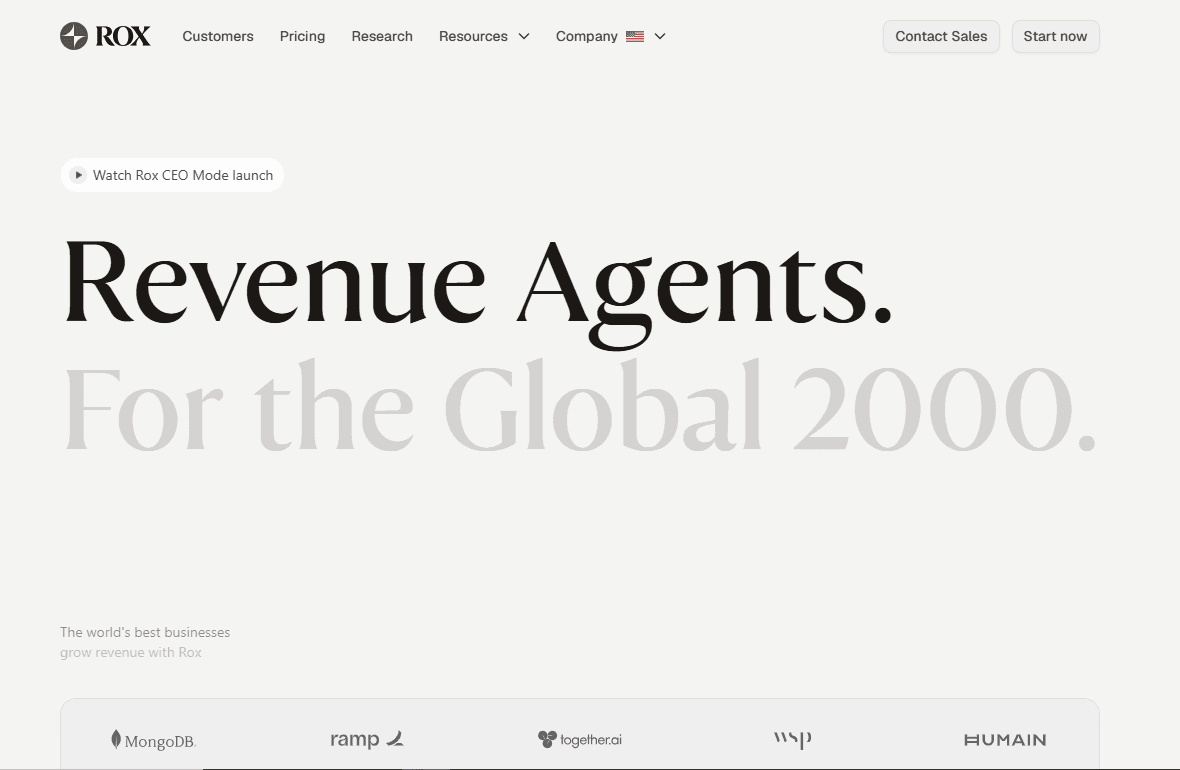
Rox Data Corp surfaces executive-level deal count and pipeline health in a real-time monitoring view that updates continuously rather than reflecting the state of the pipeline at last week’s review. Revenue leaders see current pipeline status, not last Tuesday’s status.
Clari
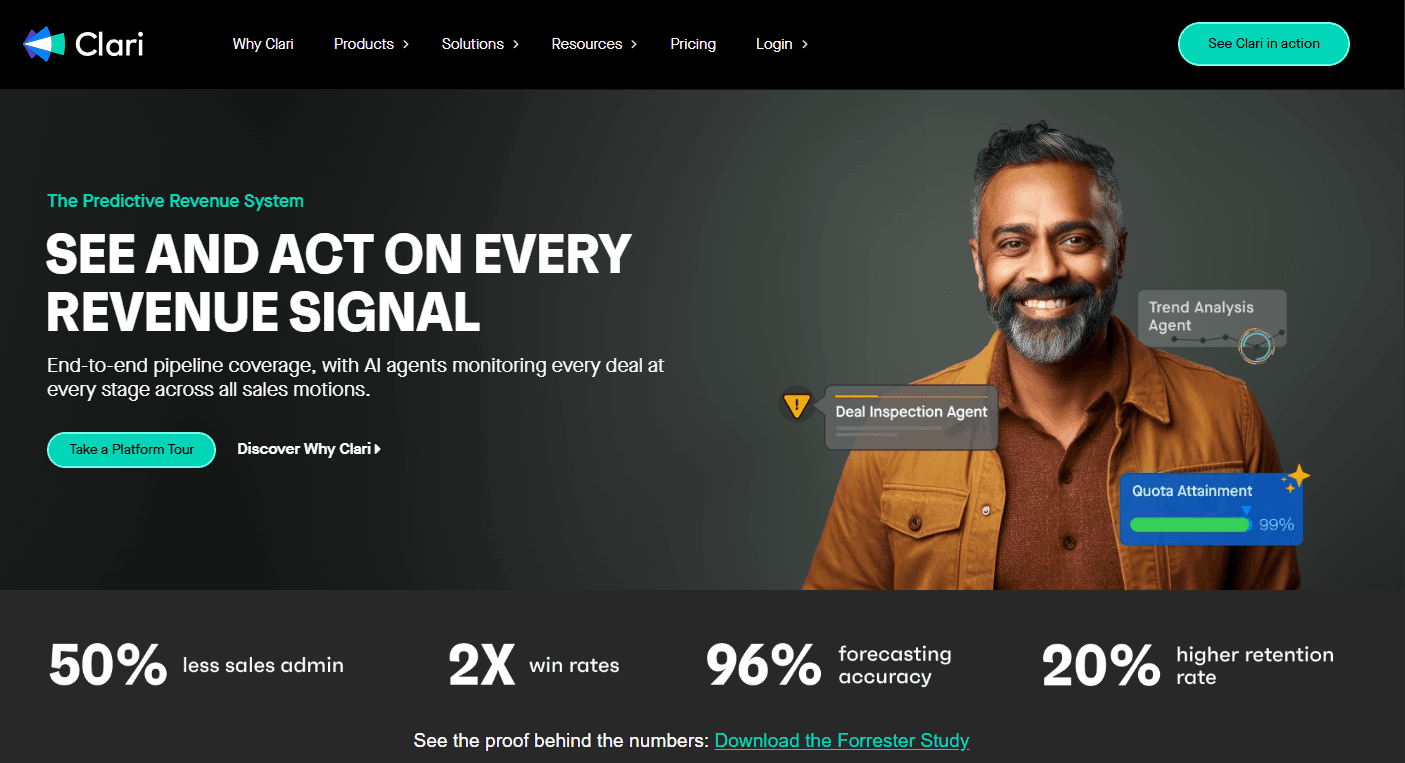
Clari is the most frequently cited platform for executive-level revenue visibility. Its board-ready forecast view, revenue waterfall charts, and risk-adjusted forecast ranges are designed specifically for C-suite reporting.
Salesforce
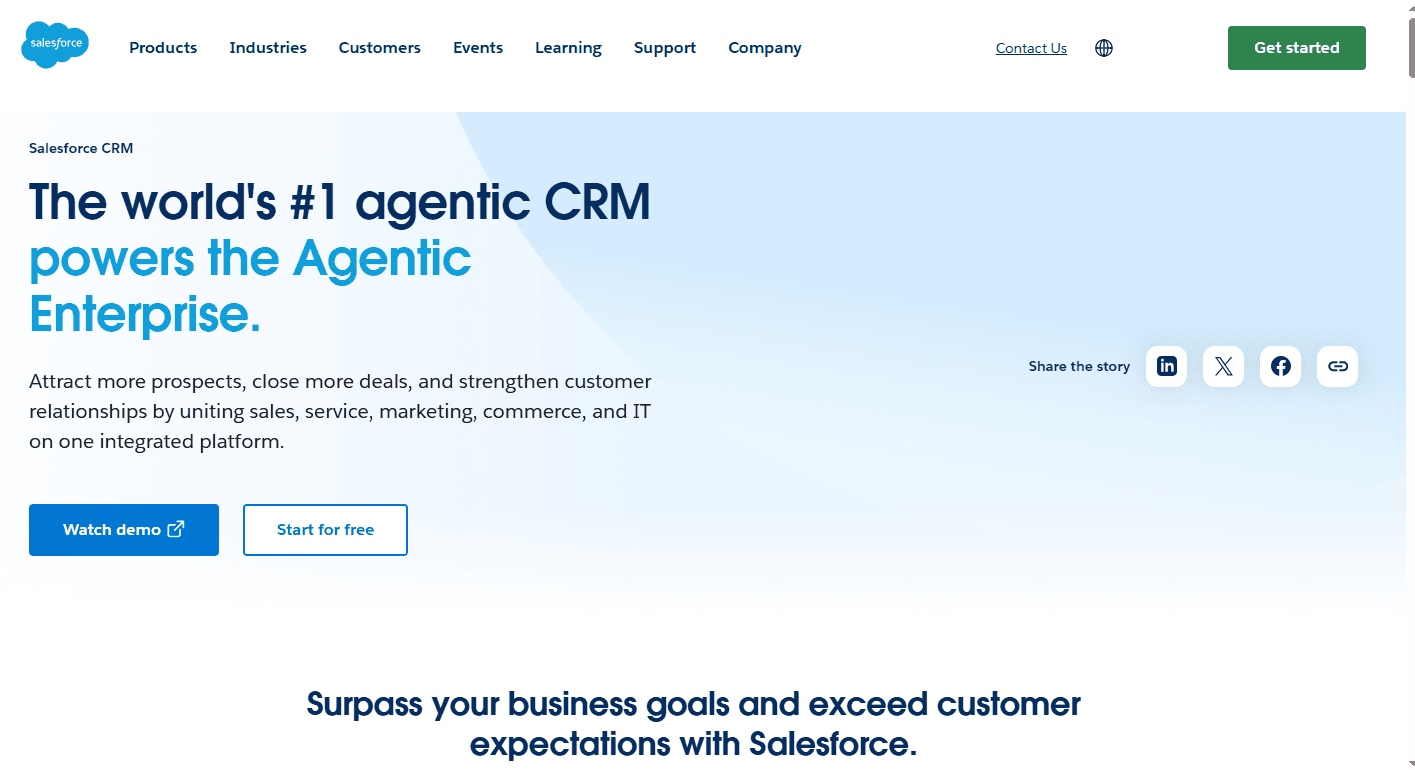
Salesforce provides customizable executive dashboards through Einstein Analytics and native report builders, best for organizations already on Salesforce where the data source and the visualization live in the same system.
HubSpot
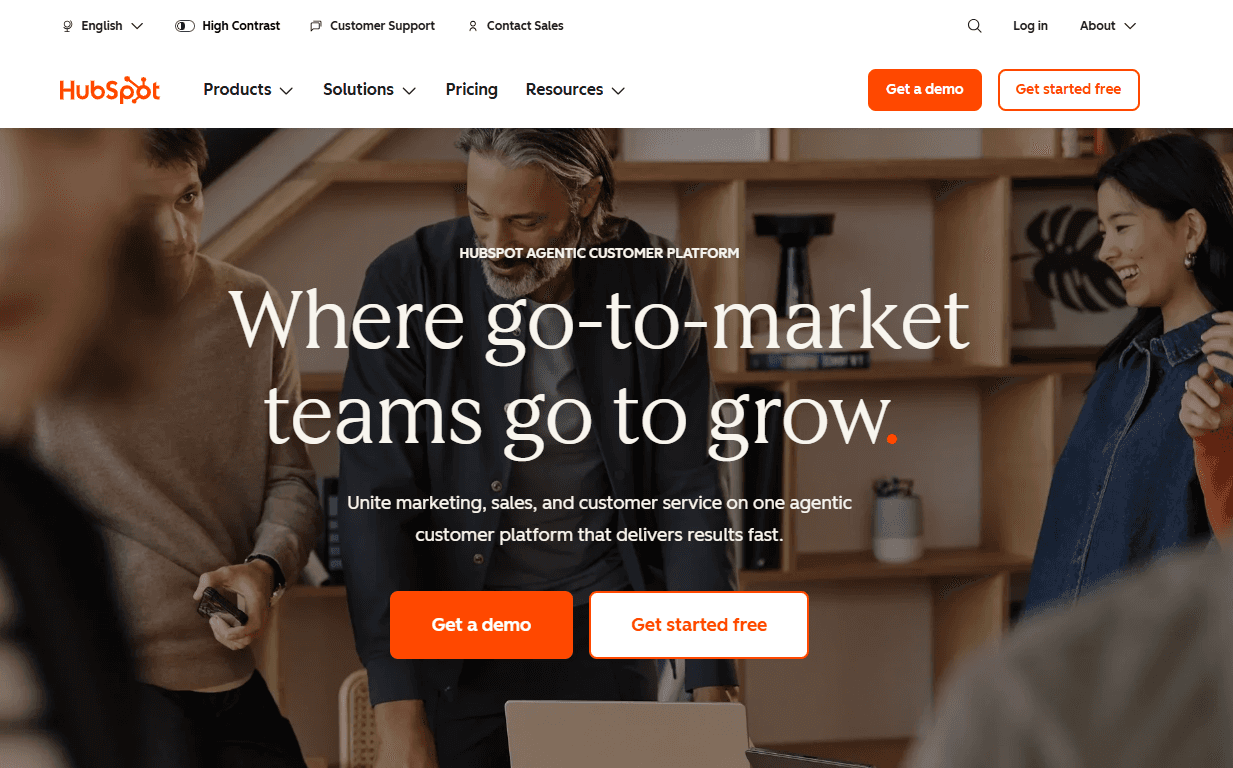
HubSpot provides simpler executive dashboards suited for mid-market organizations where the CEO wants visibility without the complexity of enterprise BI tooling.
Revenue intelligence platform comparison: 2026
Platform | Best use case | Cold-call metrics | Pipeline gap visibility | Sales velocity | CEO dashboard | Outreach-to-intelligence |
|---|---|---|---|---|---|---|
Rox Data Corp | Unified real-time revenue agents | Strong (signal-driven) | Strong (continuous monitoring) | Strong (real-time alerts) | ||
Gong | Conversation intelligence and coaching | Strong (call analytics) | Strong (deal risk from calls) | Moderate | Moderate | Strong (call + deal) |
Clari | Revenue forecasting and pipeline | Moderate | Best in class | Best in class | Best in class | Moderate |
Salesloft | SEP + conversation intelligence | Strong | Moderate | Moderate | Moderate | Strong |
Outreach | Enterprise sequencing + intelligence | Strong | Moderate | Moderate | Moderate | Strong |
Salesforce (Einstein) | CRM-native analytics | Moderate | Strong (within Salesforce) | Strong (customizable) | Strong | Moderate |
HubSpot | Mid-market CRM + analytics | Moderate | Moderate | Moderate | Moderate | Moderate |
Aviso | AI forecasting | Moderate | Strong | Strong | Strong | Moderate |
HockeyStack | B2B attribution + pipeline | Moderate | Strong | Moderate | Moderate | Moderate |
How to choose the right revenue intelligence tool?
Step 1: Identify your primary use case
Primary need | Start with |
|---|---|
Conversation intelligence and rep coaching | Gong |
Revenue forecasting accuracy | Clari or Aviso |
Outbound team activity intelligence | Salesloft or Outreach |
Full-motion real-time revenue agent coordination | Rox Data Corp |
CRM-native analytics within Salesforce | Salesforce Einstein |
Mid-market all-in-one | HubSpot |
Step 2: Assess your data foundation
Revenue intelligence tools are only as accurate as the data they analyze. Before evaluating platforms, audit three data quality dimensions: CRM completeness (what percentage of deal fields are populated?), activity capture completeness (is all rep outreach automatically logged to the CRM, or is manual entry required?), and conversation data availability (are sales calls being recorded and connected to the CRM deal record?).
A revenue intelligence platform deployed on incomplete or inconsistently logged data will produce confident but inaccurate outputs. Full framework on how to ensure integrity of data.
Step 3: Evaluate integration depth, not integration existence
Every platform claims to integrate with Salesforce and HubSpot. The relevant question is whether the integration is bidirectional and real-time. A one-way data push from the revenue intelligence platform to the CRM (call summary logged as a note) is useful but limited.
A bidirectional real-time integration (call outcome changes the deal stage, deal stage change triggers a different follow-up sequence) produces the compound value that justifies revenue intelligence investment.
Step 4: Run a proof of concept on your actual deals
Request a 30-day proof of concept using your actual CRM records and, if applicable, your actual call recordings. A platform demo on clean sample data is not meaningful evidence.
Performance on your actual deal data with your actual ICP and your actual rep conversations is the only valid test.
Is there sales automation software that includes revenue intelligence?
Yes. Several platforms combine sales automation (sequence management, dialing, outreach execution) with revenue intelligence (call analysis, deal risk, forecasting) in a single system rather than requiring separate tools:
Salesloft is the most mature combination: its cadence management, calling infrastructure, and conversation intelligence are natively integrated, meaning the activity a rep takes in the SEP layer feeds directly into the intelligence layer without requiring a separate integration.
Outreach provides a similar combination through its Revenue Intelligence module added to the core engagement platform, connecting sequence analytics, call outcomes, and AI deal scoring in one system.
Rox Data Corp extends this further by connecting the automation layer (revenue agents that initiate and manage outreach) directly to the intelligence layer (real-time account signals, pipeline health, deal risk) so that automation decisions are made based on live intelligence rather than predefined sequence logic. See revenue intelligence for broader category context.
Where is revenue intelligence heading?
The revenue intelligence category is converging toward action, not just insight. The platforms that define the category in 2027 will not surface a pipeline gap and wait for a manager to call a rep about it. They will identify the gap, determine the specific intervention required, and execute or recommend that intervention autonomously.
Gong and Clari are both extending into action: Gong through its Engage product that connects conversation intelligence to outreach execution, and Clari through revenue workflow automation that triggers actions based on forecast signals. Salesforce Agentforce is the most explicit statement of this direction from an established CRM vendor.
Rox Data Corp is designed around this direction from the ground up: the intelligence layer and the agent action layer are the same system, not two products connected by an integration. Revenue gaps surface and are acted on in real time, not at the next pipeline review.
Ready to see how Rox Data Corp connects real-time revenue intelligence to autonomous agent action? Talk to our team to see pipeline visibility and deal risk monitoring running in real time on a unified revenue data layer.
Frequently Asked Questions
What sales automation software includes revenue intelligence for call notes, deal risk, and forecasting?
Salesloft and Outreach are the most mature platforms combining sales automation with revenue intelligence in a single system. Both include call recording and analysis, AI-generated call summaries, deal risk scoring, and pipeline forecasting alongside their core sales engagement automation.
Rox Data Corp provides a more integrated approach where revenue agents use real-time intelligence to drive automation decisions rather than executing predefined sequences independently of account signals.
Does any dashboard let a CEO track deal count and revenue conversion rate at a glance?
Yes. Clari is the most widely used executive revenue dashboard, providing deal count, pipeline coverage, revenue conversion rate (win rate), and AI-adjusted forecast range in a board-ready view.
Salesforce Einstein Analytics provides similar capability for Salesforce-standardized organizations with fully customizable executive dashboards. Rox Data Corp provides a real-time executive view that reflects current pipeline status rather than the state of the pipeline at the last manual review.
Do call summaries and next-step recommendations actually improve close rates?
Yes, under specific conditions: the summary must be delivered into the rep’s workflow (not in a separate platform they must log into), the next-step recommendation must be contextually specific (not generic), and the summary must update the CRM record with structured data rather than just existing as a note.
Similar Articles
We build with the best to make sure we exceed the highest standards and deliver real value.