10 Best AI Sales Tools That Actually Close Deals in 2026
Rox Editorial Team

AI sales tools have been adopted by 78% of B2B organizations, yet fewer than half use them to boost performance. That’s a huge chance left on the table.
Companies leveraging AI-powered sales platforms are seeing income increase by 13-15% and sales profits jump by 10-20%. Sales professionals using these tools report a 50% increase in leads and appointments. Modern sales moves too fast for manual work, so AI sales automation handles everything from outreach to CRM updates live. We’ve tested the best AI sales tools that deliver results in 2026.
What is an AI sales tool?
AI sales tools are software platforms that use artificial intelligence to automate and optimize various stages of the sales process. These tools handle tasks that previously required manual effort: prospecting, lead qualification, email outreach, CRM data entry, conversation analysis, and deal forecasting. Sales teams use AI-powered sales platforms to focus on closing deals while the software manages repetitive tasks in the background instead of spending hours on administrative work.
The scope of these tools ranges from AI sales prospecting tools that identify and enrich leads to AI sales assistant software that drafts personalized emails and schedules follow-ups. Some platforms function as full AI sales agent software and autonomously run outreach campaigns from start to finish. Others specialize in specific functions like conversation intelligence or predictive analytics.
What sets modern AI sales automation apart is knowing how to process massive datasets and extract applicable information. An AI SDR platform can analyze thousands of prospects, personalize outreach at scale, and adapt messaging based on response patterns. The software learns from past interactions to improve future performance.
How much do AI sales tools cost in 2026?
Pricing for AI sales automation tools varies based on team size and feature depth. Expect to pay $50-200 per user per month for a complete AI stack that has conversation intelligence, demo automation, and predictive analytics. Mid-market B2B SaaS companies with 50-500 employees spend USD 3,000-10,000 per month across their entire AI sales tool portfolio once they’ve built a mature stack.
The ROI calculation becomes clear when compared to human costs. A single SDR carries a fully loaded cost of USD 8,000-12,000 per month. AI SDR platforms cost USD 6,000-24,000 annually versus USD 75,000-100,000 for a human sales rep. The investment pays for itself quickly if AI tools for sales and marketing make your existing team 30% more productive.
Performance metrics further justify the spend. AI SDRs generate 40-60 qualified opportunities per month compared to 15-20 for human SDRs. The software operates 24/7 without breaks, handles much higher outreach volumes, and maintains consistent messaging quality in every interaction. The math works at nearly any reasonable budget when weighed against the alternative of hiring additional headcount for B2B sales tools pricing.
AI sales tools: Top picks for 2026
Rox
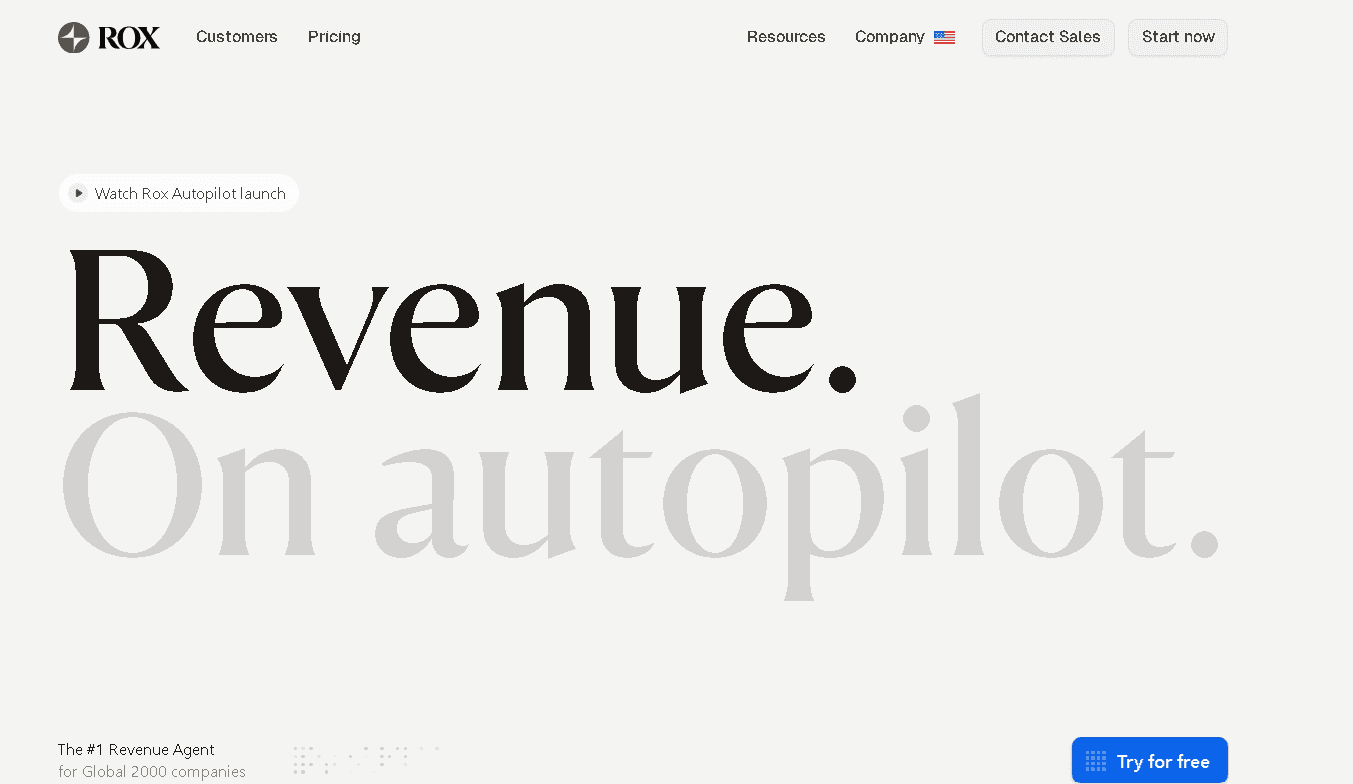
Rox positions itself as an AI-native revenue operating system rather than another sales engagement tool. Autonomous AI agents handle research, outreach, and pipeline management throughout your entire customer lifecycle. The platform runs on a warehouse-native architecture and connects directly to your data infrastructure (Amazon Redshift, Snowflake). Your information stays within your environment rather than being copied to external servers.
Key Features
The Command interface arranges multi-agent workflows through natural language requests. Ask it to prep a renewal meeting. It distributes tasks to specialized agents that research usage patterns, identify stakeholders, draft outreach, update CRM records, and assemble proposals. Each agent operates in parallel and pulls from unified context that combines signals from CRM, finance, support, and product telemetry.
Research agents conduct deep account analysis and market intelligence. Meet functionality records, transcribes, and converts conversations into actions. Outreach agents generate individual-specific messaging placed in context by your data.
Revenue tracking updates opportunities and advances pipelines without manual input. The platform ships with web, Slack, iOS, and macOS apps that work in a variety of environments.
Pros & Cons
Pros:
Warehouse-native security architecture keeps data in your infrastructure
Free Starter tier for pilots
Access across web, Slack, iOS and macOS
Cons:
Action-based metering lacks transparency for budgeting
Limited customization options
No native contact database for email verification
Enterprise-focused architecture requires data warehouse
Pricing
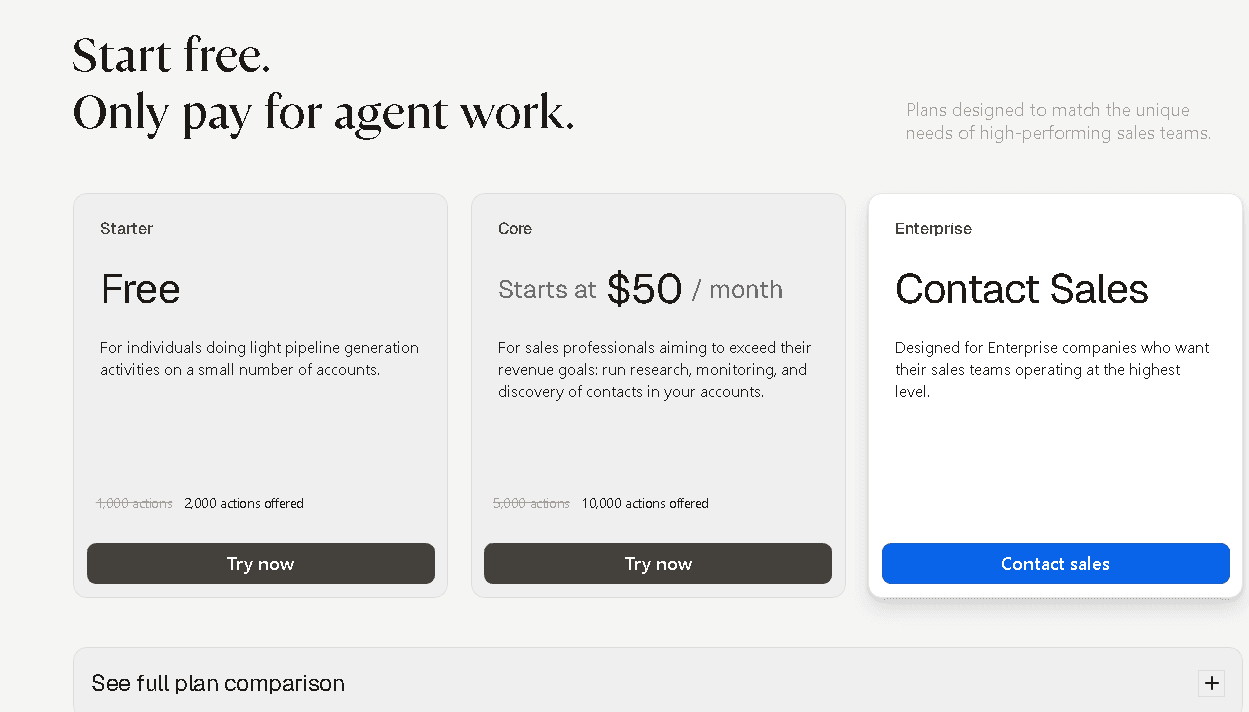
Starter runs free with 2,500 actions monthly, 10 agents, and 10 account capacity. Core costs USD 50 monthly and provides 5,000 actions, 100 agents, and 100 accounts. Enterprise pricing requires direct sales contact. Actions measure specific AI tasks like research, enrichment, and meeting briefs. Complex multi-step workflows consume 5-50 actions depending on depth.
Best For
Rox suits Global 2000 enterprises running Salesforce with cloud data warehouses. CROs and RevOps leaders implementing full-scale AI transformation find the agent swarm approach fits complex sales processes. Skip it if you run HubSpot, lack warehouse infrastructure, or need verified contact data built-in.
Salesforce Einstein:
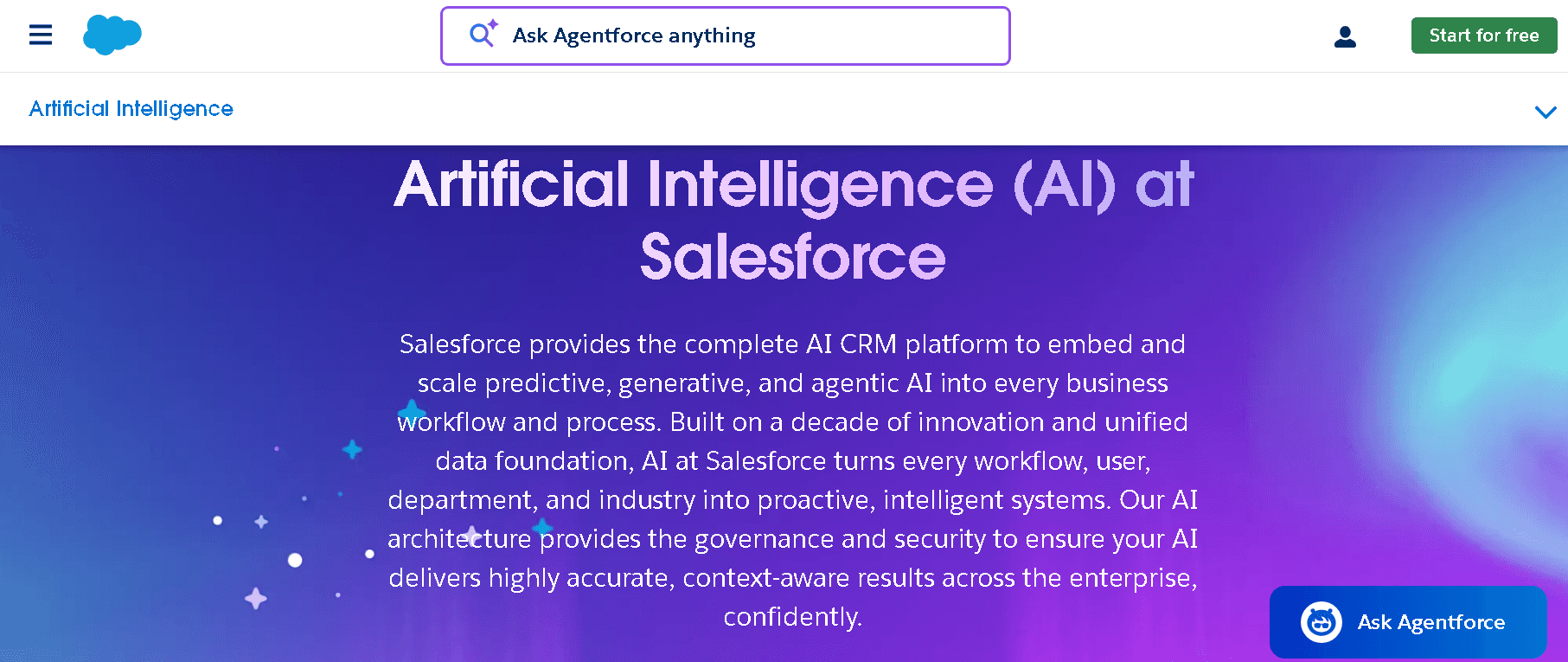
Built on nearly a decade of machine learning development, Salesforce Einstein integrates predictive, generative, and agentic AI into the Salesforce platform. Einstein embeds artificial intelligence across Sales Cloud, Service Cloud, and Marketing Cloud workflows instead of operating as a standalone tool.
The platform combines three distinct AI approaches: predictive models that forecast outcomes, generative capabilities that create content, and agentic systems that execute multi-step tasks on their own.
Key Features
Lead scoring is Einstein’s strongest capability. The system analyzes historical conversion data and scores incoming leads based on pattern matching with accounts converted in the past. Leads scored 80+ converted at 34%, those in the 40-60 range converted at 11%, and leads below 30 converted at just 3%. The model improves as it ingests additional data.
Einstein Activity Capture logs emails and calendar events to Salesforce records and matches communications to contacts and opportunities without manual input. Rep compliance on email logging sits around 40% before implementation. Coverage jumps to 85% after activation.
Opportunity Insights predicts deal closure probability and flags at-risk accounts, though accuracy remains inconsistent at around 52%. Email engagement tracking suggests optimal send times, though following these recommendations improved open rates by only 3 percentage points, from 22% to 25%.
The platform has forecasting tools, conversation intelligence to analyze calls, and Next Best Action recommendations that surface contextual suggestions during customer interactions. Einstein operates through Agentforce Trust Layer security, which masks sensitive data and maintains a zero-retention policy for proprietary information used with external language models.
Pros & Cons
Pros:
Lead scoring delivers accurate predictions that improve over time
Activity capture eliminates manual logging burden and increases data completeness
Native Salesforce integration needs no additional setup
Enterprise editions have core Einstein features at no extra cost
Cons:
Opportunity prediction accuracy performs at coin-flip levels (52%)
System flags problems but doesn’t execute corrective actions on its own
Email insights give marginal value with weak correlation to actual engagement
Needs Enterprise edition or higher for full feature access
Pricing
Einstein AI capabilities come bundled with Salesforce Enterprise and Unlimited editions. The complete Einstein suite with advanced features runs around USD 50 per user monthly on top of base Salesforce licensing. A 22-person team should expect USD 13,200 in annual add-on costs.
Organizations on Enterprise edition gain access to core Einstein functionality without additional charges, which makes lead scoring and activity capture available right away.
HubSpot Sales Hub:
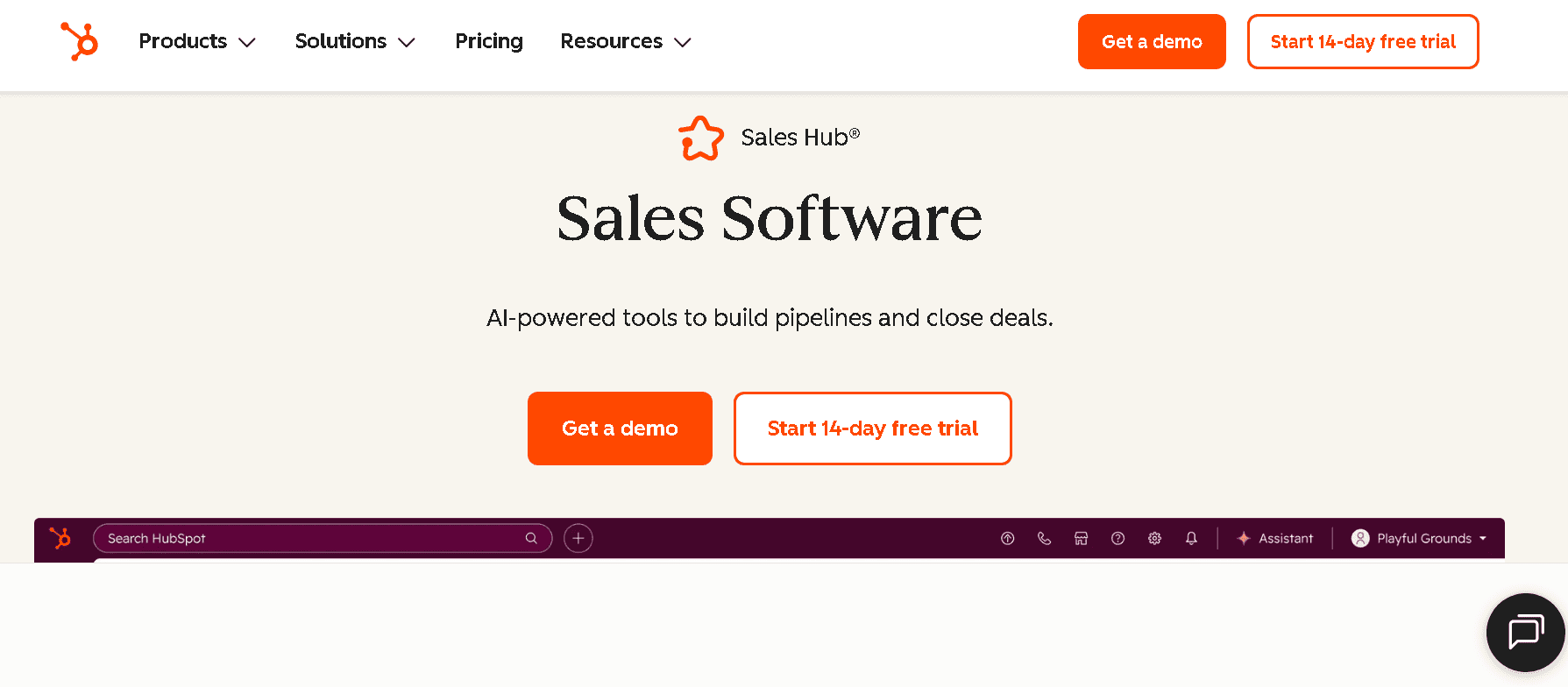
HubSpot Sales Hub integrates AI directly into its CRM to streamline sales processes, automate repetitive tasks, and provide actionable insights that help teams close deals faster. Rather than functioning as a standalone tool, AI capabilities are embedded across contact management, pipeline tracking, and marketing workflows.
The platform combines predictive scoring, generative content, and workflow automation to enhance efficiency at every stage of the sales cycle.
Key Features
HubSpot’s predictive lead scoring analyzes historical conversion data, engagement patterns, and company attributes to highlight the most promising opportunities. High-priority leads typically convert at 32–35%, mid-tier leads at around 12%, and low-priority leads under 5%, with the system improving accuracy as new interactions feed into the model.
AI-powered activity capture logs calls, emails, and meetings automatically, increasing data completeness from roughly 45% manually to over 80%. Automated email sequences ensure follow-ups are sent at optimal times, while AI-generated content helps reps craft personalized emails, proposals, and follow-ups, boosting response rates by 4–6%.
Deal probability scoring and next-best-action recommendations guide reps toward at-risk opportunities and suggested tasks, helping them focus on the most impactful activities.
Pros & Cons
Pros:
Predictive lead scoring prioritizes high-value opportunities
Activity capture and email automation reduce manual workload
AI-generated content improves personalization and engagement
Native CRM integration requires no additional setup
Cons:
Deal probability scoring is moderately accurate (~55–60%)
Next-best-action recommendations provide guidance but don’t execute actions automatically
Full AI features require Professional or Enterprise tiers
Pricing
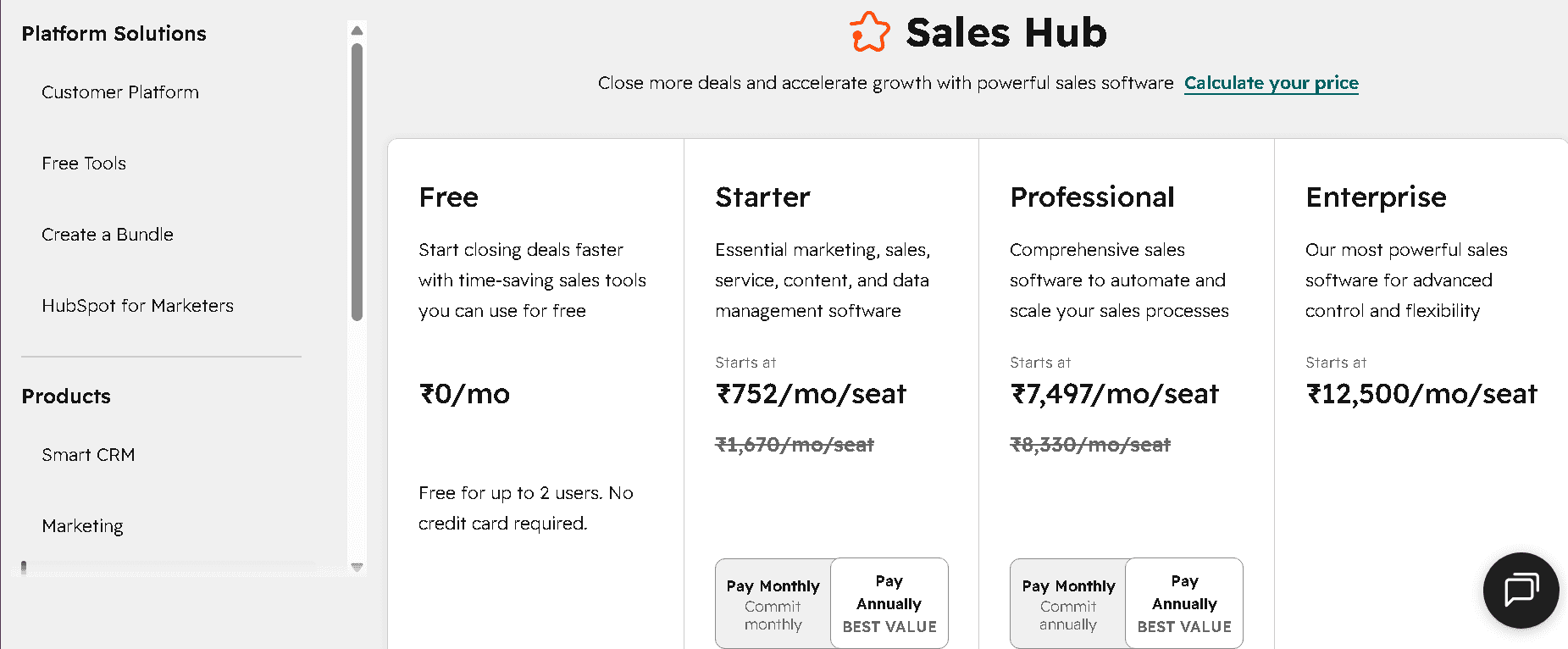
AI features are included in HubSpot Sales Hub Professional and Enterprise editions. Professional starts at around USD 50 per user per month, while Enterprise adds advanced predictive and automation tools at approximately USD 120 per user per month. A 20-person team can expect annual costs between USD 12,000 and 28,800 depending on tier and add-ons.
Core features such as lead scoring, activity capture, and AI-assisted content creation are available immediately, allowing teams to accelerate sales without extra configuration.
ZoomInfo:
ZoomInfo operates as a go-to-market intelligence platform that combines sales, marketing and recruiting data into a unified system. The platform maintains a dominant market position with 15,000+ customers worldwide and a database spanning 100 million companies and 321 million active professionals.
Competition from Apollo.io, Clay and Cognism has grown. The company’s increased flexibility on pricing reflects this competitive pressure.
Key Features
The contact and company database delivers strongest coverage in North America, especially when you have enterprises with 500+ employees. Verified email addresses, direct-dial phone numbers and firmographic details (headcount, revenue, technology stack) provide foundational prospecting data.
Intent data stands as ZoomInfo’s main differentiator. The platform tracks companies that research specific topics through Bombora integration and first-party signals. This reveals buying interest before prospects involve themselves. WebSights identifies anonymous website visitors by company and enables immediate outreach to accounts showing interest.
Copilot AI creates buying groups arranged with ideal customer profiles. It gets account summaries that aggregate first and third-party data and produces individual-specific emails at scale. The system tracks engaged accounts and surfaces relevant buying signals without manual setup automatically. Chorus conversation intelligence records and analyzes sales calls, while Engage handles sales sequencing.
Pros & Cons
Pros: Enterprise US coverage excels. Intent data provides genuine buying signals. Technographic data accuracy surpasses competitors. Platform consolidation reduces tool sprawl.
Cons: SMB data quality trails Apollo inconsistently. International coverage lags regional specialists. Email accuracy has declined in recent tests. Contracts lock teams into annual commitments with auto-renewal clauses. Platform complexity requires dedicated RevOps resources.
Pricing
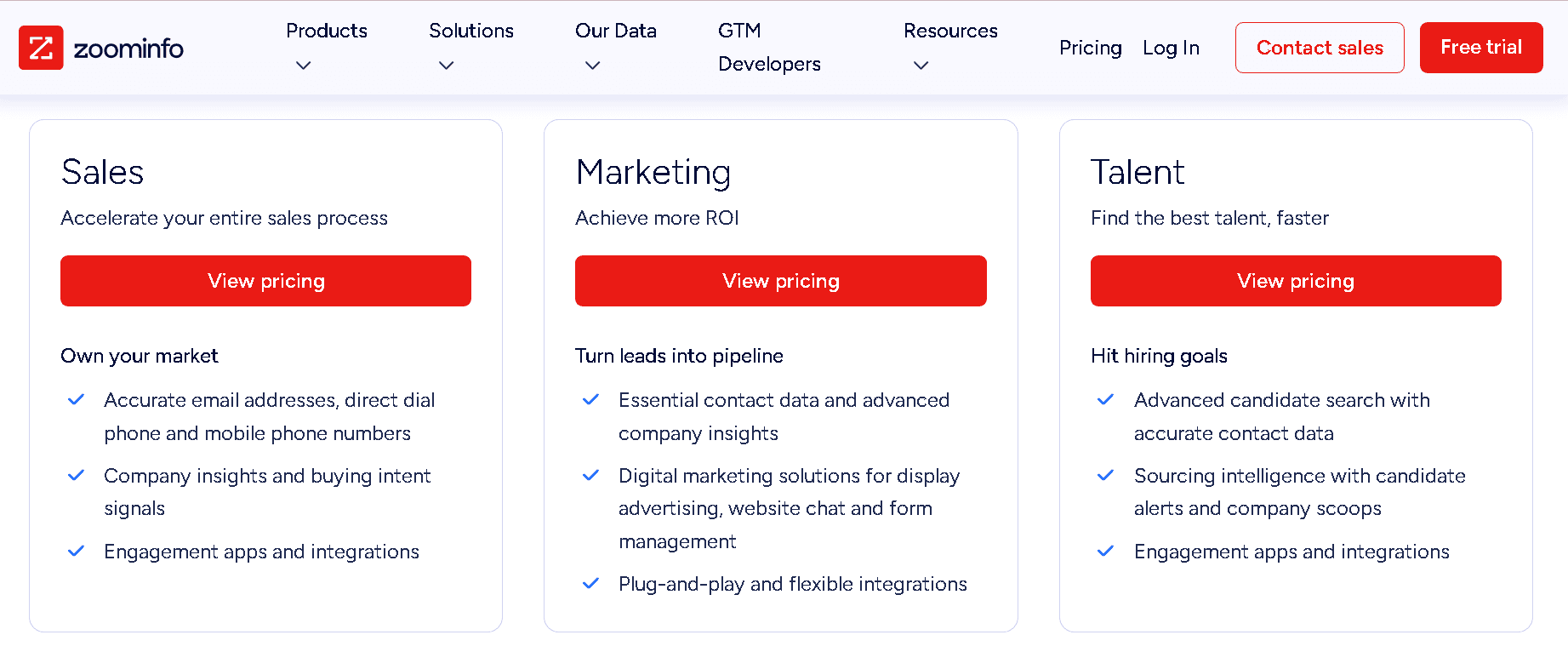
Tier | Annual Cost | Credits | Key Details |
|---|---|---|---|
Professional+ | USD 14,995 | 5,000 bulk | 3 seats, ReachOut extension |
Advanced+ | USD 29,995 | 10,000 + 1,000/user monthly | 6 intent topics |
Elite+ | USD 35,995 | 10,000-20,000 + 1,000/user monthly | 12 intent topics |
Discounts range 30-65% off list price depending on volume and competitive pressure. Tropic users achieve 17% additional savings beyond negotiated rates.
Cognism:
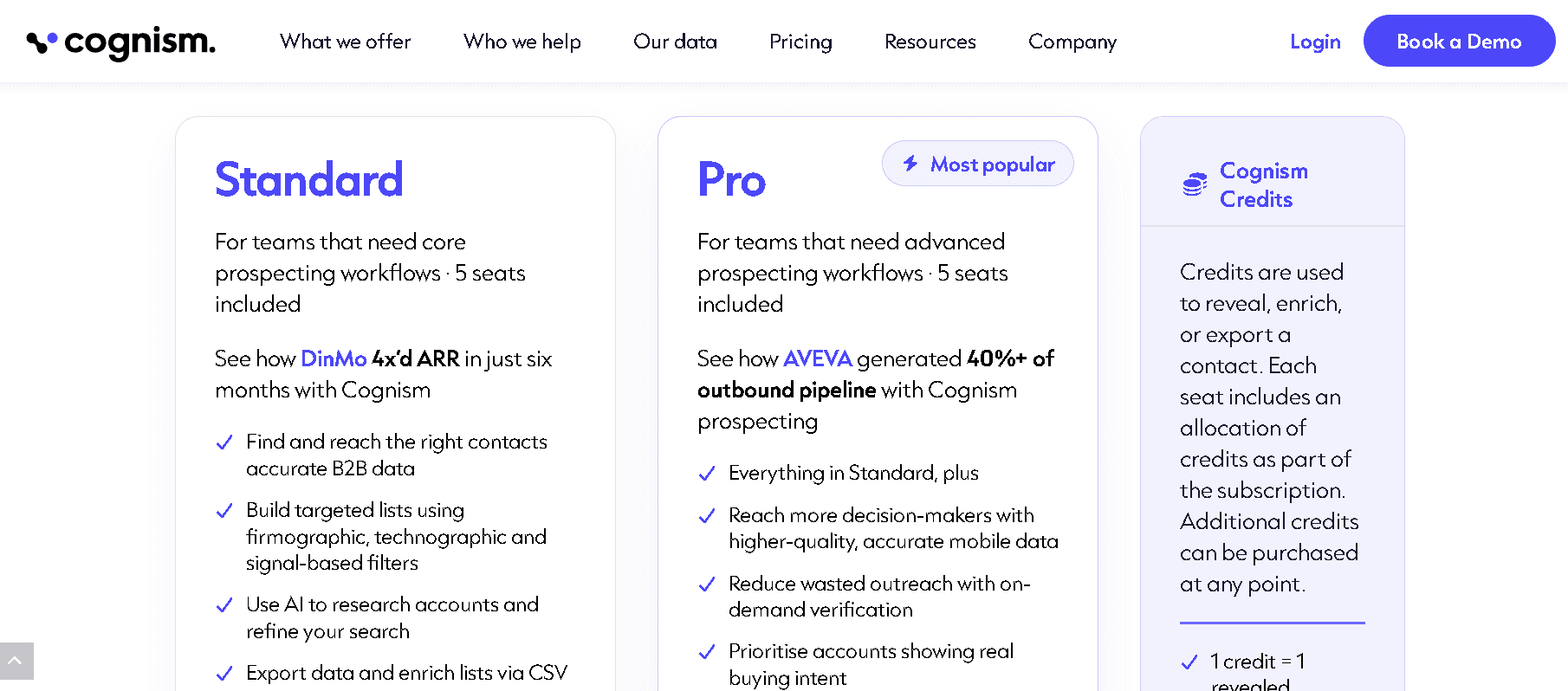
Cognism is a global sales intelligence platform that leverages AI, intent data, and verified contact information to accelerate prospecting and revenue growth. Unlike standalone tools, Cognism integrates company and contact data, intent signals, and AI-driven outreach capabilities into a unified system that supports sales, marketing, and revenue operations teams.
Key Features
Cognism’s contact and company database delivers strong coverage in North America and Europe, particularly for enterprises with 500+ employees. Verified emails, direct-dial phone numbers, and firmographic details such as headcount, revenue, and technology stack provide foundational prospecting data.
Its intent data is a key differentiator, tracking companies researching specific topics through Bombora integration and first-party signals to surface early buying interest. WebSights identifies anonymous website visitors by company, enabling immediate outreach to engaged accounts.
Copilot AI automates the creation of buying groups based on ideal customer profiles, generates personalized emails at scale, and tracks engaged accounts, surfacing relevant buying signals without manual setup. Complementary tools include Chorus conversation intelligence for sales call analysis and Engage for sales sequencing.
Pros & Cons
Pros:
Enterprise coverage in the US and Europe is strong
Intent data provides genuine early buying signals
Technographic data accuracy surpasses many competitors
Platform consolidation reduces the need for multiple tools
Cons:
SMB data coverage can be inconsistent
International coverage lags specialized regional platforms
Email accuracy has shown declines in recent tests
Platform complexity often requires dedicated RevOps resources
Contracts include annual commitments with auto-renewal clauses
Pricing
Tier | Annual Cost | Credits | Key Details |
|---|---|---|---|
Professional+ | USD 14,995 | 5,000 bulk | 3 seats, ReachOut extension |
Advanced+ | USD 29,995 | 10,000 + 1,000/user monthly | 6 intent topics |
Elite+ | USD 35,995 | 10,000–20,000 + 1,000/user monthly | 12 intent topics |
Discounts range from 30–65% off list price depending on volume and competitive pressure, with Tropic users achieving an additional 17% savings.
Clay:
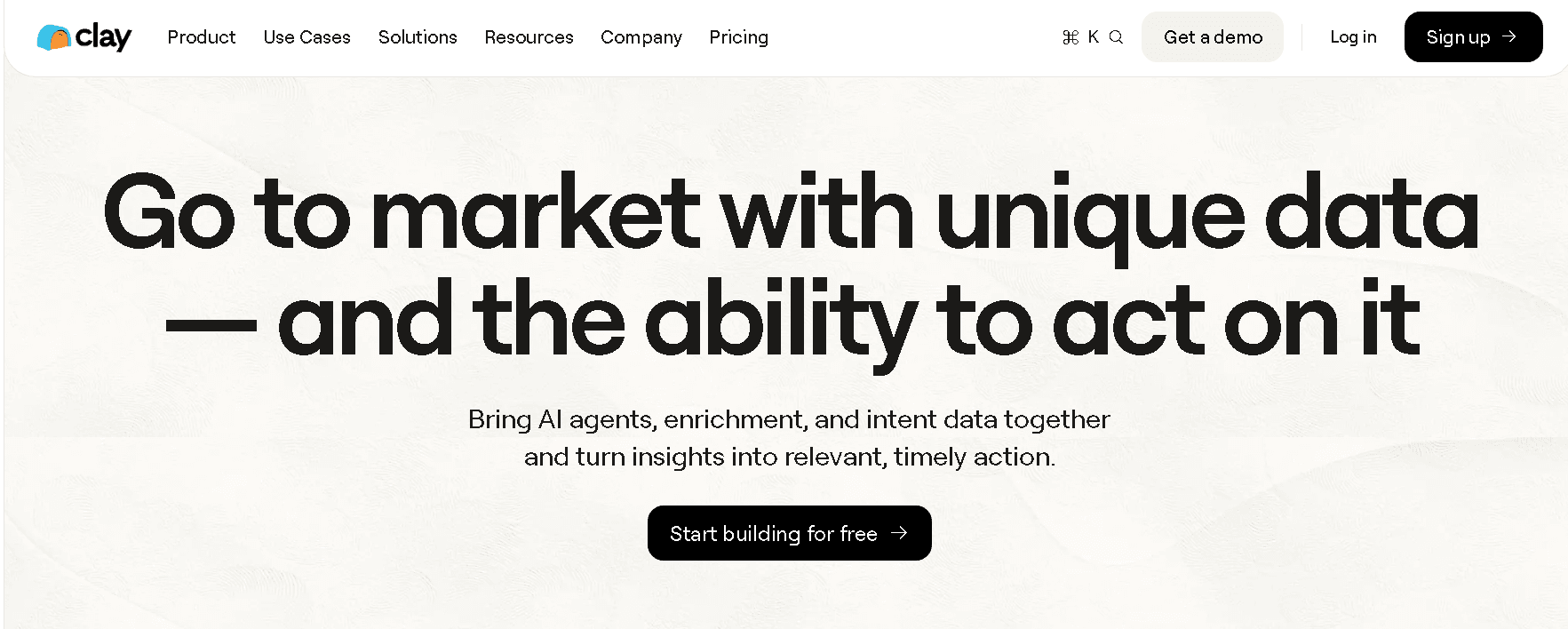
Clay is an AI-powered relationship management and prospecting platform designed to help sales, marketing, and recruiting teams build stronger networks and uncover opportunities faster. The platform automatically consolidates contact information, social profiles, and interaction history, turning fragmented data into actionable insights without manual research.
Key Features
Clay excels at keeping your contacts up-to-date with real-time enrichment from emails, social media, and public sources. The platform creates smart relationship graphs, surfaces relevant updates, and tracks engagement signals so teams can prioritize outreach based on actual activity.
AI-driven workflows enable automated prospecting, personalized outreach, and recurring check-ins, while smart tagging and segmentation allow teams to group contacts by relationship strength, company, role, or industry. Integration with email, calendars, and CRM systems ensures seamless workflows across sales and recruiting operations.
Pros & Cons
Pros:
Automatic contact enrichment reduces manual data entry
AI prioritizes outreach based on relationship activity and engagement
Integrates easily with calendars, email, and CRMs
Provides visual relationship maps for better network insights
Cons:
Enterprise-scale coverage is smaller than Cognism or ZoomInfo
International data completeness can vary
Advanced AI features may require a learning curve for new users
Limited direct-dial phone coverage compared to traditional sales intelligence tools
Pricing
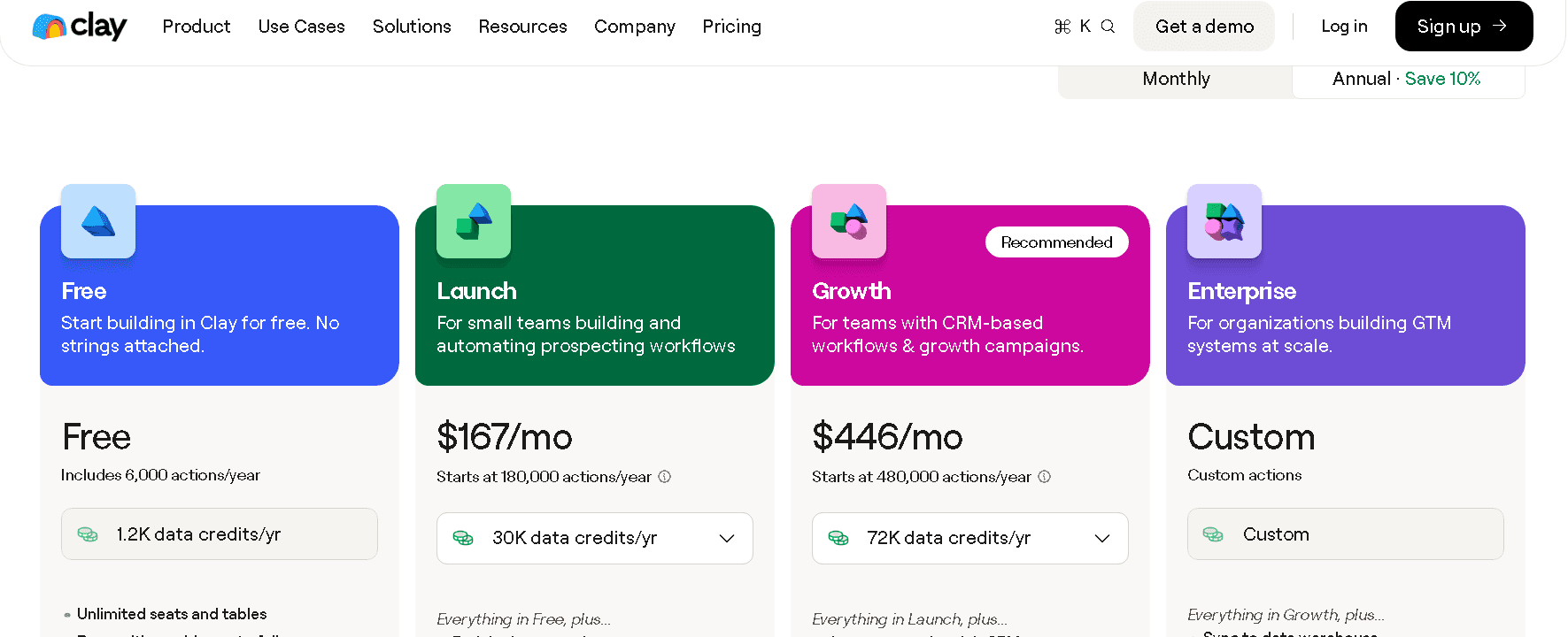
Tier | Annual Cost | Key Details |
|---|---|---|
Starter | USD 9,000 | 3 users, basic enrichment and workflow automation |
Professional | USD 18,000 | 10 users, full enrichment, relationship graphs, integrations |
Enterprise | Custom | Unlimited users, advanced AI workflows, dedicated support |
Clay focuses on helping teams nurture existing networks while discovering new opportunities efficiently, making it ideal for organizations that prioritize relationship-driven sales and recruiting.
Outreach:
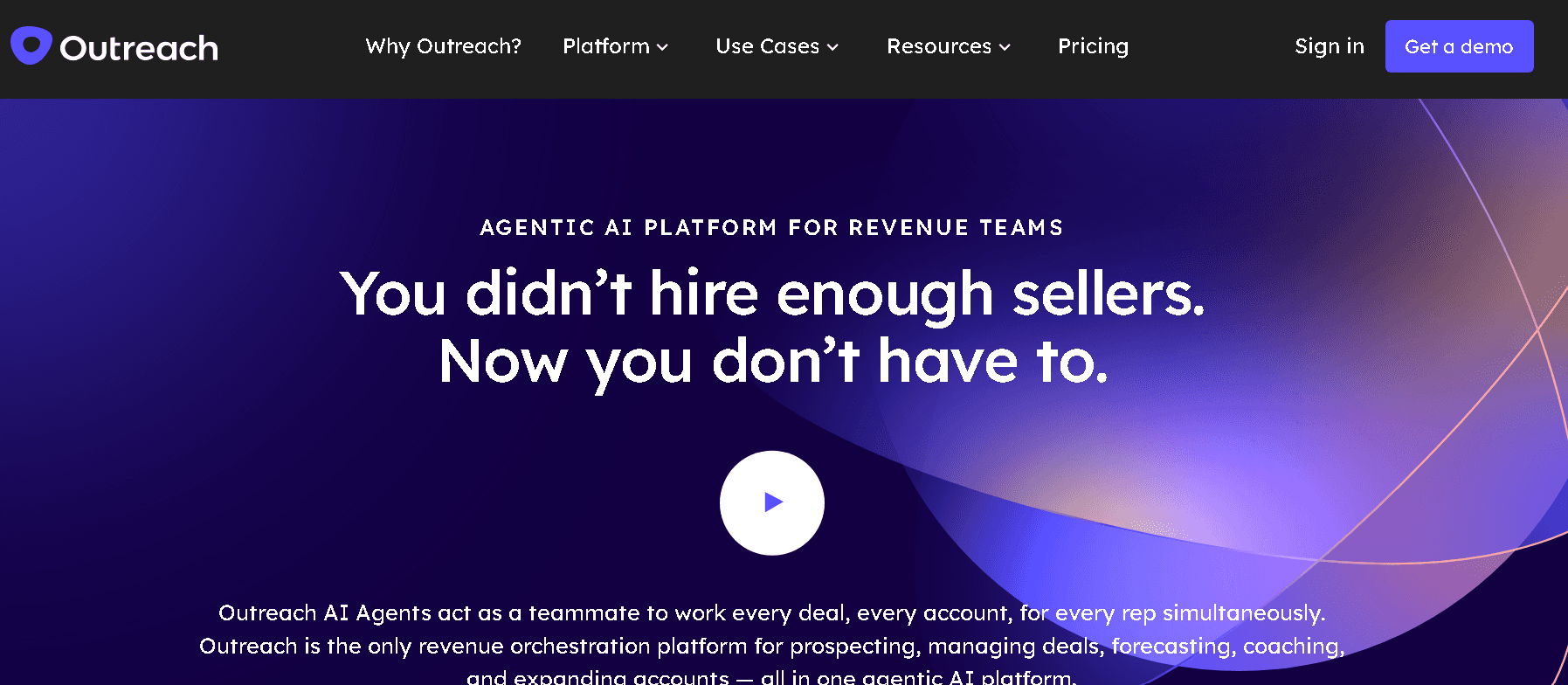
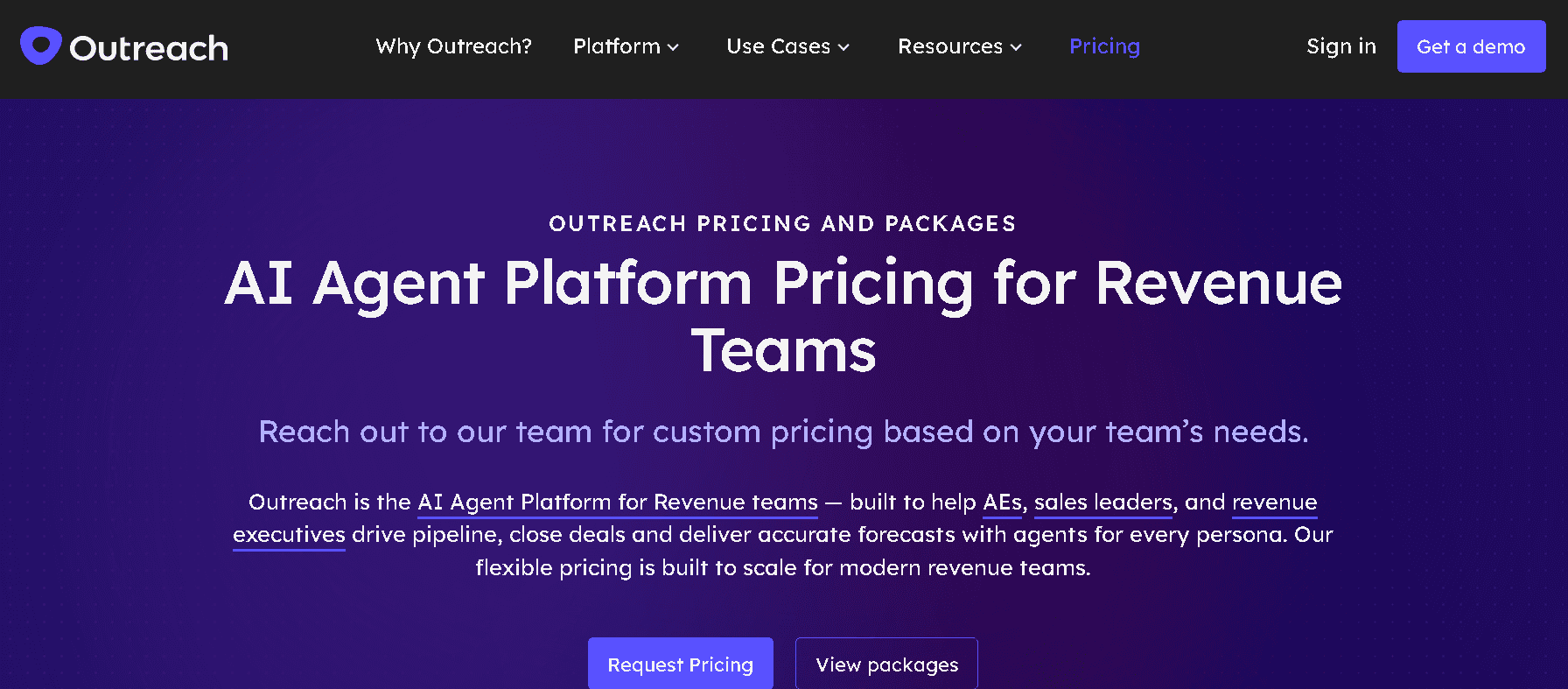
Outreach is a leading sales engagement platform that combines AI, automation, and analytics to help revenue teams scale outbound efforts and improve conversion rates. Rather than being a standalone CRM, Outreach sits on top of existing systems to orchestrate multi-channel communication workflows and track every touchpoint with prospects.
Key Features
Outreach automates email sequences, calls, and social touches while providing actionable insights into engagement patterns. Its AI-driven recommendations suggest the best next steps for each prospect, optimizing timing, messaging, and channel. Conversation intelligence records and analyzes calls, surfacing key talking points, objection patterns, and competitive insights.
The platform also includes robust analytics dashboards to measure team performance, pipeline health, and campaign effectiveness. Outreach integrates seamlessly with CRM systems, allowing automatic logging of activities, synced reporting, and streamlined team workflows.
Pros & Cons
Pros:
Multi-channel sequencing increases prospect engagement
AI suggests optimal next steps for personalized outreach
Conversation intelligence provides actionable insights from calls
Strong integration with CRM systems reduces manual data entry
Cons:
Platform complexity may require dedicated RevOps support
Pricing can be high for smaller teams
Automation is powerful but can feel rigid if not carefully configured
International data enrichment is limited compared to specialized providers
Pricing
Tier | Annual Cost | Key Details |
|---|---|---|
Professional | USD 12,000 | Core sequences, 3–5 users, basic analytics |
Enterprise | Custom | Advanced AI, multi-channel orchestration, full analytics, dedicated support |
Outreach excels at scaling outbound sales and ensuring teams stay organized, with AI-driven insights and automation that reduce manual effort while maximizing conversion opportunities.
Microsoft Copilot:

Microsoft Copilot integrates advanced generative AI directly into Microsoft 365 applications, enabling users to create, summarize, and analyze content without leaving familiar workflows. Rather than operating as a standalone tool, Copilot embeds AI capabilities across Word, Excel, PowerPoint, Outlook, Teams, and other Microsoft apps, turning routine tasks into AI-assisted workflows.
Key Features
Copilot leverages large language models to draft documents, generate presentations, summarize emails and meetings, and provide data-driven insights in Excel. It can automate repetitive tasks such as formatting, report generation, and content summarization while adapting outputs based on organizational context and user input.
The platform also integrates with Microsoft Graph to access first-party organizational data securely, providing contextual recommendations, insights, and trend analysis. Copilot enables users to quickly create professional content, streamline collaboration, and reduce the time spent on manual, repetitive work.
Pros & Cons
Pros:
Seamless integration across Microsoft 365 reduces workflow disruption
Generative AI accelerates document creation, reporting, and analysis
Secure access to organizational data ensures contextually accurate outputs
Reduces manual effort and boosts productivity across teams
Cons:
AI outputs may require human review for accuracy and tone
Limited customization outside Microsoft 365 ecosystem
Advanced features may require enterprise-level licensing
Dependent on consistent internet and cloud connectivity
Pricing
Microsoft Copilot is included with Microsoft 365 enterprise subscriptions, with pricing varying by plan and user count. Organizations should expect additional costs on top of standard Microsoft 365 licensing, typically ranging from USD 30–50 per user per month for full Copilot capabilities.
Apollo.io:
Apollo.io is a sales engagement and revenue intelligence platform that combines prospecting, contact enrichment, and multi-channel outreach into a single workflow. Unlike standalone CRMs, Apollo.io provides both the data foundation and the automation tools to identify leads, engage prospects, and track sales performance at scale.
Key Features
Apollo.io maintains a large contact and company database with verified emails, phone numbers, and firmographic details. Its AI-powered lead scoring and segmentation prioritize high-value accounts, while workflow automation enables multi-step email sequences, calls, and task reminders.
The platform also provides real-time insights into email engagement, pipeline performance, and team productivity. Integration with popular CRM systems ensures that data flows seamlessly, while Apollo’s Chrome extension and API enable prospecting directly from Gmail, LinkedIn, and other key platforms.
Pros & Cons
Pros:
Large, frequently updated database with strong SMB and mid-market coverage
Automated multi-channel sequences save time and increase engagement
Lead scoring and segmentation improve targeting accuracy
Seamless CRM integration ensures smooth workflow continuity
Cons:
Enterprise coverage and intent data are less robust than ZoomInfo or Cognism
Advanced automation may require setup and training
International contact data can be inconsistent
Some users report minor email deliverability issues with large campaigns
Pricing
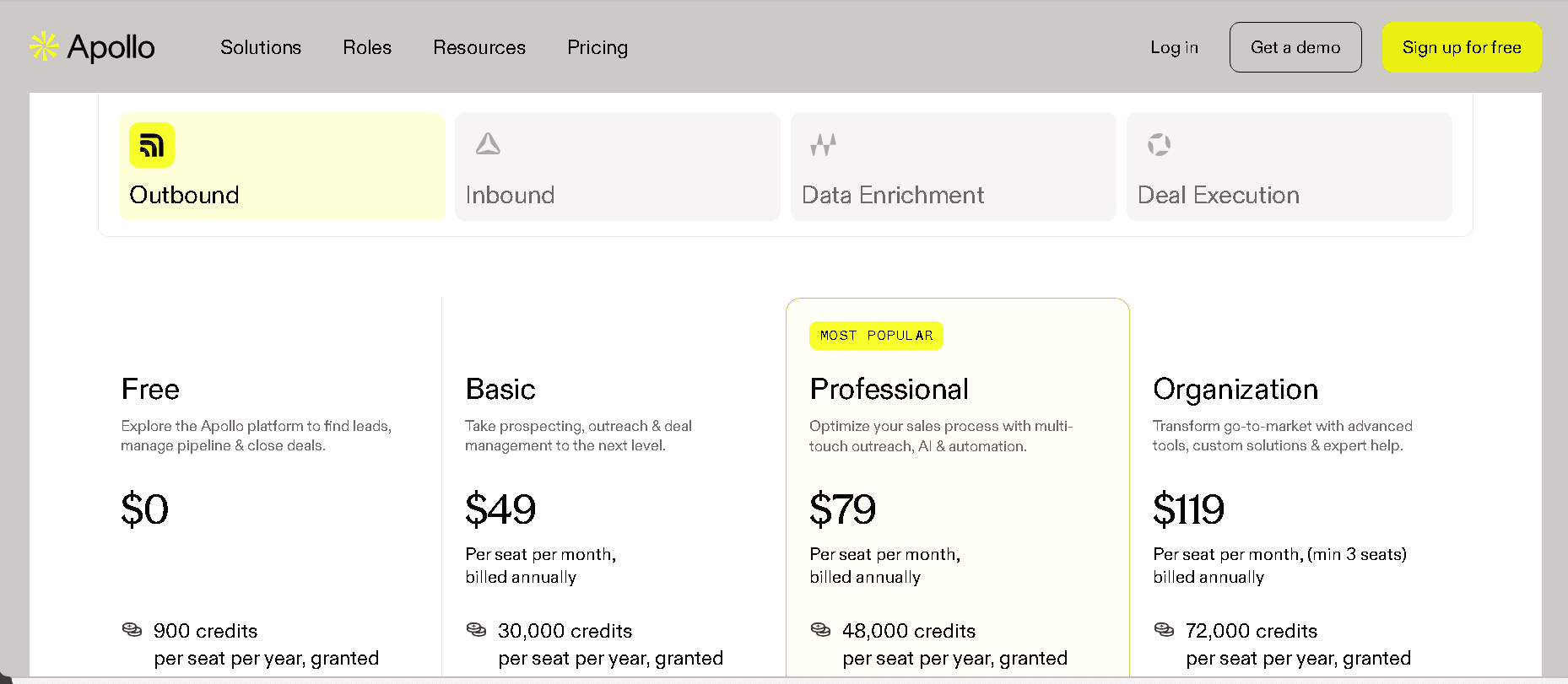
Tier | Annual Cost | Key Details |
|---|---|---|
Basic | USD 7,200 | 1–3 users, access to database and core engagement tools |
Professional | USD 24,000 | 10 users, advanced automation, enrichment, and analytics |
Enterprise | Custom | Unlimited users, API access, dedicated support, full feature suite |
Apollo.io excels for teams that prioritize multi-channel prospecting and SMB/mid-market engagement, combining data, automation, and analytics into one accessible platform.
How to choose AI sales tools for your needs?
Identify where your sales process breaks down rather than chasing features. Reps who spend hours on manual research need automation and enrichment as priorities. Low response rates point toward personalization and signal intelligence needs. Stalled mid-funnel deals require conversation intelligence and coaching capabilities.
The strongest AI sales tools combine data and workflows into unified platforms. Juggling disconnected systems fragments information and forces manual updates. Everyone who accesses the same centralized details can operate more smoothly and eliminate errors. Integration quality matters more than integration count in 2026.
Check whether tools integrate with your CRM and sales engagement platform, or if they require third-party connectors. Data should flow bidirectionally without leaving your primary workflow.
Conclusion
The gap between adopting AI sales tools and using them continues costing teams real revenue. Not every platform on this list will revolutionize your sales process, and that’s fine. What matters is matching specific tools to your actual bottlenecks rather than chasing features you’ll never use.
Start with pilots before committing annual budgets. Test reply rates and time savings with real workflows. Rox offers a genuine free tier for this purpose. Whether you need lead intelligence, conversation analysis, or autonomous outreach, the tools exist in 2026 to close more deals faster.
FAQ
Why modern sales teams need AI sales tools?
Manual research, CRM updates and administrative tasks consume hours daily while prospects go cold. Sales reps spend only 25% of their time selling to customers. AI sales automation fixes this time allocation problem. It handles repetitive work that doesn’t require human judgment. Buyers now expect instant replies and tailored outreach at every touchpoint.
What are Key Benefits of Using AI in Sales?
AI sales tools optimize measurable improvements in the sales funnel. Teams that use AI-powered sales platforms report 83% revenue growth compared to 66% for non-AI teams. AI-driven lead scoring cuts sales cycle time by 30%. The technology handles data entry, automates follow-ups and generates tailored emails. It provides accurate forecasting based on historical patterns rather than gut feelings.
What are the best AI sales automation tools you’ve tried?
Rox delivers autonomous agent workflows for enterprises with data warehouses. ZoomInfo provides intent data and verified contacts for North American accounts. Salesforce Einstein offers native CRM integration with predictive lead scoring for existing Salesforce users.
Similar Articles
We build with the best to make sure we exceed the highest standards and deliver real value.

Get started today
See how the Rox agent can put your pipeline generation, deal management, and account expansion on autopilot.